In Vitro and In Silico Evaluation of the Trypanocidal Activity of a Subfraction Isolated from Mutisia campanulata
Grazielle Pereira da Silva, Lucas Resende Dutra Sousa, Paula Melo de Abreu Vieira, Ricardo Stefani, Andréa Mendes do Nascimento

TL;DR
A plant extract was tested for its ability to kill a parasite causing Chagas disease, with promising results from both lab and computer simulations.
Contribution
A subfraction from Mutisia campanulata was identified as a potential new treatment for Chagas disease through in vitro and in silico studies.
Findings
The subfraction showed strong trypanocidal activity with an IC50 of 5.88 ± 0.13 μg/mL against Trypanosoma cruzi.
Pseudotaraxasterol from the subfraction bound effectively to a T. cruzi enzyme with an energy of −10.2 kcal/mol.
Molecular dynamics simulations confirmed stable interactions between pseudotaraxasterol and the enzyme.
Abstract
In the present study, a subfraction rich in aliphatic hydrocarbons and pentacyclic triterpenes was isolated after chromatographic steps from Mutisia campanulata Less and its trypanocidal activity were evaluated using in vitro and in silico approaches. The chemical structures of the compounds present in the subfraction were defined by GC–MS and 13C NMR data analysis. The trypanocidal activity in vitro of the subfraction indicated potency against epimastigote forms of the Y strain from Trypanosoma cruzi (IC50 of 5.88 ± 0.13 μg/mL). Molecular docking studies were conducted using four T. cruzi enzyme targets (1TC1, 1YHL, 2EF6 and 4C27) and six compounds, including a control. The pseudotaraxasterol obtained better results with an energy of −10.2 kcal/mol for the 4C27 enzyme. The RMSD trajectory of the pseudotaraxasterol in protein–ligand complex indicates stability during the 100 ns…
Genes, proteins, chemicals, diseases, species, mutations and cell lines named across the full text — each resolved to its canonical identifier and authoritative record.
Click any figure to enlarge with its caption.
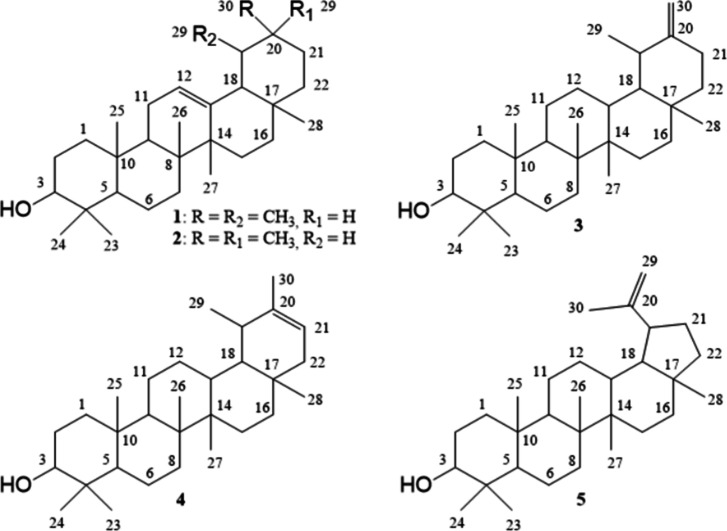 Figure 1
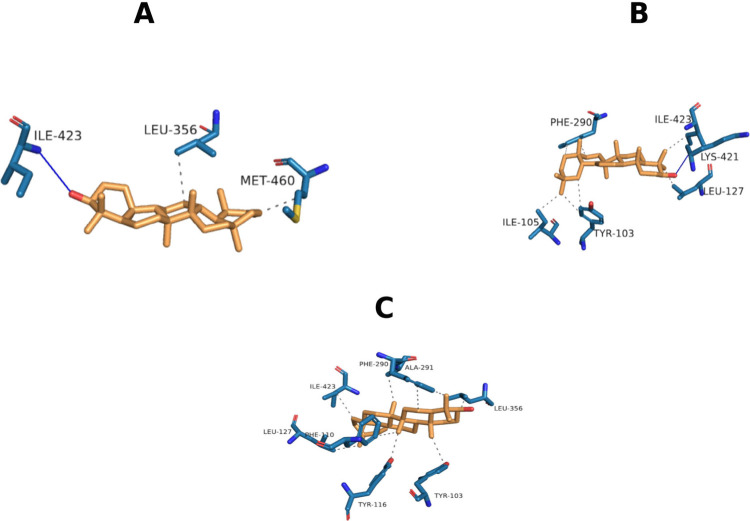 Figure 2
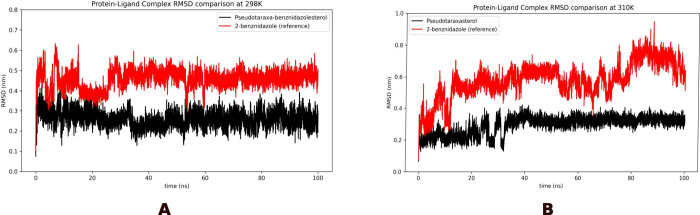 Figure 3
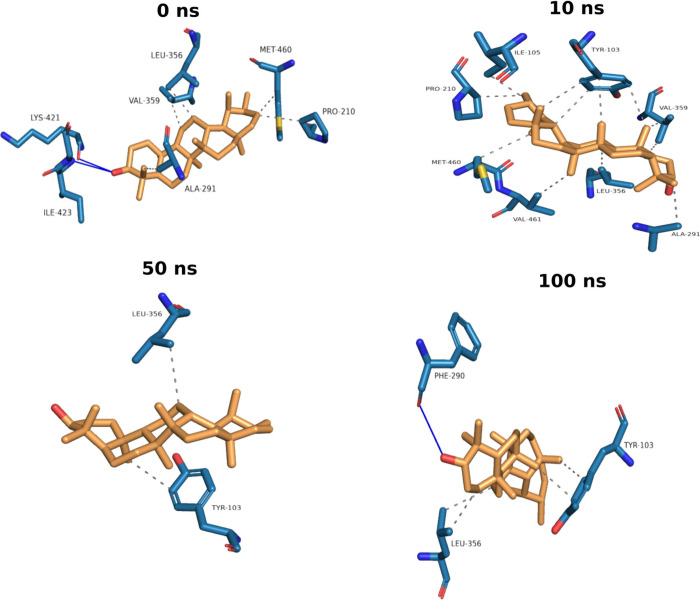 Figure 4
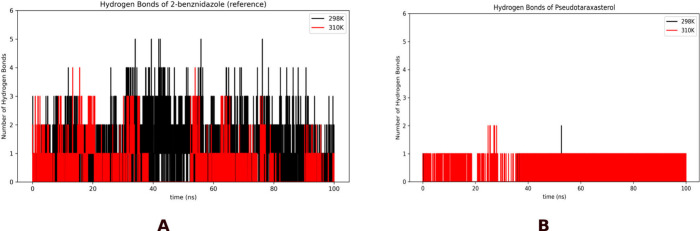 Figure 5
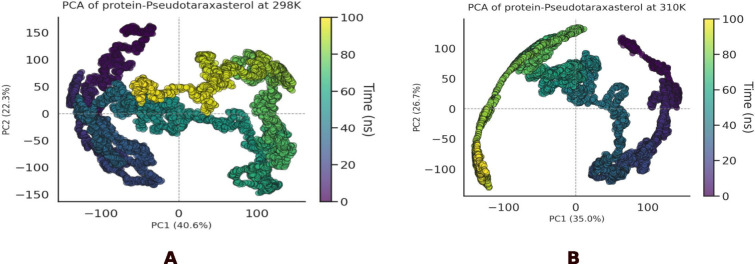 Figure 6
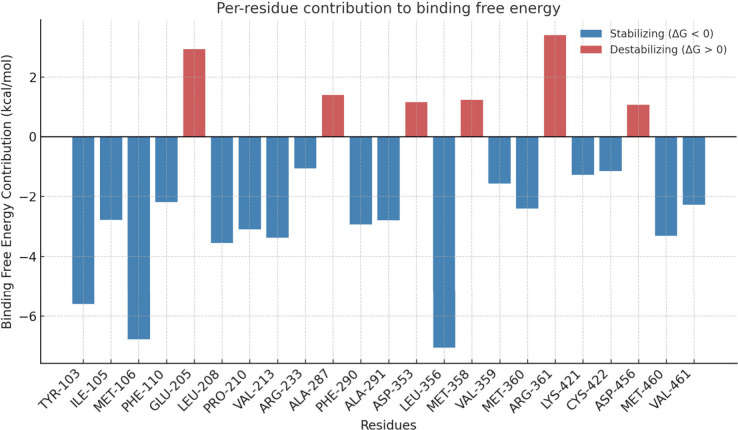 Figure 7
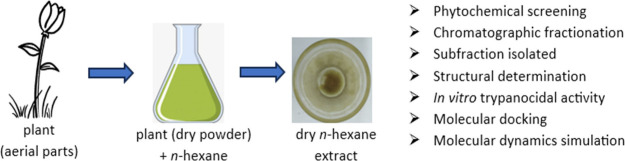 Figure 8
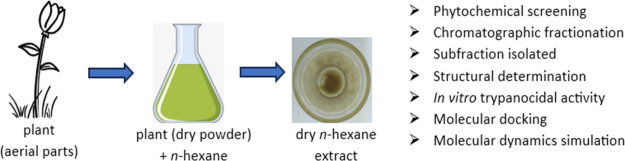 Figure 9
Peer Reviews
No public reviews on file for this paper yet. If you reviewed it on a platform where reviews are public (OpenReview, ICLR, NeurIPS, ICML), you can paste yours below so the community can read it here.
Videos
No videos yet. Explain this paper in a talk, walkthrough, or lecture? Add one.
Taxonomy
TopicsTrypanosoma species research and implications · Research on Leishmaniasis Studies · Lysosomal Storage Disorders Research