Hydrosilylation of Esters via a Titanocene(III) Borohydride–PMHS System: Scope, Limitations, and Mechanistic Insights
Godfred Fianu, Jenna Azar, Emmanuel Bulted, Elizabeth Jones, Robert A. Flowers

TL;DR
A new method for converting esters into alcohols using a titanocene catalyst and a silane reductant is described, offering mild and cost-effective conditions.
Contribution
A novel hydrosilylation method for ester reduction using titanocene(III) borohydride and PMHS is introduced.
Findings
Alcohol yields range from 43% to 99% using catalytic amounts of titanocene(III) borohydride and PMHS.
Isopropanol addition enhances reactivity by forming a more active titanocene(III) hydride species.
The method is mild, cost-effective, and applicable to a wide range of esters.
Abstract
The hydrosilylation of aromatic and aliphatic esters using catalytic amounts of titanocene(III) borohydride and poly(methylhydrosiloxane) (PMHS) as the terminal reductant is described. Alcohol yields range from 43% to 99%, with select esters requiring the addition of isopropanol to promote reactivity. This modification is proposed to facilitate in situ formation of a more reactive titanocene(III) hydride species, which appears necessary for efficient ester reduction. This ester reduction protocol is mild, cost-effective, operationally simple and has potential utility in broader reductive transformations.
Genes, proteins, chemicals, diseases, species, mutations and cell lines named across the full text — each resolved to its canonical identifier and authoritative record.
Click any figure to enlarge with its caption.
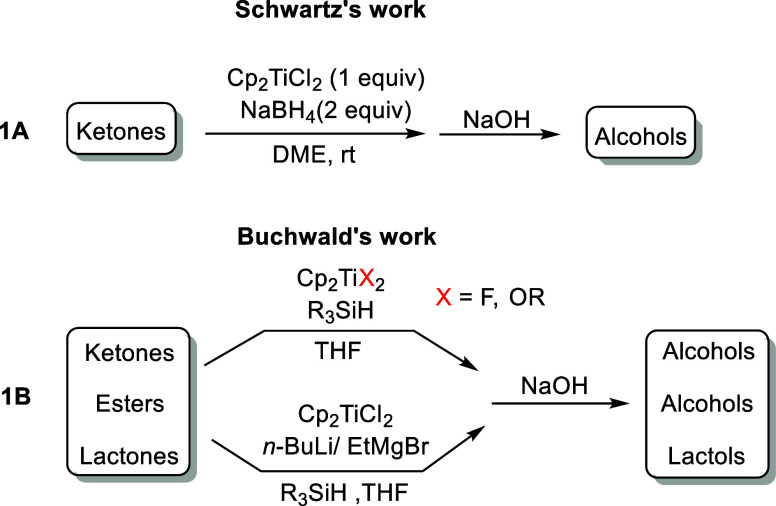 Figure 1
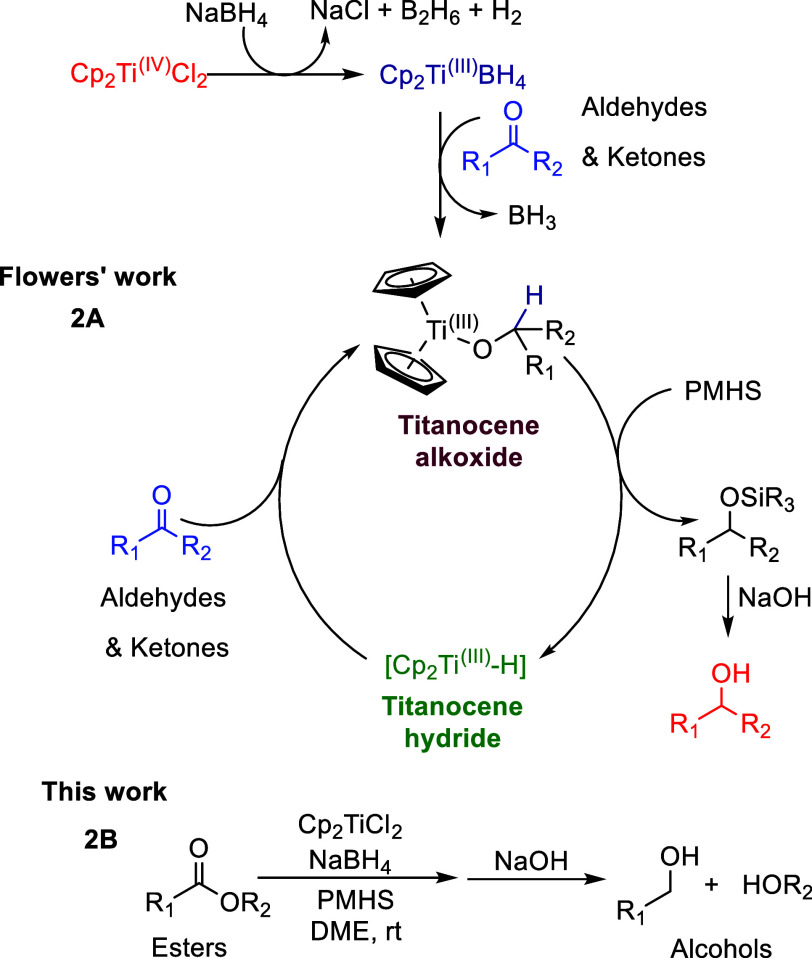 Figure 2
 Figure 3
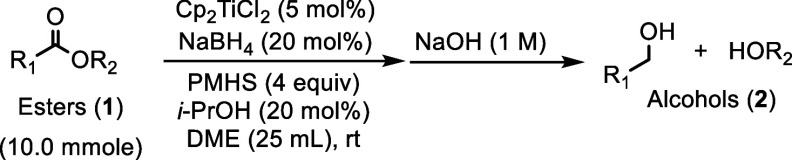 Figure 4
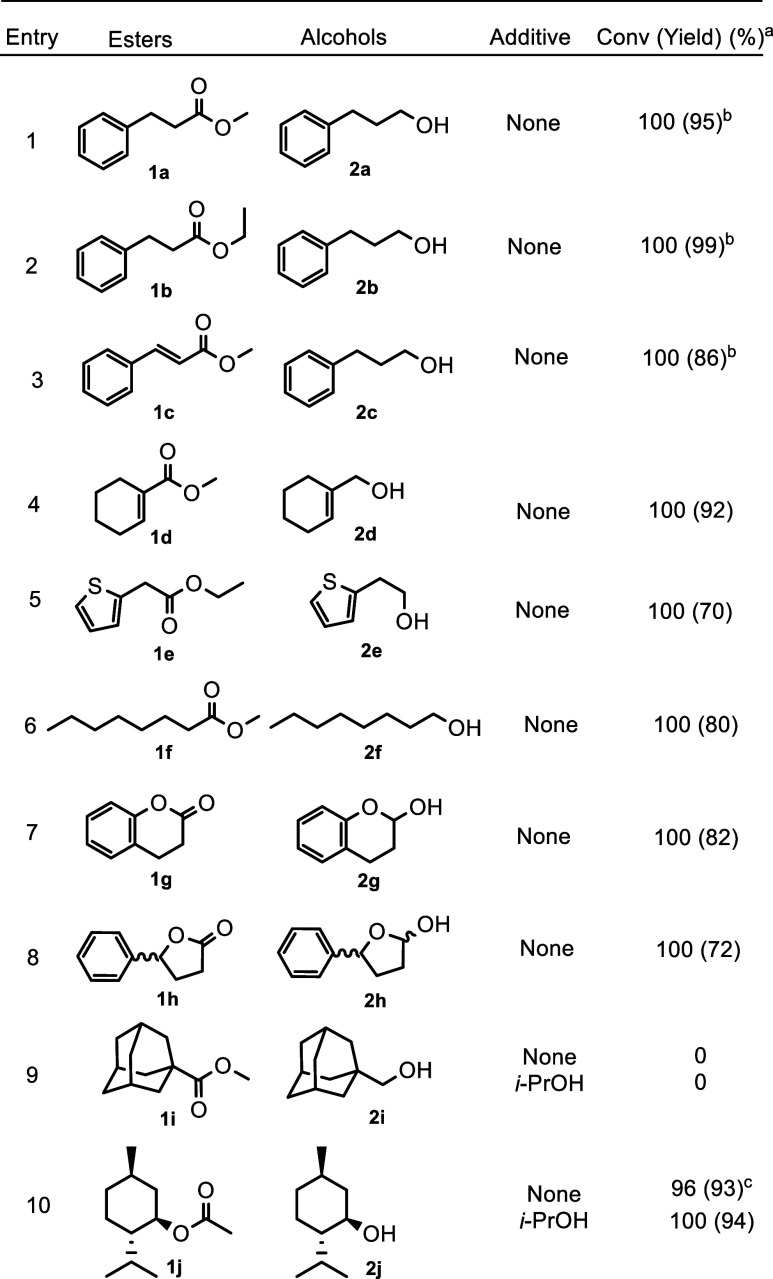 Figure 5
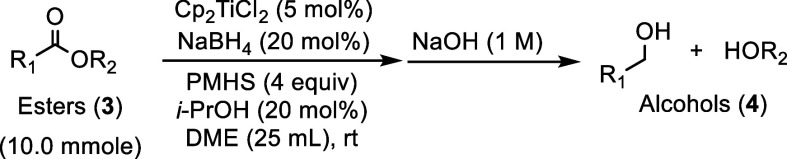 Figure 6
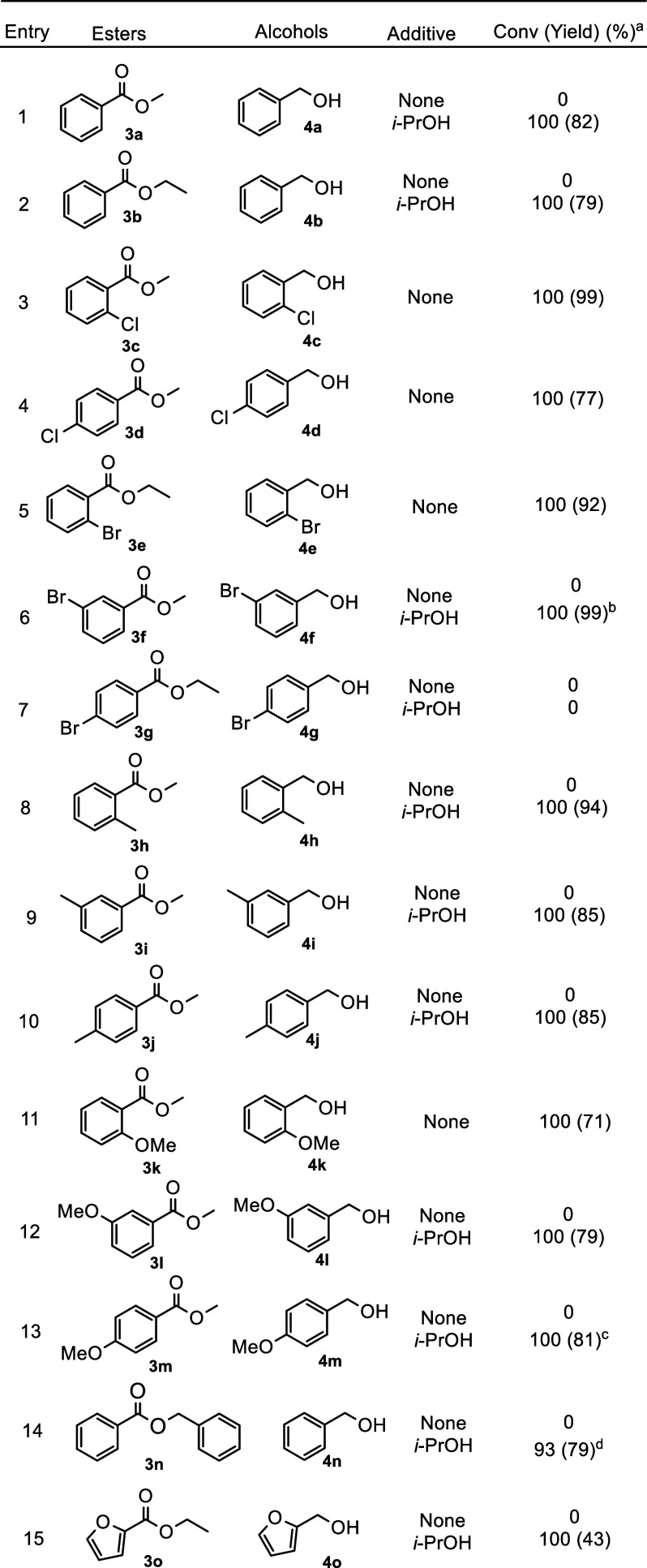 Figure 7
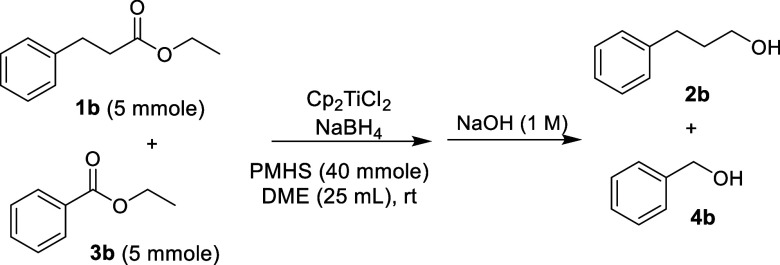 Figure 8
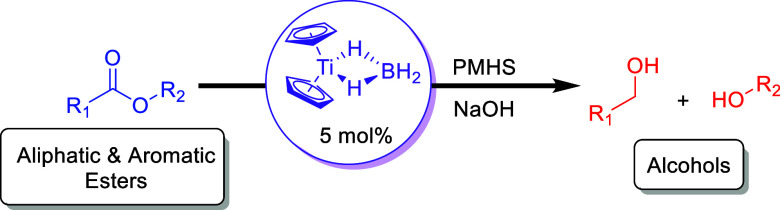 Figure 9
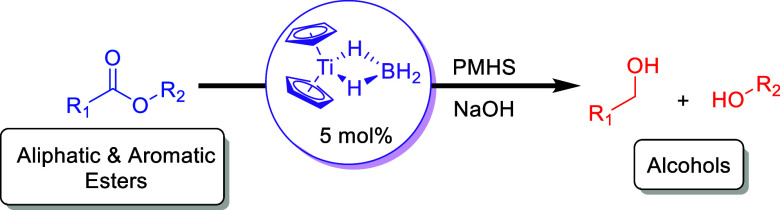 Figure 10
Peer Reviews
No public reviews on file for this paper yet. If you reviewed it on a platform where reviews are public (OpenReview, ICLR, NeurIPS, ICML), you can paste yours below so the community can read it here.
Videos
No videos yet. Explain this paper in a talk, walkthrough, or lecture? Add one.
Taxonomy
TopicsOrganoboron and organosilicon chemistry · Asymmetric Hydrogenation and Catalysis · Advanced Synthetic Organic Chemistry