Development of a Molecularly Imprinted Pencil Graphite Electrode for the Voltammetric Detection of Hg2+ Ions
Mehmet Karagözlü, Dina El Miari, Mariam Moghazi, Süleyman Aşır, Ilgım Göktürk, Fatma Yılmaz, Adil Denizli, Deniz Türkmen

TL;DR
A new sensor was developed to detect mercury ions using a modified graphite electrode, offering fast and accurate detection at low concentrations.
Contribution
A novel molecularly imprinted pencil graphite electrode for voltammetric detection of Hg2+ ions was developed.
Findings
The sensor detected Hg2+ in aqueous solutions and real samples with a linear relationship.
Detection and quantification limits were 0.188 nM and 0.570 nM, respectively.
The method is rapid, simple, and cost-effective for mercury ion detection.
Abstract
The ability to detect trace amounts of mercury has become critical due to its possible severe toxic effects on both humans and the environment when exposed to unsafe amounts. This study focuses on developing a novel mercury detection technique using differential pulse anodic stripping voltammetry (DPASV) with a pencil graphite electrode modified with a molecularly imprinted polymer (MIP-PGE). The amino acid-based N-methacryloyl-(L)-cysteine methyl ester (MAC) monomer was used for the imprinting process of Hg2+ ions. Fourier transform infrared spectroscopy equipped with an attenuated total reflection (FTIR-ATR), contact angle (CA), and scanning electron microscopy (SEM) was used to characterize the electrochemical sensors. The obtained results revealed that the voltammetric detection method using MIP-PGE was able to accurately detect Hg2+ in both aqueous solutions and real samples for…
Genes, proteins, chemicals, diseases, species, mutations and cell lines named across the full text — each resolved to its canonical identifier and authoritative record.
Click any figure to enlarge with its caption.
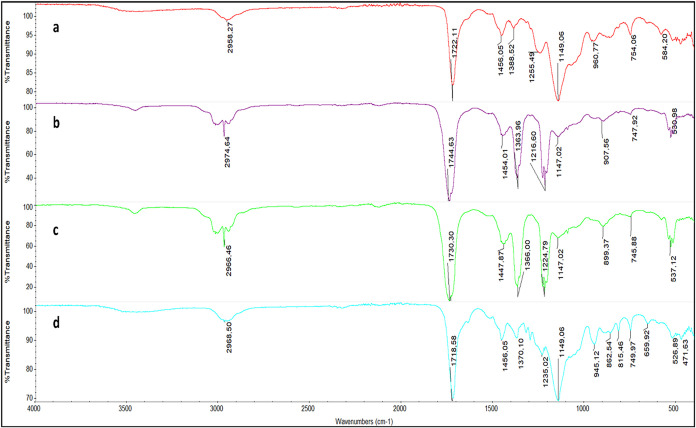 Figure 1
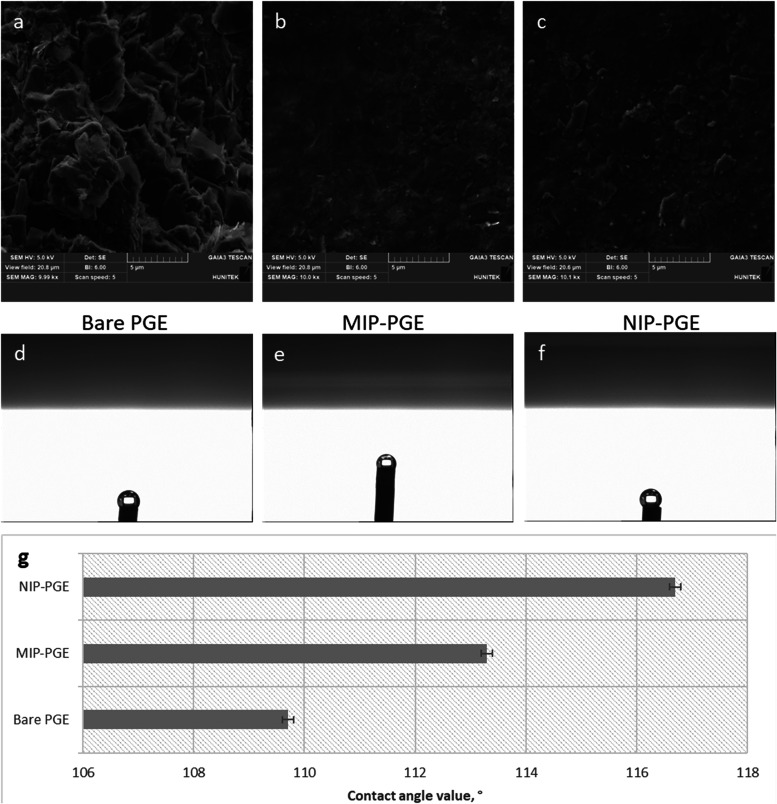 Figure 2
 Figure 3
 Figure 4
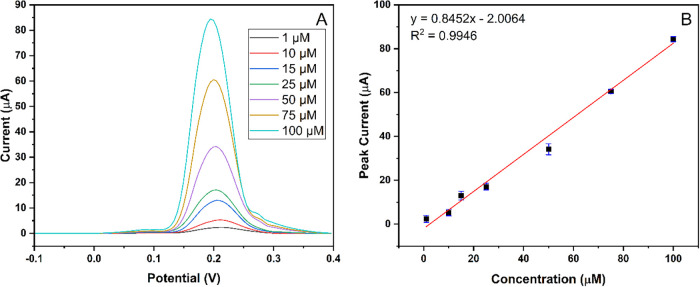 Figure 5
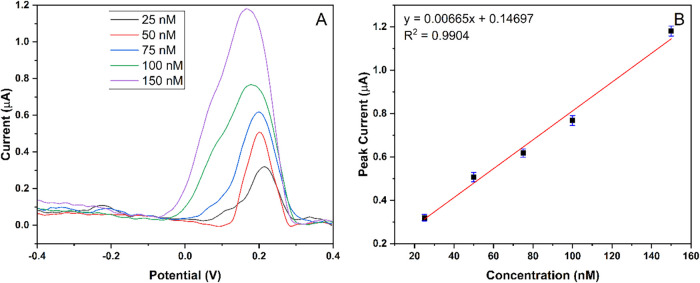 Figure 6
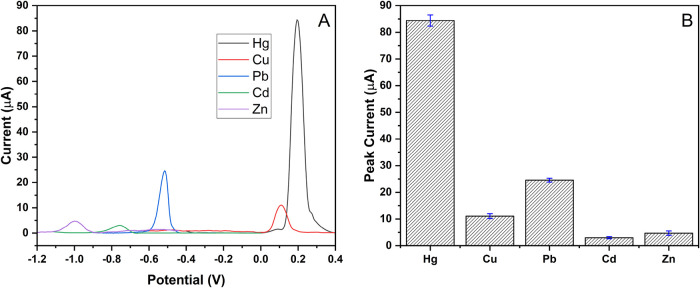 Figure 7
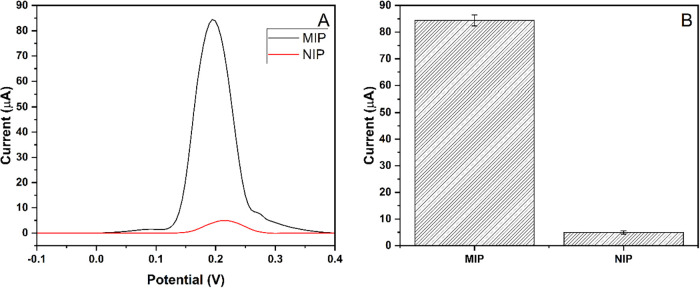 Figure 8
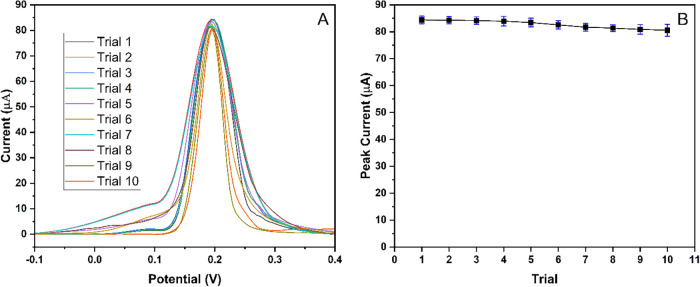 Figure 9
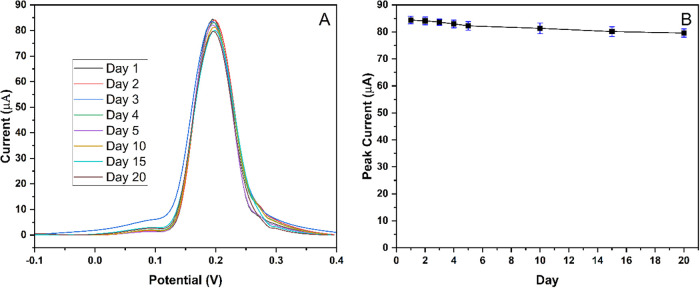 Figure 10
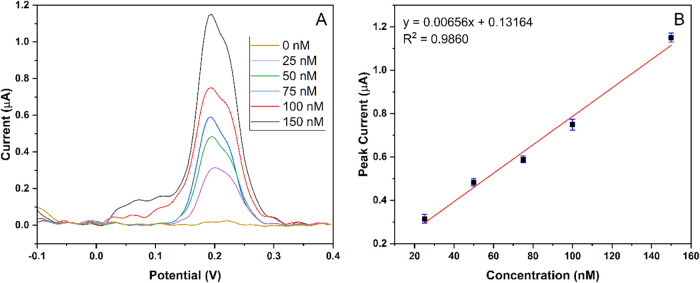 Figure 11
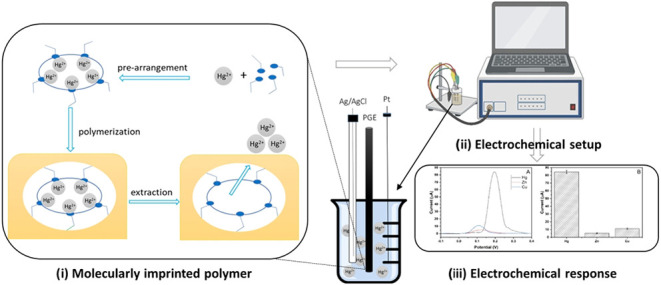 Figure 12
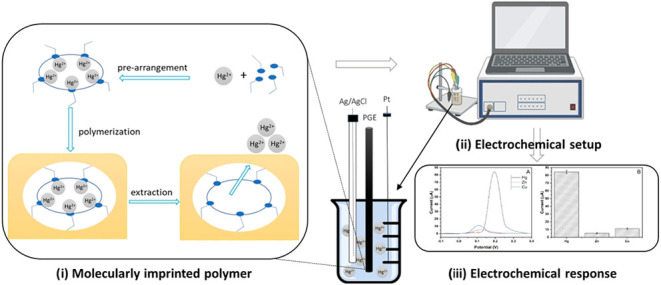 Figure 13
 Figure 14
 Figure 15
Peer Reviews
No public reviews on file for this paper yet. If you reviewed it on a platform where reviews are public (OpenReview, ICLR, NeurIPS, ICML), you can paste yours below so the community can read it here.
Videos
No videos yet. Explain this paper in a talk, walkthrough, or lecture? Add one.
Taxonomy
TopicsElectrochemical Analysis and Applications · Analytical chemistry methods development · Analytical Chemistry and Sensors