Production of Activated Carbon from Grape Pomace (Vitis labrusca) by Chemical Activation with ZnCl2 and Its Application in Phenol Adsorption
Amanda Ferreira Scholant, Márcia Moreira, Alice Neri da Silva Sousa, Keli Arruda da Silva, Nauro da Silveira, Débora Pez Jaeschke, Luiz Antonio de Almeida Pinto, Tito Roberto Sant’ Anna Cadaval

TL;DR
This study shows that activated carbon made from grape pomace can effectively remove phenol from water, making it a sustainable solution.
Contribution
The paper introduces a novel method for producing activated carbon from grape pomace using ZnCl2 activation for phenol adsorption.
Findings
Activated carbon achieved a maximum phenol adsorption capacity of 180 mg g–1.
The pseudo-second-order model best described the adsorption kinetics.
The adsorption process was found to be spontaneous and favorable with negative ΔG° values.
Abstract
This study investigated the production of activated carbon from Vitis labrusca grape pomace through chemical activation with ZnCl2 and subsequent carbonization at varying temperatures and times using a fractional factorial design. The best performance for phenol adsorption was obtained at 800 °C for 120 min, achieving a maximum adsorption capacity of 54.04 mg g–1. The activated carbon presented a high specific surface area (1017.58 m2 g–1), meso- and micro-porous structure (type I and IVa isotherms with H4 hysteresis), oxygenated functional groups, and thermal stability. Adsorption kinetics were studied at different phenol concentrations (50–150 mg L–1), and the experimental data were fitted to pseudo-first-order, pseudo-second-order, and Elovich models. The results revealed that the pseudo-second-order model better described the kinetic data. Regarding the equilibrium studies, the…
Genes, proteins, chemicals, diseases, species, mutations and cell lines named across the full text — each resolved to its canonical identifier and authoritative record.
Click any figure to enlarge with its caption.
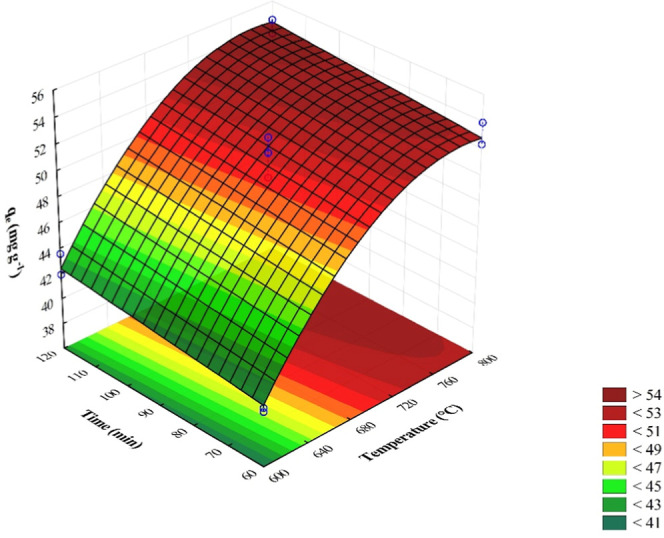 Figure 1
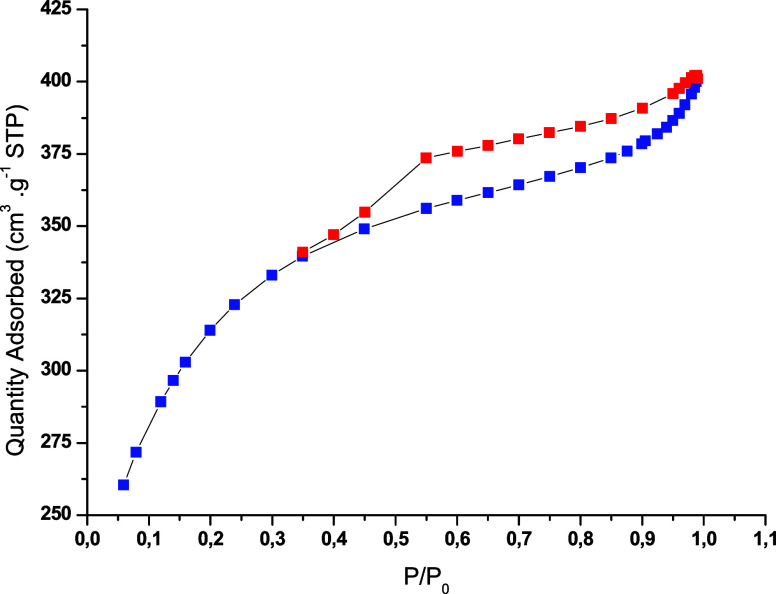 Figure 2
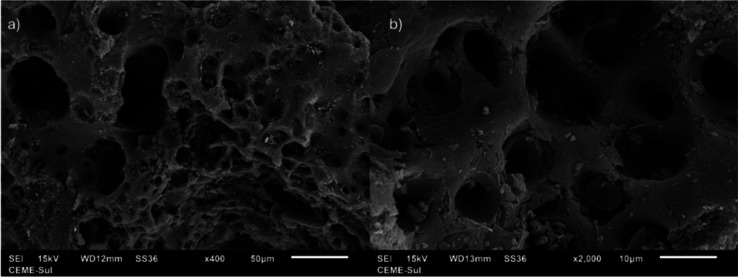 Figure 3
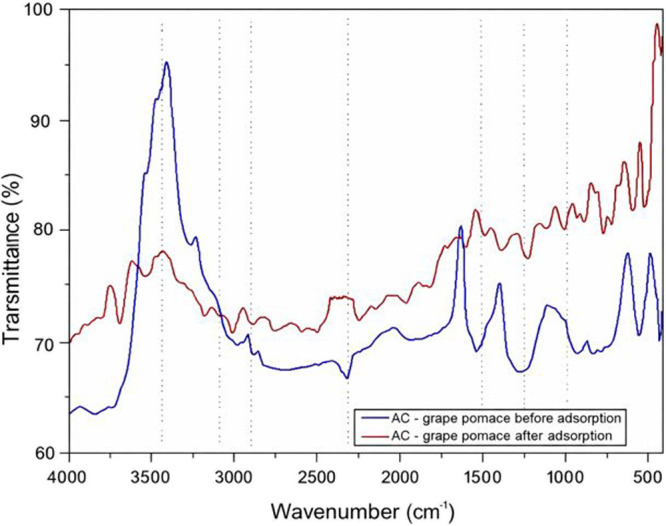 Figure 4
 Figure 5
 Figure 6
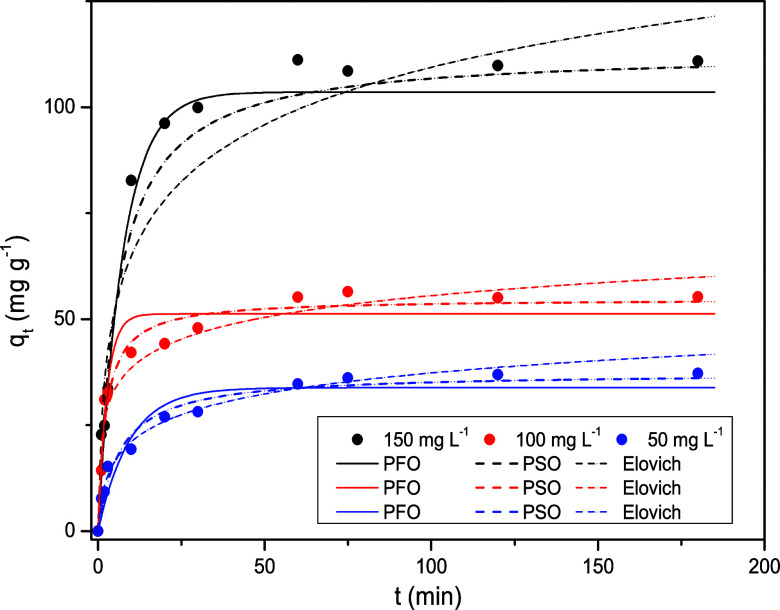 Figure 7
 Figure 8
 Figure 9
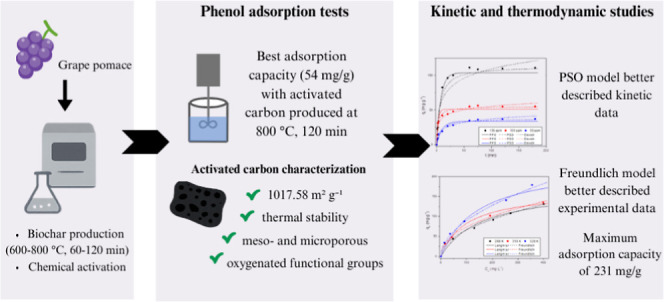 Figure 10
 Figure 11
 Figure 12
 Figure 13
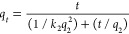 Figure 14
 Figure 15
 Figure 16
 Figure 17
 Figure 18
Peer Reviews
No public reviews on file for this paper yet. If you reviewed it on a platform where reviews are public (OpenReview, ICLR, NeurIPS, ICML), you can paste yours below so the community can read it here.
Videos
No videos yet. Explain this paper in a talk, walkthrough, or lecture? Add one.
Taxonomy
TopicsAdsorption and biosorption for pollutant removal · Phosphorus and nutrient management · activated carbon and charcoal