Oil Palm Shell-Derived Activated Carbon: Adsorption Kinetics, Thermodynamics, and Interaction Mechanism for Lufenuron 50-EC Pesticide
David Nuñez-Vargas, Juan Barraza-Burgos, Juan Guerrero-Perez, Luis Diaz, Ajay K. Dalai, Venu Babu Borugadda

TL;DR
Researchers made activated carbon from oil palm shells and found it can effectively remove a pesticide called lufenuron, with the best sample removing 96.9% of it.
Contribution
The study introduces a new method to produce activated carbon from oil palm shells and evaluates its effectiveness in pesticide adsorption.
Findings
AC-900-2 achieved the highest lufenuron removal yield of 96.9%.
The adsorption process was best described by the pseudo-second-order kinetic model.
Chemically activated carbons showed improved adsorption due to functional groups introduced by KOH.
Abstract
Activated carbon (AC) was synthesized from oil palm shell (OPS) through physical (AC-800-2 and AC-900-2) and chemical (AC-750-1.5-3:1 and AC-800-1-2:1) activation processes in a carbon dioxide atmosphere. KOH was used as an activating agent in the impregnation process in the case of chemical activation. The synthesized ACs were characterized by proximate and ultimate analysis, Fourier transform infrared (FTIR) spectroscopy, X-ray diffraction (XRD), Raman spectroscopy, scanning electron microscopy (SEM), and textural properties of the samples. The tested properties, including surface area (S BET), pore volume (VT), and average pore size (SP), were determined by the Brunauer-Emmet-Teller (BET) method and the Barrett-Joyner-Halenda (BJH) model. Lufenuron adsorption results demonstrated that AC-900-2 achieved the highest lufenuron removal yield of 96.9%. The samples were best represented…
Genes, proteins, chemicals, diseases, species, mutations and cell lines named across the full text — each resolved to its canonical identifier and authoritative record.
Click any figure to enlarge with its caption.
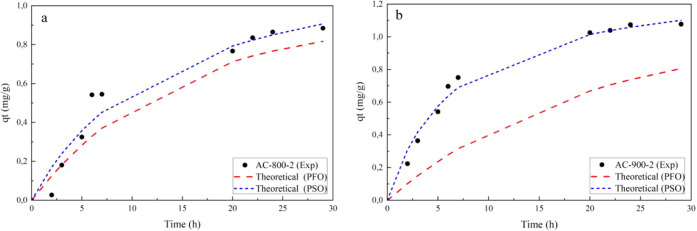 Figure 1
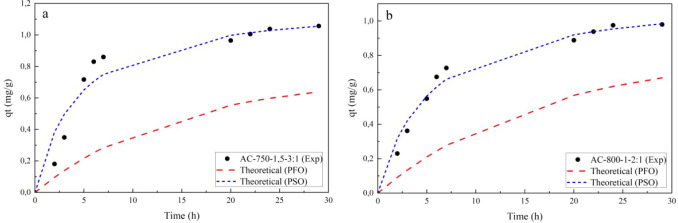 Figure 2
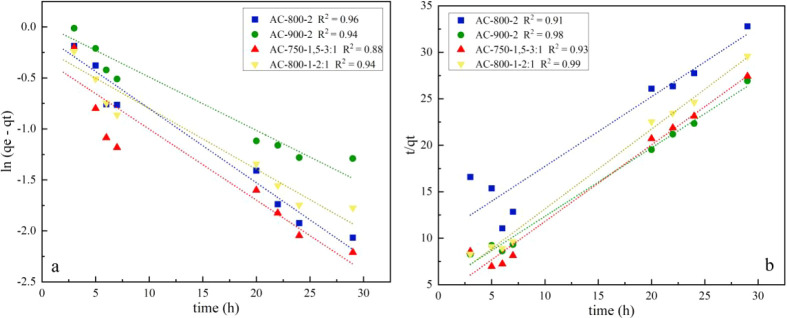 Figure 3
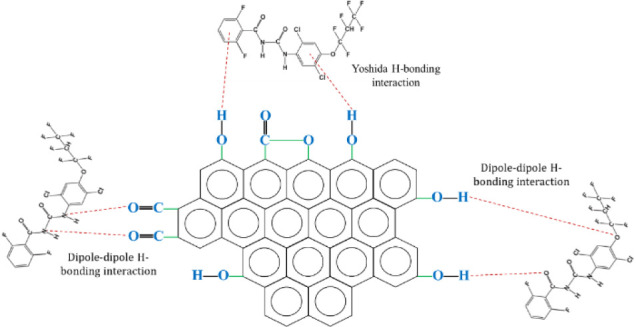 Figure 4
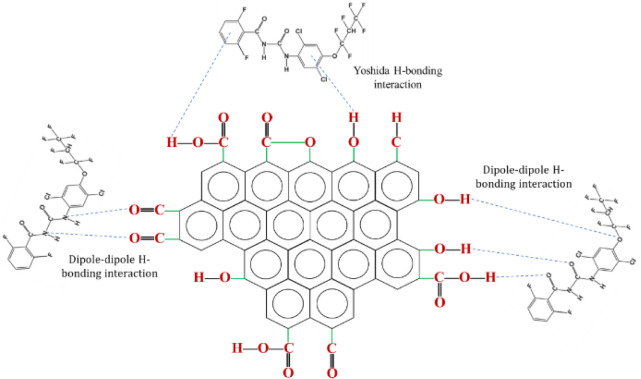 Figure 5
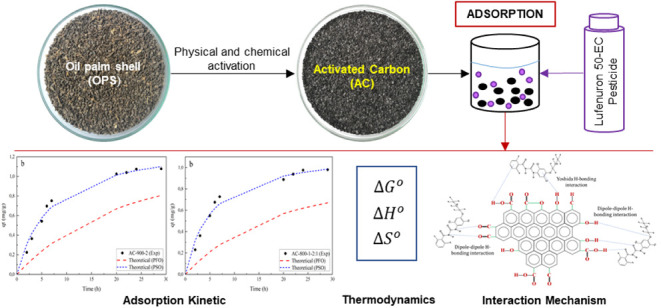 Figure 6
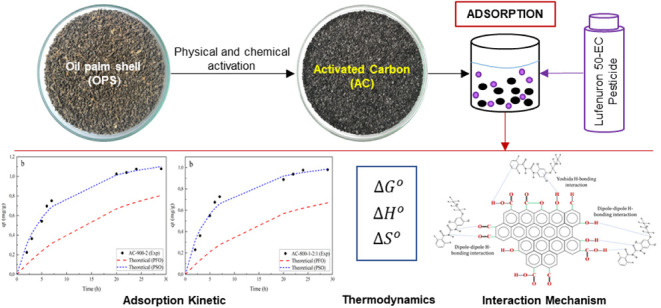 Figure 7
 Figure 8
 Figure 9
 Figure 10
 Figure 11
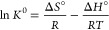 Figure 12
 Figure 13
 Figure 14
 Figure 15
 Figure 16
 Figure 17
 Figure 18
 Figure 19
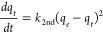 Figure 20
 Figure 21
Peer Reviews
No public reviews on file for this paper yet. If you reviewed it on a platform where reviews are public (OpenReview, ICLR, NeurIPS, ICML), you can paste yours below so the community can read it here.
Videos
No videos yet. Explain this paper in a talk, walkthrough, or lecture? Add one.
Taxonomy
TopicsAdsorption and biosorption for pollutant removal · Carbon Dioxide Capture Technologies · Supercapacitor Materials and Fabrication