Influence of a repeated peripheral electrical stimulation on substance P and cortisol concentrations, and behavior in German Simmental calves — a pilot study
Theresa Tschoner, Hannah Kerber, Yury Zablotski, Gabriela Knubben-Schweizer, Melanie Feist

TL;DR
This pilot study examined how electrical stimulation affects substance P and cortisol levels, as well as behavior, in calves, finding unexpected decreases in substance P despite signs of pain.
Contribution
The study explores substance P as a potential biomarker for nociception in calves without tissue damage or inflammation.
Findings
Pain group calves had significantly lower substance P at 25 minutes compared to baseline.
Pain group showed more behaviors like 'head held below dorsal line' and 'eye lids half closed' compared to controls.
Cortisol levels in control calves decreased significantly at 4.5 hours compared to baseline.
Abstract
The aim was to assess plasma substance P (PSPC) and plasma cortisol (PCC) concentrations, vital signs, behavioral parameters, and activity in calves submitted to either an electrical, or a sham stimulus. The hypothesis of this pilot study was that an electrical stimulus increases plasma substance P concentrations in calves due to nociception. A total of 24 male calves (43.9 ± 2.0 days old) were included in this study. Calves in PAIN (n = 12) were submitted to 5 consecutive electrical stimuli, and calves in CON (n = 12) to 5 consecutive sham stimuli. Blood samples to measure PSPC and PCC were taken before (baseline and at 0 min), during (5 min to 25 min), and after (30 min to 7 hours) stimulation. Vital signs and behavior were recorded for 30 min during the stimulation and additionally before each blood sampling time. Activity was assessed over 24 h. There were no significant…
Genes, proteins, chemicals, diseases, species, mutations and cell lines named across the full text — each resolved to its canonical identifier and authoritative record.
Click any figure to enlarge with its caption.
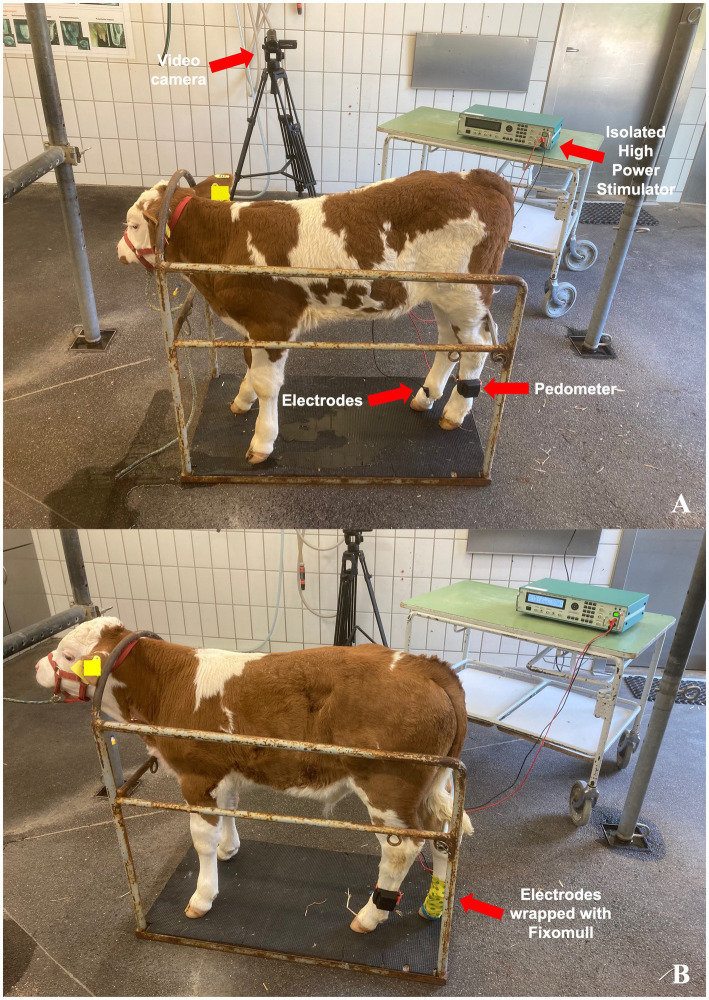 Figure 1
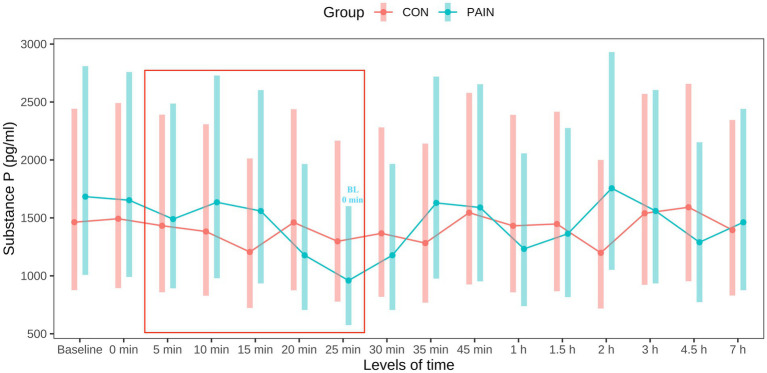 Figure 2
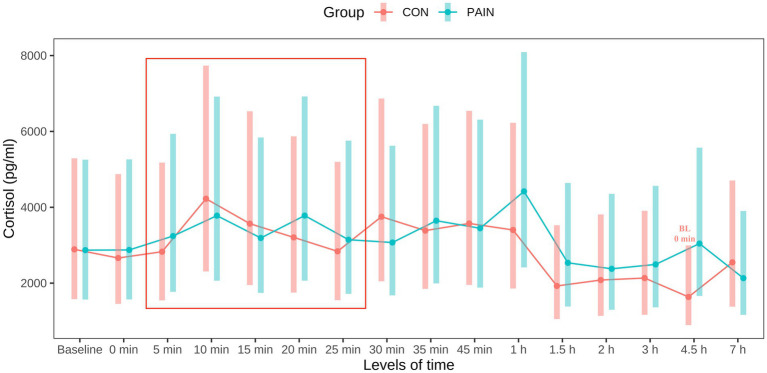 Figure 3
Peer Reviews
No public reviews on file for this paper yet. If you reviewed it on a platform where reviews are public (OpenReview, ICLR, NeurIPS, ICML), you can paste yours below so the community can read it here.
Videos
No videos yet. Explain this paper in a talk, walkthrough, or lecture? Add one.
Taxonomy
TopicsAnimal Behavior and Welfare Studies · Animal health and immunology · Stress Responses and Cortisol