Post-traumatic growth and rehabilitation adherence in lower extremity fracture patients: a parallel mediation model
Xiaowei Liu, Qianwen Chen, Danqin Li, Huixiu Xiong, Han Shi, Xuanying Li, Yujie He, Xiaoxiao Mei, Zengjie Ye

TL;DR
This study shows that psychological factors like post-traumatic growth and social support help patients with leg fractures stick to their rehabilitation exercises.
Contribution
The study introduces a parallel mediation model explaining how post-traumatic growth influences rehabilitation adherence through self-efficacy and social support.
Findings
Post-traumatic growth was positively linked to adherence to rehabilitation exercises.
Self-efficacy and social support significantly mediated the relationship between post-traumatic growth and rehabilitation adherence.
The model remained significant after adjusting for income and showed measurement invariance across genders.
Abstract
Previous studies have shown that psychological factors such as post-traumatic growth (PTG), self-efficacy, and social support may be associated with rehabilitation behaviors in patients with musculoskeletal injuries. The mechanism underlying the relationship between PTG and adherence to rehabilitation exercises among patients with lower extremity fractures needs to be further investigated. In total, 407 patients with lower extremity fractures were recruited from the Be Resilient to Fractures Cohort. Assessment tools measured post-traumatic growth, self-efficacy, perceived social support, and adherence to rehabilitation exercises. Bootstrap-based structural equation modeling was used to analyze data. The structural equation model showed a good fit, with χ2/df = 2.879, RMSEA = 0.068, GFI = 0.933, CFI = 0.972, and AGFI = 0.900. Post-traumatic growth was positively associated with…
Genes, proteins, chemicals, diseases, species, mutations and cell lines named across the full text — each resolved to its canonical identifier and authoritative record.
Click any figure to enlarge with its caption.
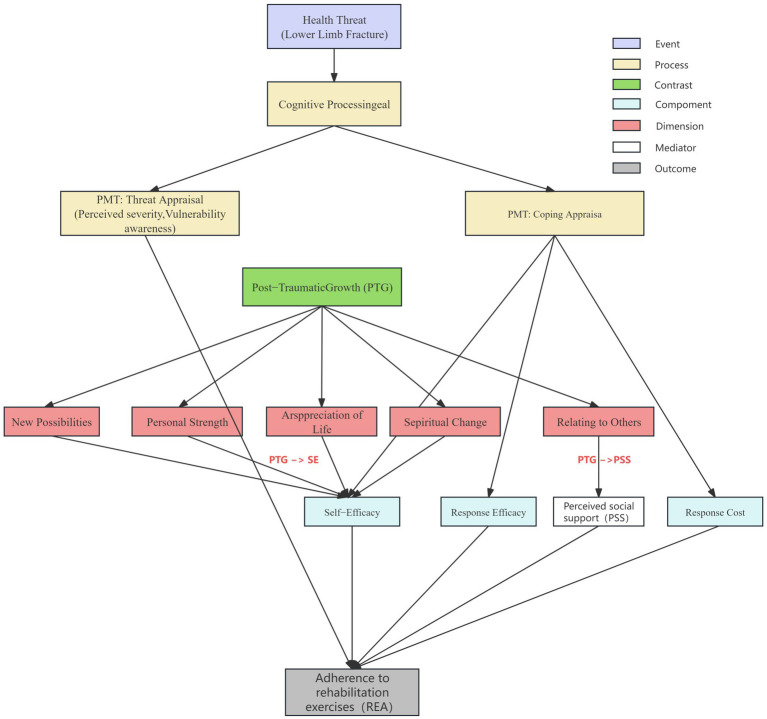 Figure 1
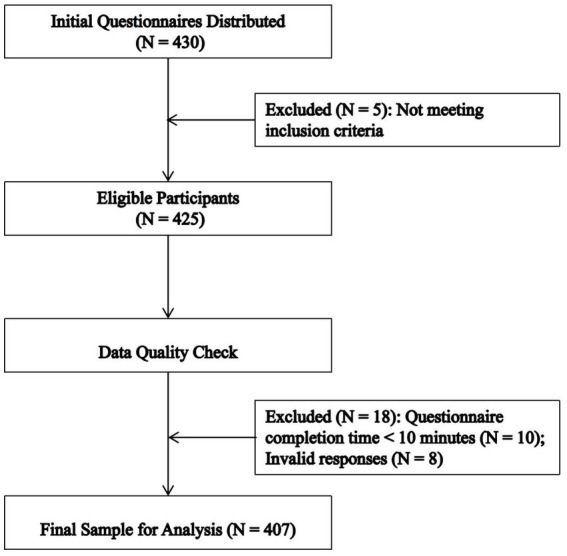 Figure 2
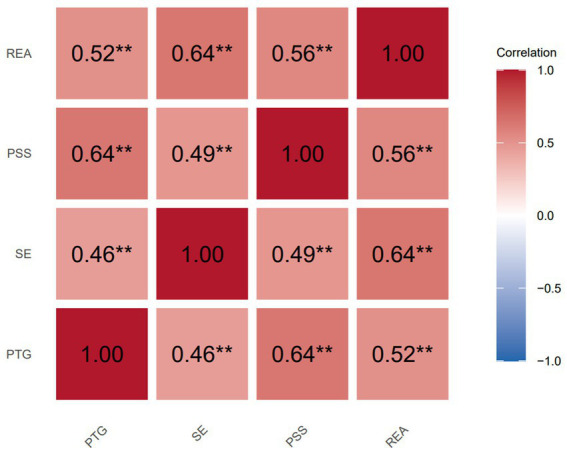 Figure 3
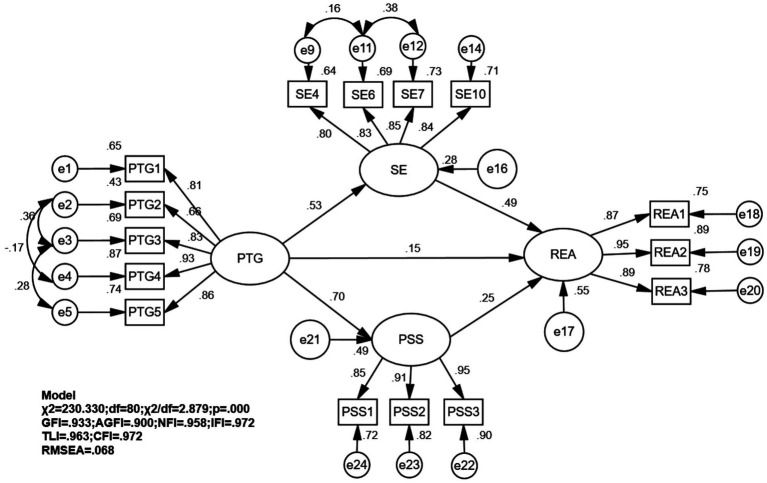 Figure 4
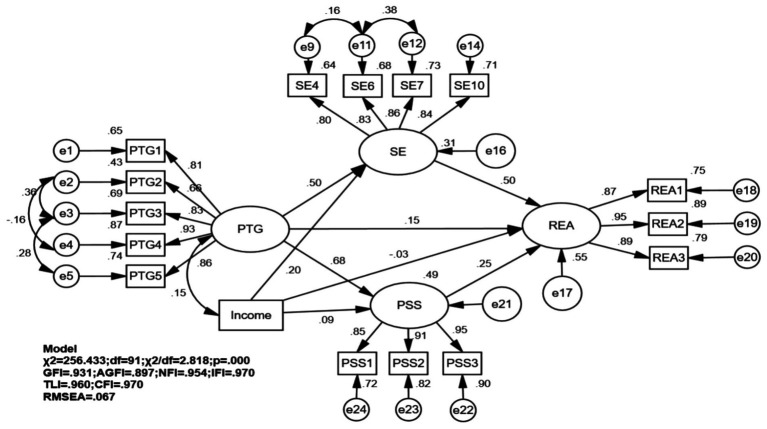 Figure 5
Peer Reviews
No public reviews on file for this paper yet. If you reviewed it on a platform where reviews are public (OpenReview, ICLR, NeurIPS, ICML), you can paste yours below so the community can read it here.
Videos
No videos yet. Explain this paper in a talk, walkthrough, or lecture? Add one.
Taxonomy
TopicsBone fractures and treatments · Hip and Femur Fractures · Trauma and Emergency Care Studies