In vitro comparative analysis of steamed wood and other lignocellulosic substrates on ruminal fermentation and microbiota
Kazuaki Ito, Makoto Adachi, Andrew J. Scheftgen, Garret Suen, Ryo Hiyama, Kazuto Seki, Shintaro Nakai, Rintaro Yano, Takehiro Nishida, Masaaki Hanada, Naoki Fukuma

TL;DR
This study explores how steamed wood and other plant-based materials affect rumen fermentation and microbial communities in a lab setting.
Contribution
The study identifies distinct microbial clusters associated with steamed wood and xylo-oligosaccharides, suggesting their potential as sustainable feed ingredients.
Findings
Steamed woods and xylo-oligosaccharides formed distinct microbial clusters compared to untreated woods and conventional feeds.
Specific genera like Succinivibrio and Selenomonas were dominant in clusters associated with steamed wood and xylo-oligosaccharides.
These substrates enhance fermentability and are linked to unique microbial structures in vitro.
Abstract
Lignocellulosic biomass such as wood is increasingly recognized as a promising low-opportunity-cost feed (LCF) that does not compete with human-edible food. In this study, we evaluated rumen fermentation characteristics and microbial community responses using an in vitro batch culture system with a diverse set of substrates, including steamed and untreated woods, xylo-oligosaccharides, spent mushroom substrates, and conventional feeds. Hierarchical clustering based on bacterial community composition revealed five distinct microbial clusters. Certain steamed woods and xylo-oligosaccharides formed separate clusters from untreated woods and conventional feeds, and were associated with the dominance of specific genera such as Succinivibrio and Selenomonas. These microbial shifts may reflect differences in substrate characteristics, potentially related to hemicellulose- and…
Genes, proteins, chemicals, diseases, species, mutations and cell lines named across the full text — each resolved to its canonical identifier and authoritative record.
Click any figure to enlarge with its caption.
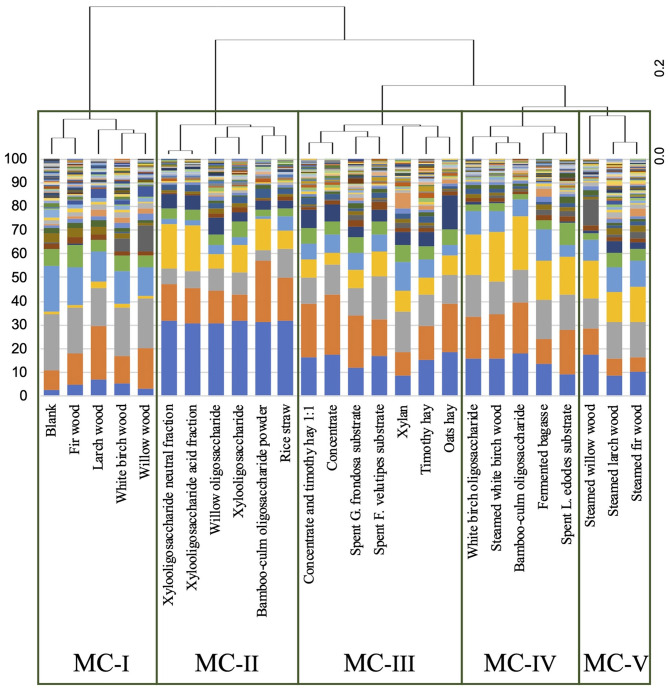 Figure 1
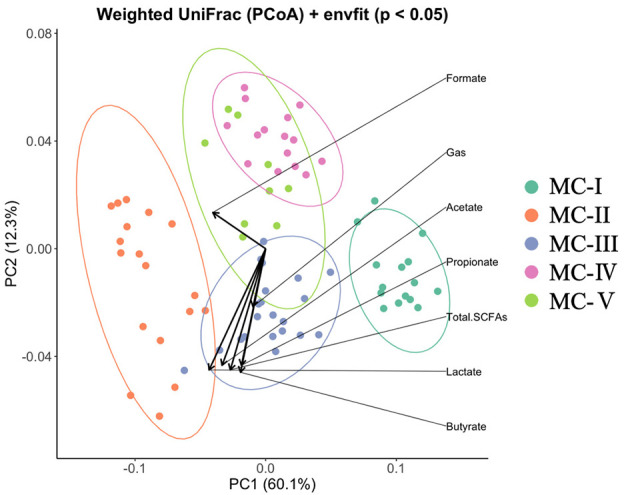 Figure 2
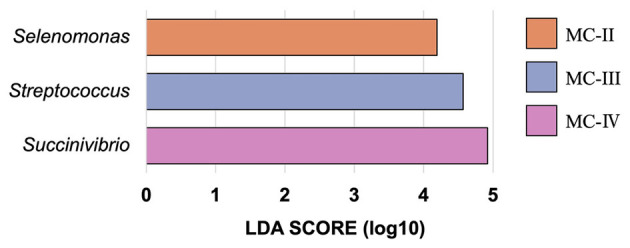 Figure 3
Peer Reviews
No public reviews on file for this paper yet. If you reviewed it on a platform where reviews are public (OpenReview, ICLR, NeurIPS, ICML), you can paste yours below so the community can read it here.
Videos
No videos yet. Explain this paper in a talk, walkthrough, or lecture? Add one.
Taxonomy
TopicsRuminant Nutrition and Digestive Physiology · Agriculture Sustainability and Environmental Impact · Agroforestry and silvopastoral systems