Estimating Organism Abundance Using Within‐Sample Haplotype Frequencies of eDNA Data
Pedro F. P. Brandão‐Dias, Gledis Guri, Megan R. Shaffer, Elizabeth Andruszkiewicz Allan, Ryan P. Kelly

TL;DR
This paper introduces a new method to estimate the number of organisms in a sample using eDNA by analyzing haplotype frequency deviations.
Contribution
A novel maximum likelihood estimator is introduced to infer organism abundance from eDNA data without needing tissue-derived references.
Findings
Accurate estimates of contributors are possible with variable haplotypes and well-characterized population frequencies.
Simulations show the method performs well under realistic noise and haplotype distribution scenarios.
The approach assumes a single, panmictic population for accurate inference.
Abstract
Environmental DNA (eDNA) provides powerful insights into species presence and community composition but remains limited in its capacity to infer species abundance or population structure. Here, we show that the deviation between within‐sample haplotype frequencies and the overall population‐level haplotype frequencies can be used to estimate the number of individual contributors to a given sample. We first establish the theoretical framework for approximating population haplotype frequencies directly from eDNA data, enabling application even in the absence of tissue‐derived references. Building on this foundation, we introduce a maximum likelihood estimator to infer the number of contributors and assess its performance through simulations spanning a range of haplotype frequency distributions and noise scenarios. These approaches assume that all samples are drawn from a single, panmictic…
Genes, proteins, chemicals, diseases, species, mutations and cell lines named across the full text — each resolved to its canonical identifier and authoritative record.
Click any figure to enlarge with its caption.
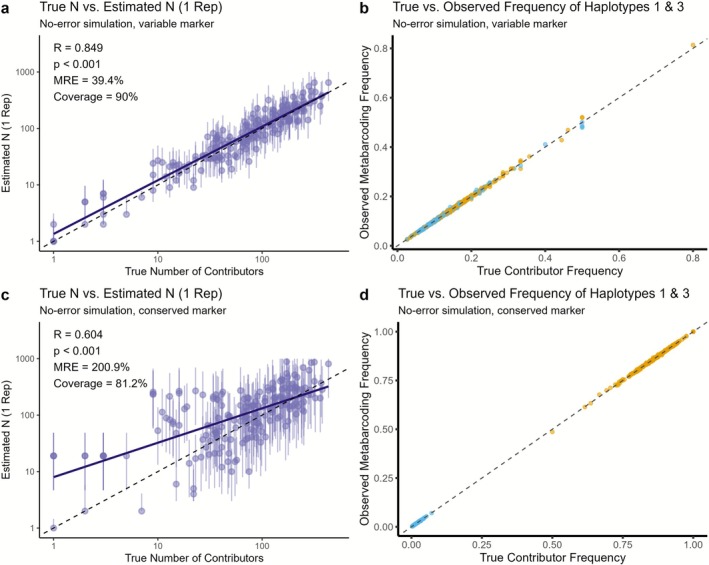 Figure 1
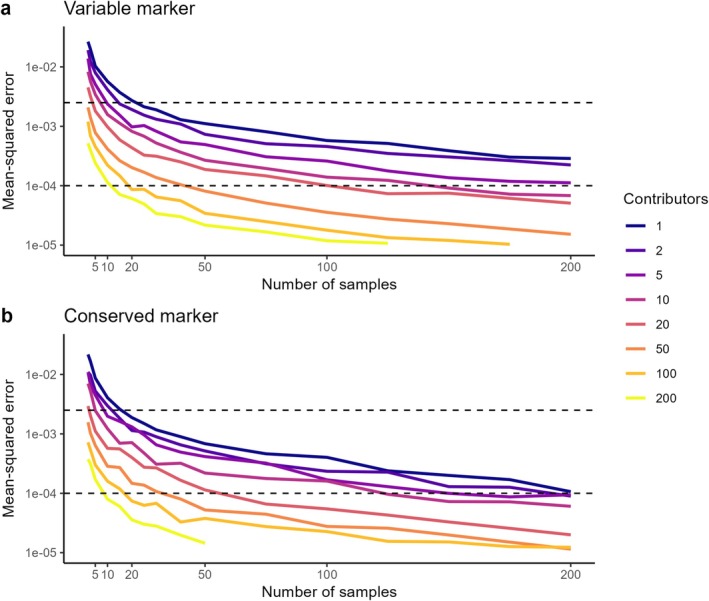 Figure 2
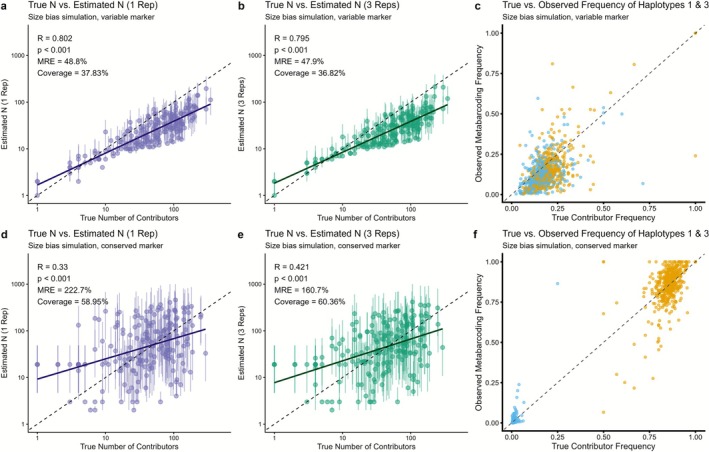 Figure 3
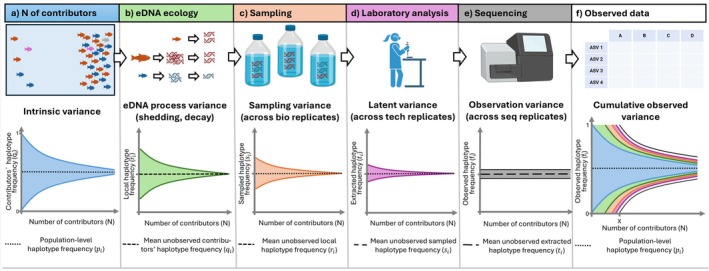 Figure 4
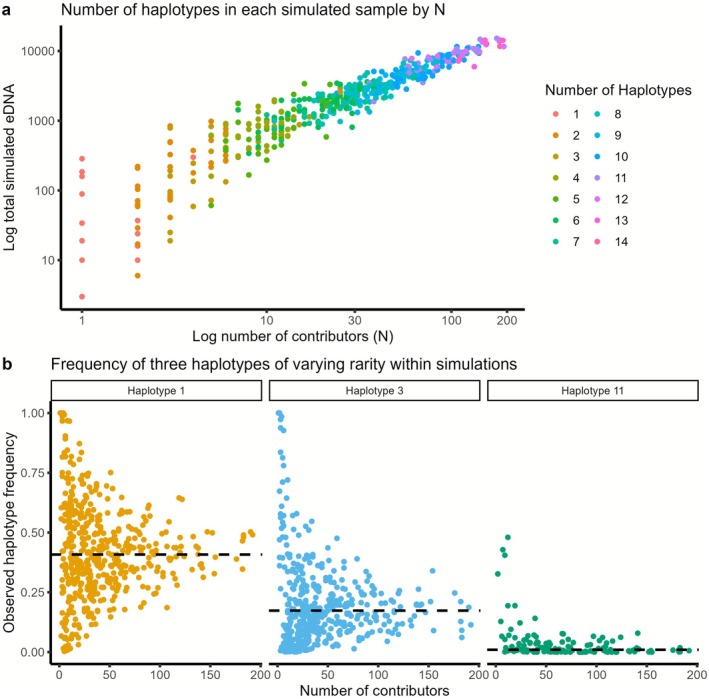 Figure 5
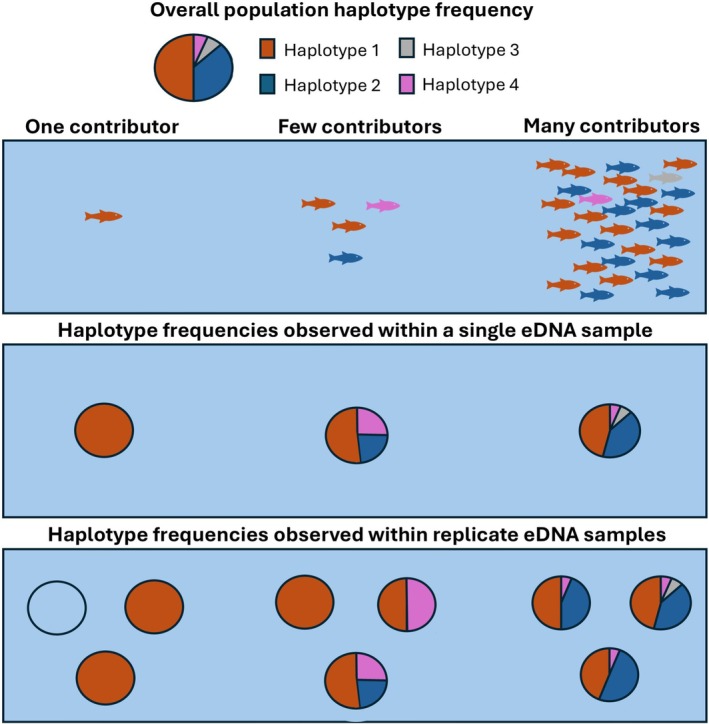 Figure 6
Peer Reviews
No public reviews on file for this paper yet. If you reviewed it on a platform where reviews are public (OpenReview, ICLR, NeurIPS, ICML), you can paste yours below so the community can read it here.
Videos
No videos yet. Explain this paper in a talk, walkthrough, or lecture? Add one.
Taxonomy
TopicsEnvironmental DNA in Biodiversity Studies · Cancer Genomics and Diagnostics · Protist diversity and phylogeny