A Mixed‐Reality Navigation Simulator for Training Infiltration Procedures of the Spine: Evaluation in Kambin Triangle Location
César F. Domínguez‐Velasco, Jessica Alatorre‐Flores, Jorge A. Pérez‐Terrazas, Efrain Albor‐Ramírez, Felipe Camarillo‐Juárez, Marino A. Capurso‐García, Fabrizio Cutolo, Vincenzo Ferrari, Miguel A. Padilla‐Castañeda

TL;DR
A mixed-reality simulator was developed to train spine infiltration procedures, showing improved success and understanding for residents.
Contribution
A mixed-reality navigation simulator combining virtual fluoroscopy and 3D-printed models for spine infiltration training.
Findings
Residents had more infiltration success using MR compared to virtual fluoroscopy alone.
Residents reported better understanding of anatomy and easier target point location with MR guidance.
Higher risky contacts at nerve roots were observed under MR conditions.
Abstract
During minimally invasive surgeries, the Kambin Triangle infiltration procedure is primarily used as a safe anatomical access route to critical spine structures. Inadequate location of final infiltrations can be critical for inexperienced residents. A mixed reality (MR) navigator simulator for spine infiltration was developed. It combines virtual fluoroscopy simulation (FS) and augmented reality views with 3D‐printed lumbar spine patient models. Ten residents of orthopaedics tested the system. Residents showed more infiltration success under MR than FS but with higher risky contacts at the nerve roots. Residents reported an improved understanding of the anatomy and clinical case during MRI guidance and greater ease in locating target points in this condition. The results demonstrate the advantages of combining MR with FS for training minimally invasive spinal procedures to…
Genes, proteins, chemicals, diseases, species, mutations and cell lines named across the full text — each resolved to its canonical identifier and authoritative record.
Click any figure to enlarge with its caption.
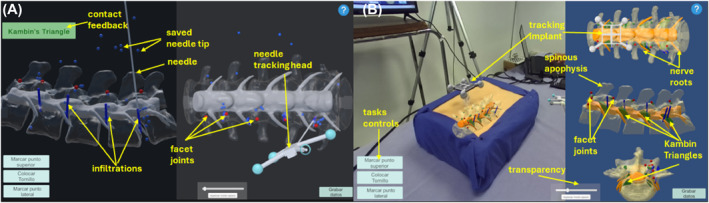 Figure 1
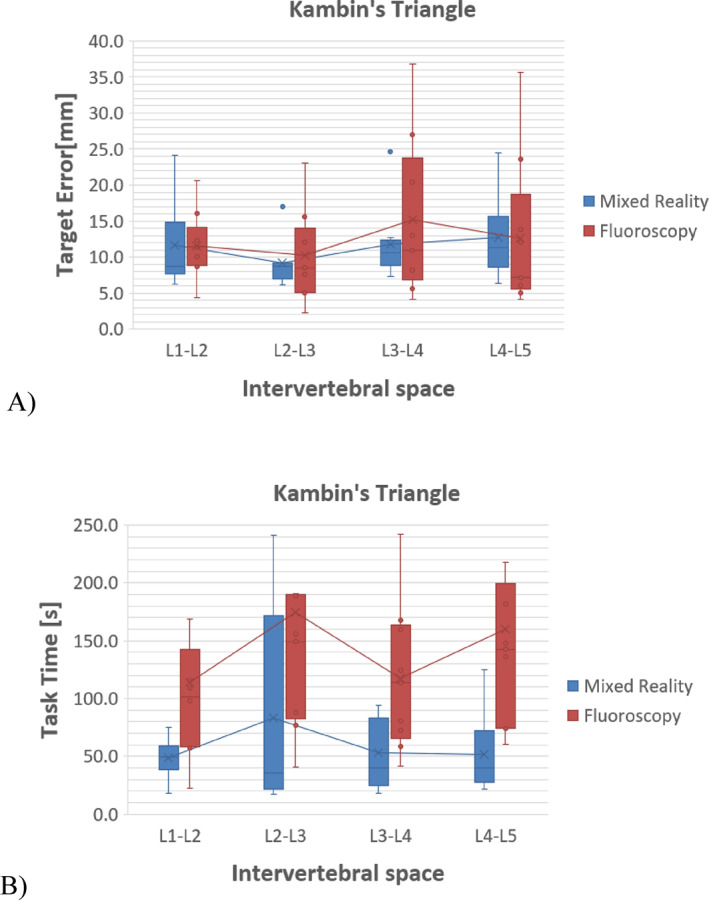 Figure 2
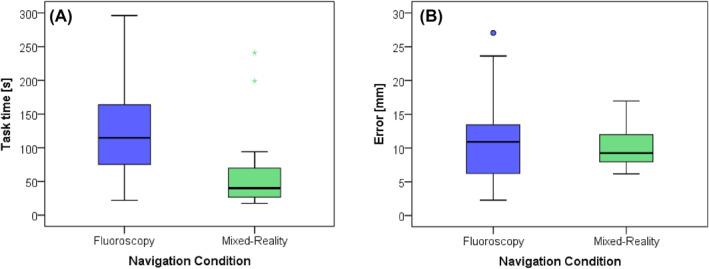 Figure 3
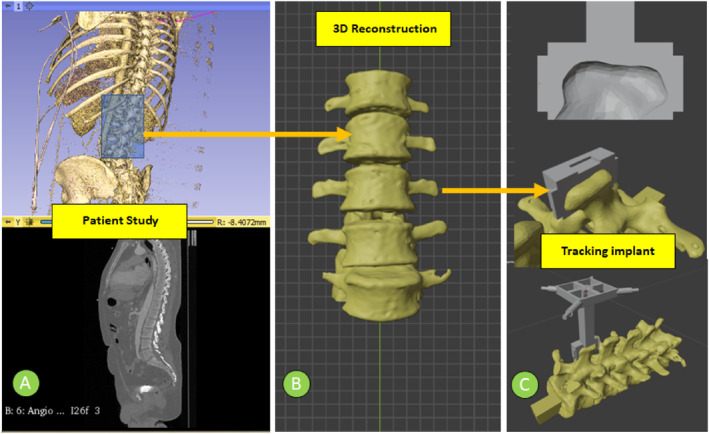 Figure 4
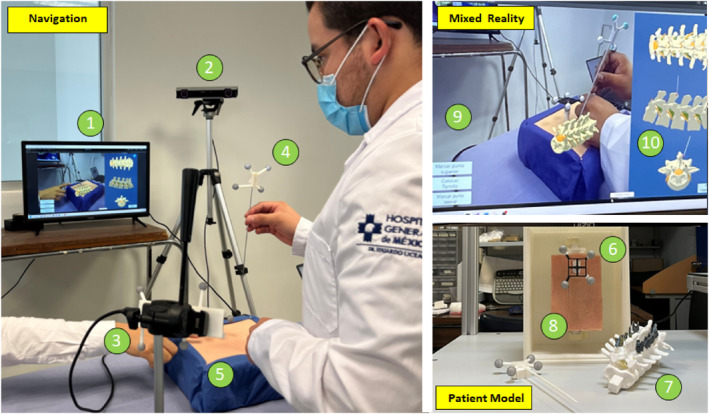 Figure 5
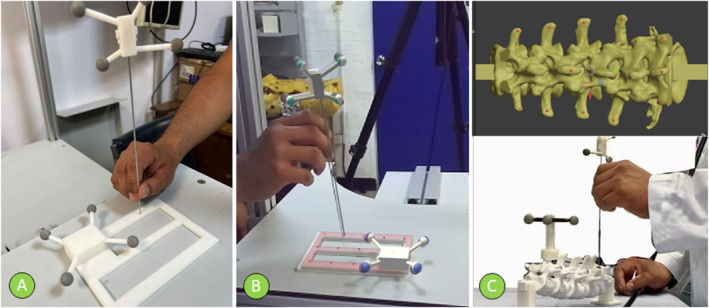 Figure 6
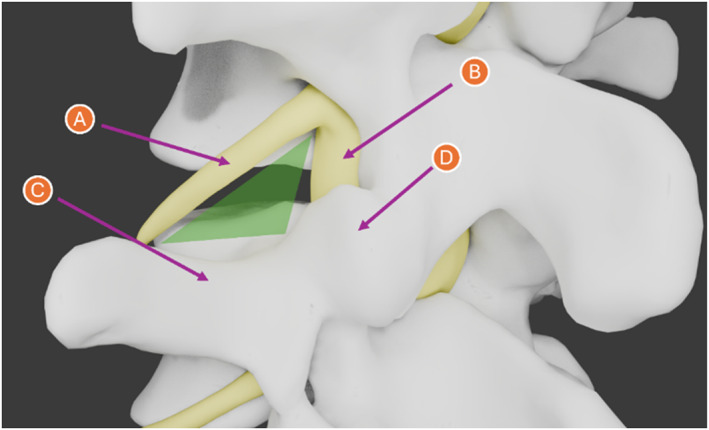 Figure 7
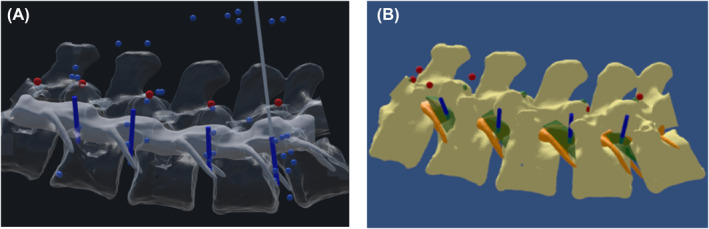 Figure 8
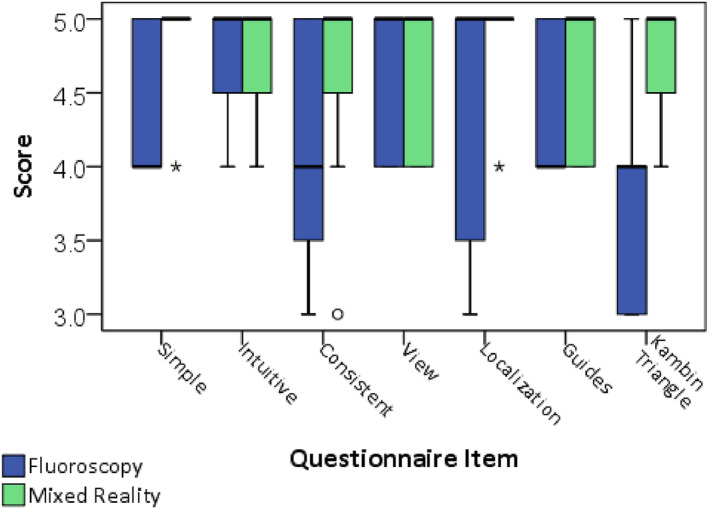 Figure 9
Peer Reviews
No public reviews on file for this paper yet. If you reviewed it on a platform where reviews are public (OpenReview, ICLR, NeurIPS, ICML), you can paste yours below so the community can read it here.
Videos
No videos yet. Explain this paper in a talk, walkthrough, or lecture? Add one.
Taxonomy
TopicsSurgical Simulation and Training · Spinal Fractures and Fixation Techniques · Augmented Reality Applications