Parental gender inequality and their children’s educational attainment, quality of life and mental health: An analysis from the Pelotas 1993 birth cohort in Brazil
Nicolas A. Crossley, Leticia Czepielewski, Ana M.B. Menezes, Fernando Wehrmeister, Clarissa S. Gama, Manjing Gao

TL;DR
This study shows that more equal parental relationships are linked to better education, quality of life, and mental health in children.
Contribution
The study introduces a Couple’s Gender Inequality Index (CGII) to assess how parental gender equality affects child development.
Findings
Higher CGII scores correlate with better educational attainment in both genders.
Greater parental equality is linked to improved quality of life in 18-year-olds.
Higher CGII is associated with lower depression risk in adolescents.
Abstract
Gender, as a sociostructural factor, may shape child development through social norms that influence family dynamics. We examined whether more egalitarian parental relationships are associated with better developmental outcomes. Using data from the Pelotas 1993 birth cohort (Brazil), we adapted a population-level gender inequality metric to characterise parental relationships. The Couple’s Gender Inequality Index (CGII) was derived from maternal health, parental education and income. Associations between CGII and educational attainment, quality of life, and depression at age 18 were assessed using linear regression models adjusted for family income, gestational age, birth weight, parental cohabitation and race. The sample comprised 2,852 participants (1,446 women). Higher CGII scores, indicating greater equality within couples, were associated with significantly higher educational…
Genes, proteins, chemicals, diseases, species, mutations and cell lines named across the full text — each resolved to its canonical identifier and authoritative record.
Click any figure to enlarge with its caption.
 Figure 1
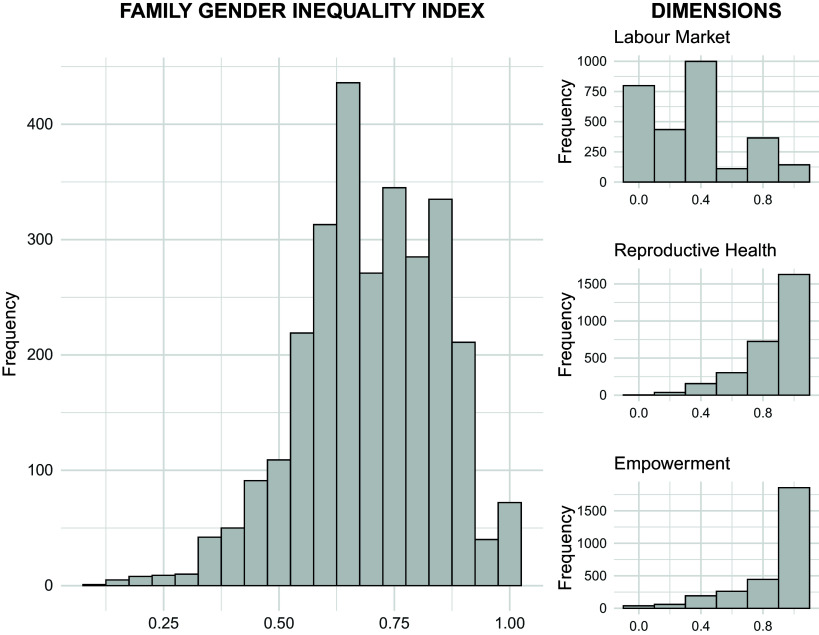 Figure 1
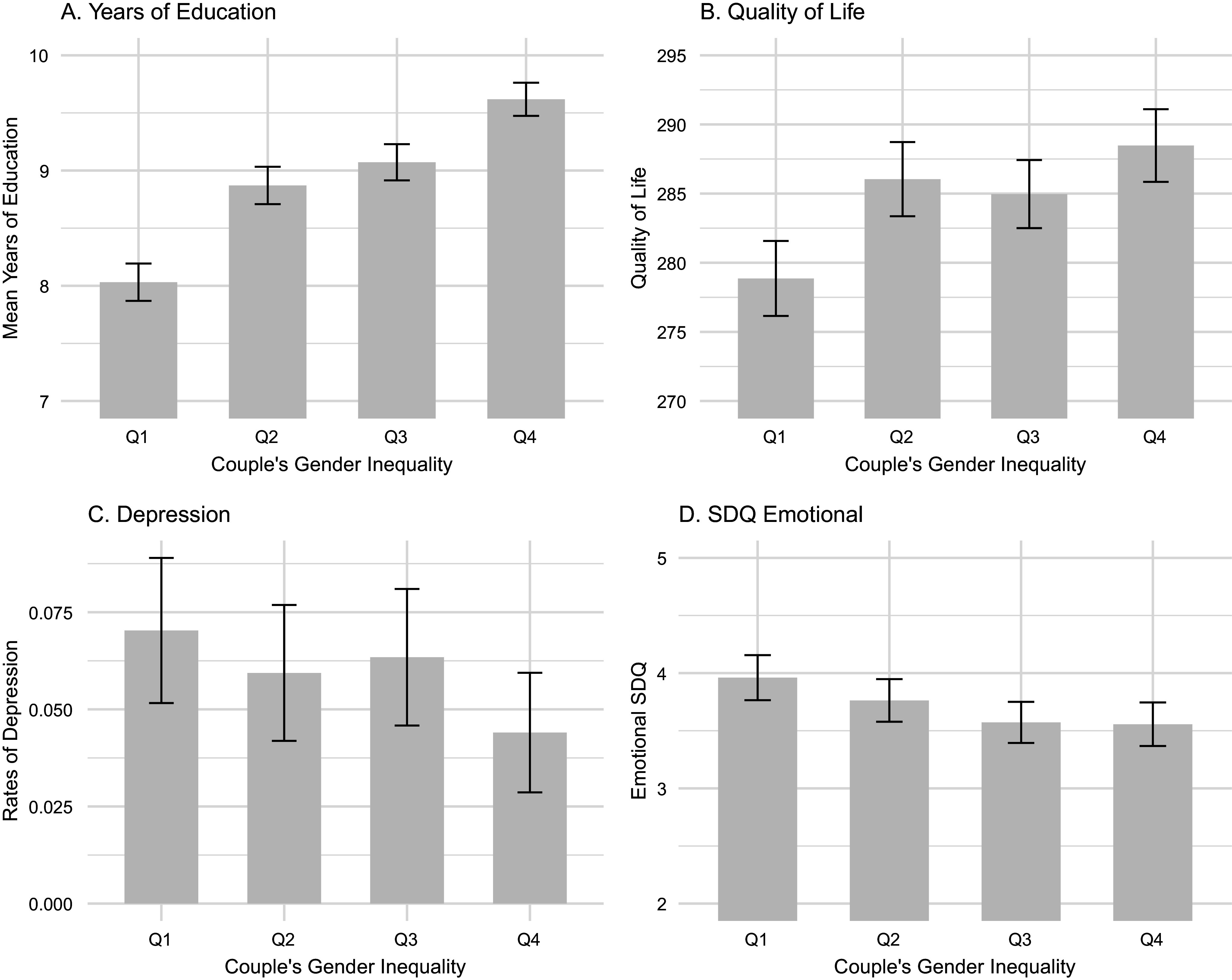 Figure 2
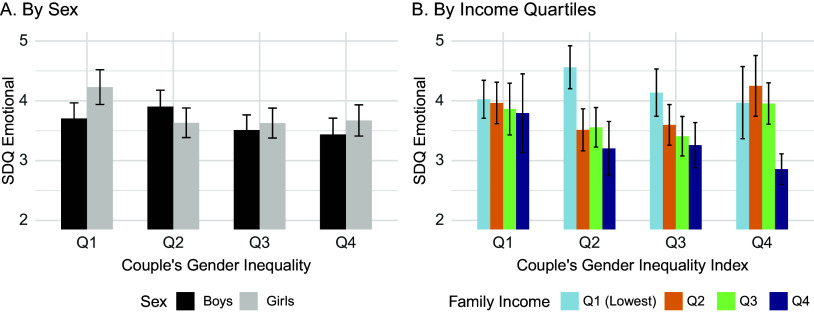 Figure 3
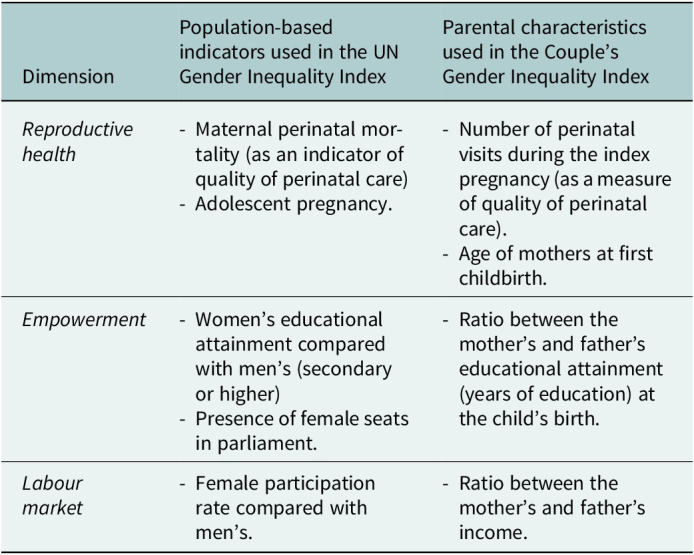 Figure 5
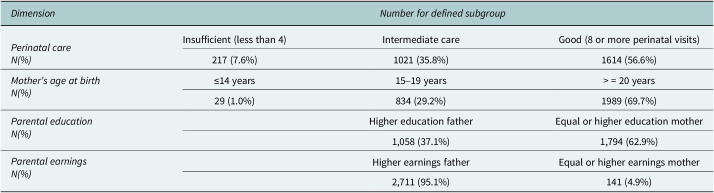 Figure 6
Peer Reviews
No public reviews on file for this paper yet. If you reviewed it on a platform where reviews are public (OpenReview, ICLR, NeurIPS, ICML), you can paste yours below so the community can read it here.
Videos
No videos yet. Explain this paper in a talk, walkthrough, or lecture? Add one.
Taxonomy
TopicsFamily Dynamics and Relationships · Demographic Trends and Gender Preferences · Health disparities and outcomes