Carbon-11 Isotopic Radiolabeling of CP31398 and Development of a Fluorine-18 Derivative to Target Protein p53 with PET Imaging
Sébastien Beuché, Soizic Martin Aubert, Philippe Robin, Caroline Denis, Denis Servent, Bertrand Kuhnast, Charles Truillet, Fabien Caillé

TL;DR
Researchers developed two PET radiotracers based on CP31398 to target mutant p53 in cancer, but found they bind to an unknown target instead.
Contribution
The study introduces novel carbon-11 and fluorine-18 radiolabeled derivatives of CP31398 for potential p53 imaging.
Findings
Both [11C]CP31398 and [18F]FG-CP31398 were synthesized with acceptable radiochemical yields and molar activities.
Binding experiments showed [18F]FG-CP31398 binds to cells with some specificity but not directly to p53.
Autoradiography revealed unexpected binding to p53-negative cells, suggesting an alternative target.
Abstract
Mutant protein p53, a central driver of pro-oncological deregulations, is widely recognized as a biomarker of cancer aggressiveness and therapy resistance. In a personalized medicine perspective, positron emission tomography (PET) imaging of mutant p53 would be a powerful tool for patient stratification and drug development. However, to date, no PET radiotracers directly targeting mutant p53 have been reported. Inspired by the CP31398 drug, which stabilizes p53 conformation and treats tumors expressing mutant p53, we designed two novel PET radiotracers labeled with either carbon-11 by isotopic labeling or fluorine-18, namely [11C]CP31398 and [18F]FG-CP31398. The nonradioactive fluorinated analogue was synthesized, as well as the two radiolabeling precursors. Optimization of the radiomethylation with carbon-11 of the phenol precursor was achieved, and automated radiosynthesis of…
Genes, proteins, chemicals, diseases, species, mutations and cell lines named across the full text — each resolved to its canonical identifier and authoritative record.
Click any figure to enlarge with its caption.
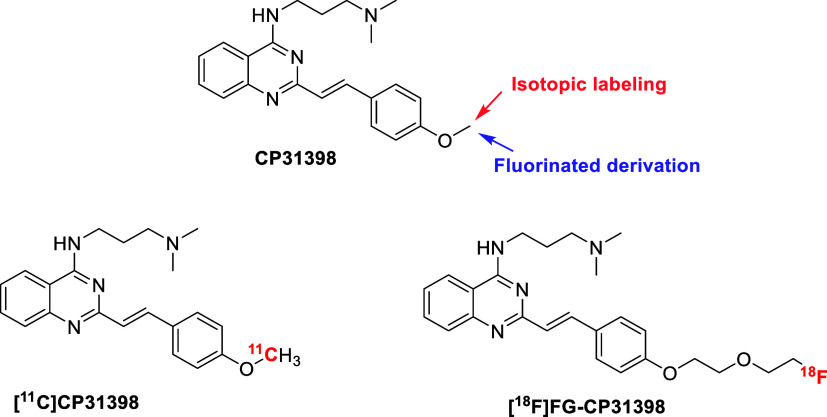 Figure 1
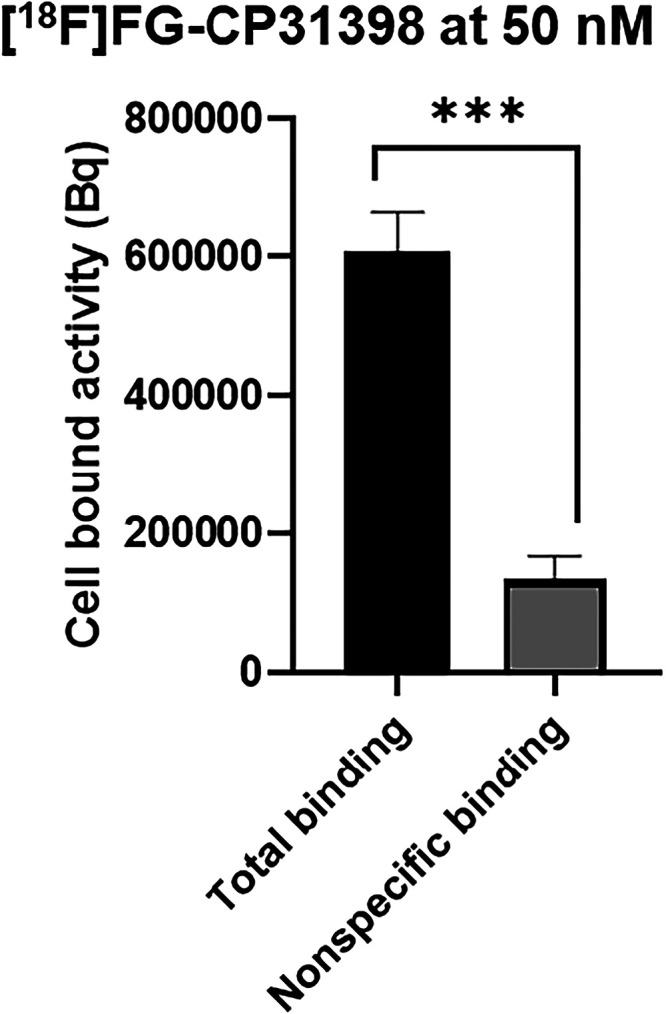 Figure 2
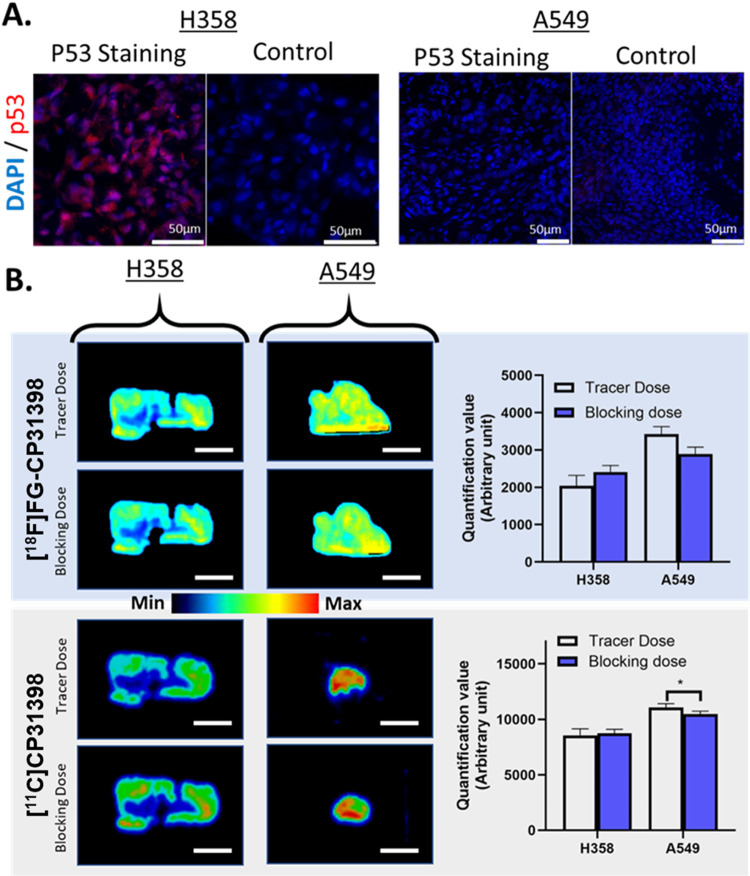 Figure 3
 Figure 4
 Figure 5
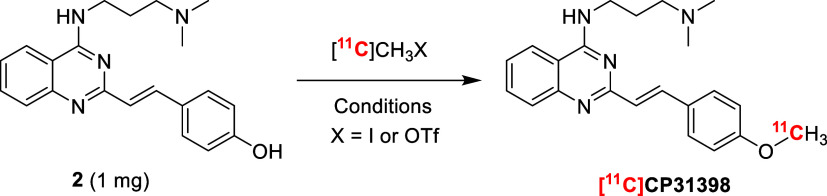 Figure 6
 Figure 7
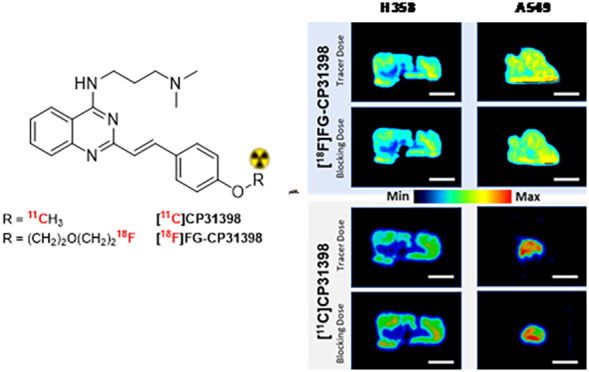 Figure 8
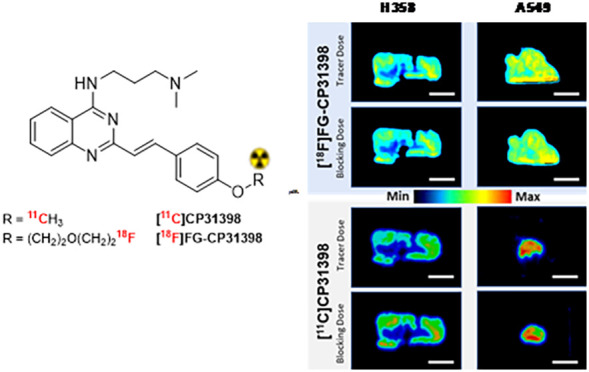 Figure 9
Peer Reviews
No public reviews on file for this paper yet. If you reviewed it on a platform where reviews are public (OpenReview, ICLR, NeurIPS, ICML), you can paste yours below so the community can read it here.
Videos
No videos yet. Explain this paper in a talk, walkthrough, or lecture? Add one.
Taxonomy
TopicsCancer-related Molecular Pathways · Medical Imaging Techniques and Applications · Fluorine in Organic Chemistry