Bioluminescent Immunophage Sensors for the Quantification of Insulin
Brian M. Miller, Brigette Wynne Q. Villamin, Vivian W. Liang, Bilge C. Yildiz, Teodora Nedic, Sanjana Sen, Elliot L. Botvinick, Gregory A. Weiss

TL;DR
A new bioluminescent sensor called BLIPS can detect insulin quickly and accurately, which could improve diabetes diagnosis and treatment.
Contribution
The novel BLIPS platform uses phage-displayed immunosensors with split-nanoluciferase to detect insulin with high specificity and sensitivity.
Findings
BLIPS detects insulin down to 50 pM within minutes.
The sensor has no cross-reactivity with IGF-1 and IGF-2.
The platform uses phage display to solubilize otherwise insoluble antibody fragments.
Abstract
Diagnosis and then therapeutic management of diabetes require accurate, rapid monitoring of key biomarkers. Currently, only glucose levels guide diabetes management. Reliance on one biomarker can lead to diabetes misdiagnosis and improper treatment. However, adding insulin to the diagnostic portfolio could improve patient outcomes. Toward this goal, we report BLIPS (Bioluminescent Immunophage Sensor), an easy-to-produce, point-of-care immunoassay platform for the detection and quantification of insulin. BLIPS combines the highly specific detection capabilities of antibodies, ease of handling and production of phage display, and a reliable, turn-on optical signal of nanoluciferase. Specifically, fragment antigen binding (Fab) regions of an antibody sandwich pair were each genetically fused to split-nanoluciferase fragments to detect insulin via the activity of the reconstituted…
Genes, proteins, chemicals, diseases, species, mutations and cell lines named across the full text — each resolved to its canonical identifier and authoritative record.
Click any figure to enlarge with its caption.
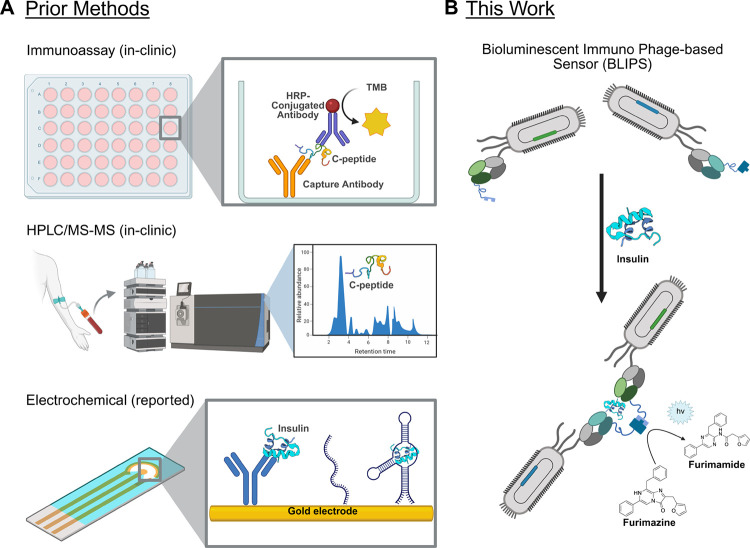 Figure 1
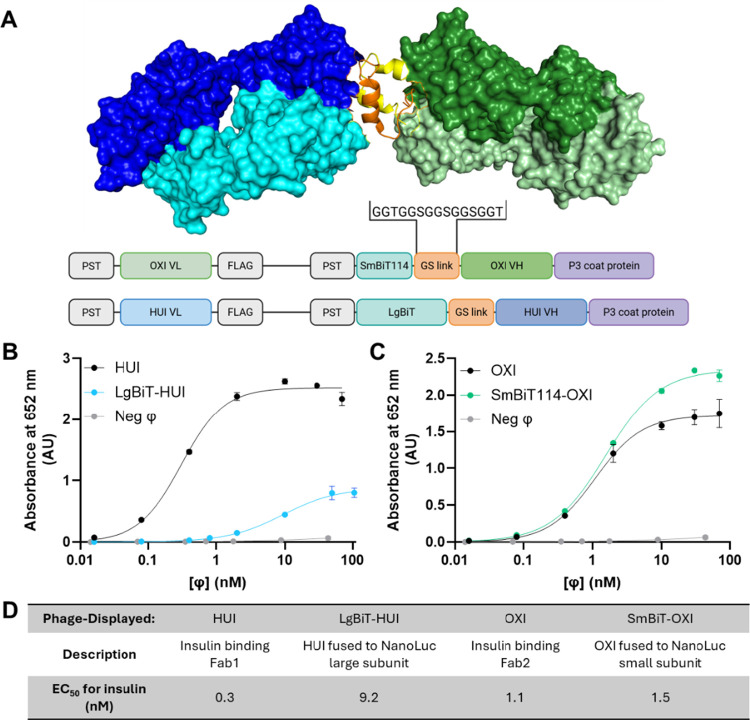 Figure 2
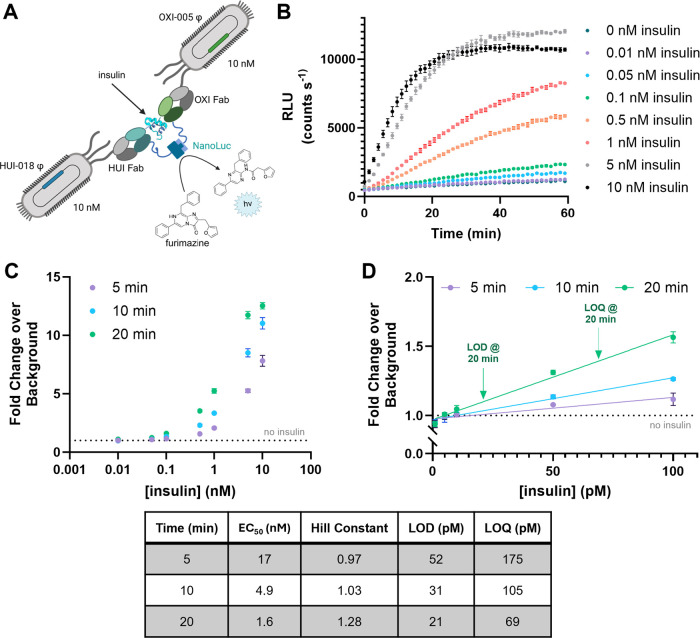 Figure 3
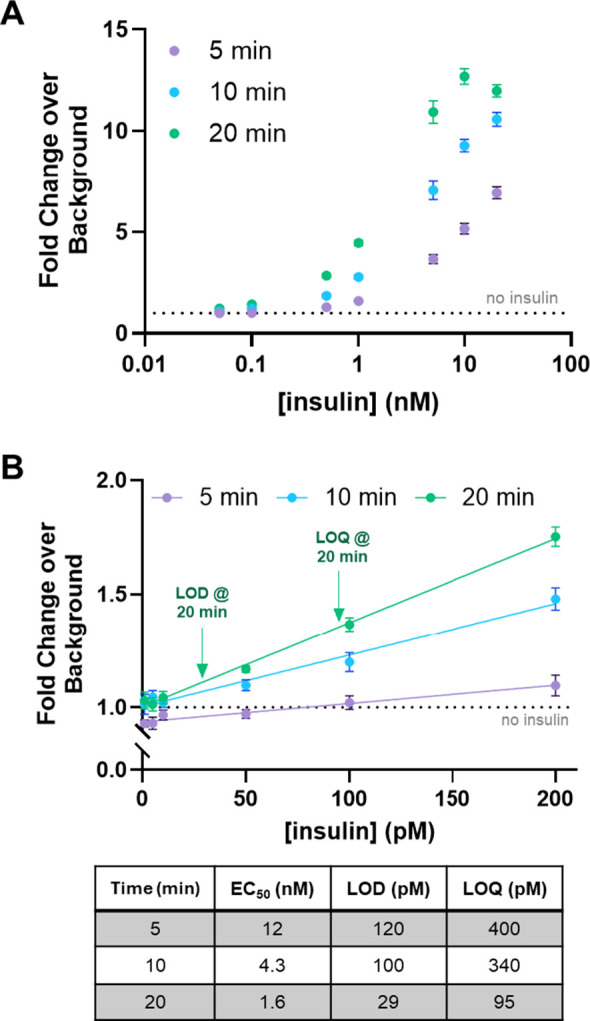 Figure 4
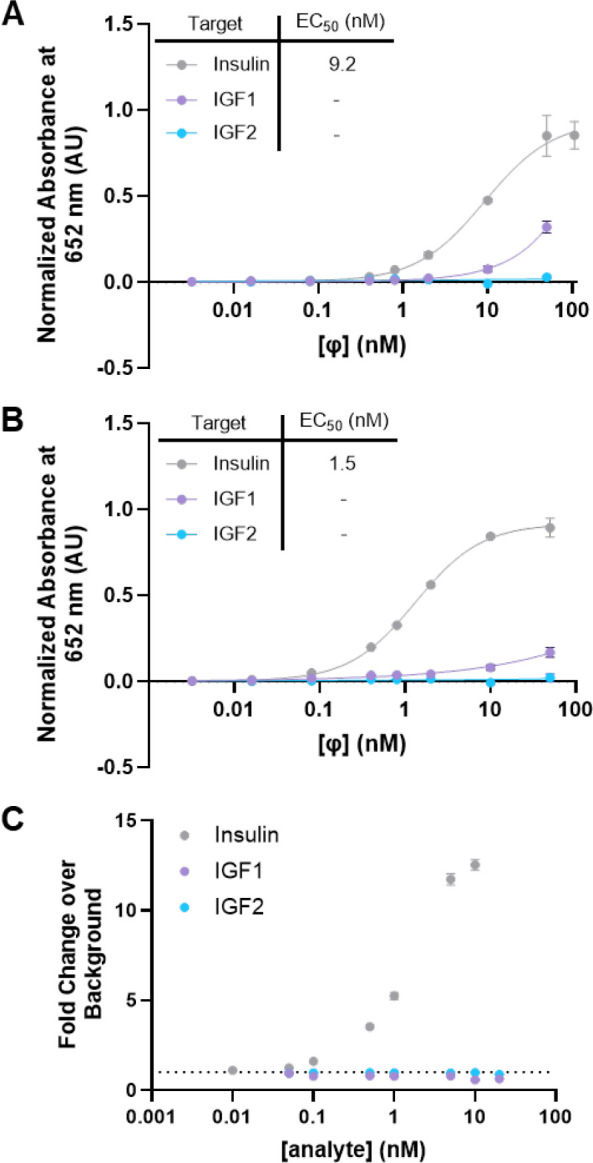 Figure 5
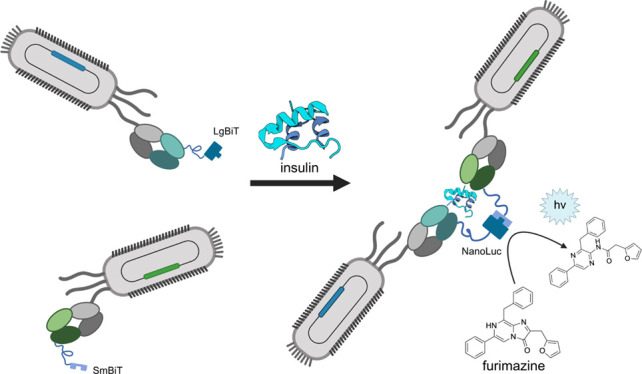 Figure 6
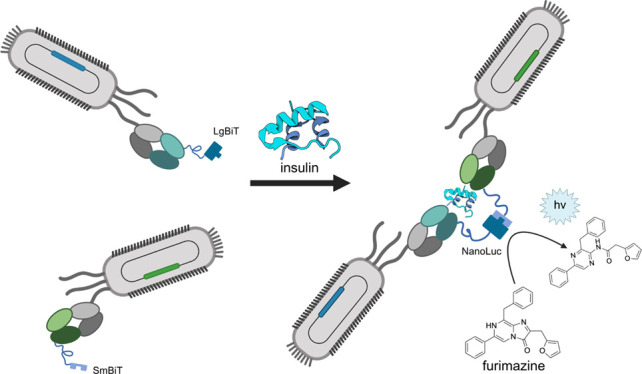 Figure 7
Peer Reviews
No public reviews on file for this paper yet. If you reviewed it on a platform where reviews are public (OpenReview, ICLR, NeurIPS, ICML), you can paste yours below so the community can read it here.
Videos
No videos yet. Explain this paper in a talk, walkthrough, or lecture? Add one.
Taxonomy
TopicsAdvanced Biosensing Techniques and Applications · Biosensors and Analytical Detection · bioluminescence and chemiluminescence research