Purification and Characterization of an Alkaline Lipase from Streptomyces sp. AU-153 and Evaluation of Its Detergent Compatibility
Rukiye Boran Gulen, Aysel Ugur, Nurdan Sarac

TL;DR
Scientists purified a highly active lipase from a Streptomyces bacteria and found it works well in detergents for stain removal at low temperatures.
Contribution
This study is the first to combine ATPS purification with detergent compatibility testing for a Streptomyces lipase.
Findings
The lipase from Streptomyces sp. AU-153 showed high activity (1543 U/mL) and stability in detergent conditions.
ATPS purification achieved an 8-fold purification with 272.7% recovery of the enzyme.
The enzyme effectively removed oil stains in low-temperature washing tests.
Abstract
Detergent-compatible lipases are increasingly valued for their ability to remove stains under low-temperature and environmentally friendly washing conditions. Their industrial applicability depends on achieving high enzyme production, cost-effective purification, and stability within detergent formulations. Here, we report the purification and characterization of a highly active extracellular lipase from Streptomyces sp. AU-153 (1543 U/mL, p-NPP assay). A simplified aqueous two-phase system (ATPS) of poly(ethylene glycol) and sodium chloride achieved 8-fold purification with a recovery of 272.7%. The purified enzyme exhibited optimal activity at pH 8.0 and 40 °C, maintained stability across pH 7–11, and retained substantial activity up to 60 °C. Activity was enhanced by Ca2+, Mg2+, and β-mercaptoethanol, whereas PMSF inhibited activity. The lipase remained stable in various commercial…
Genes, proteins, chemicals, diseases, species, mutations and cell lines named across the full text — each resolved to its canonical identifier and authoritative record.
Click any figure to enlarge with its caption.
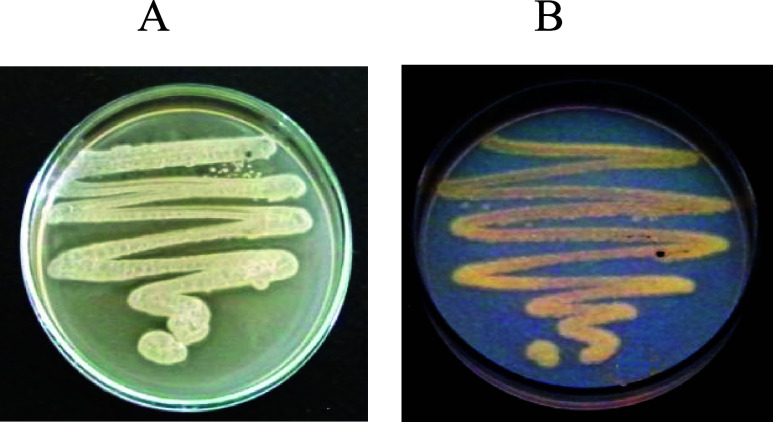 Figure 1
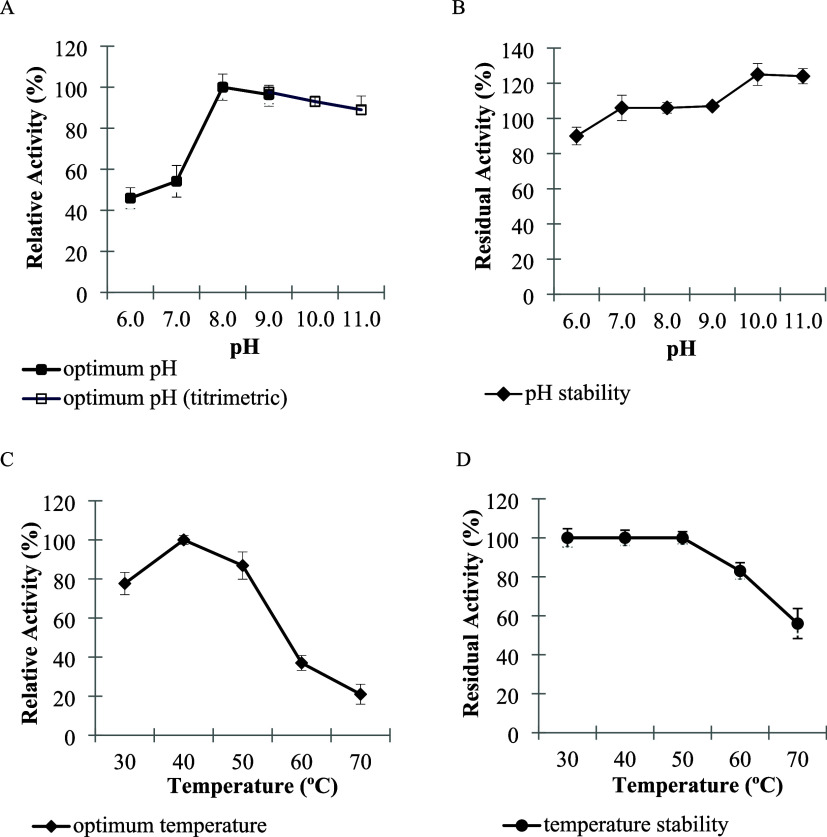 Figure 2
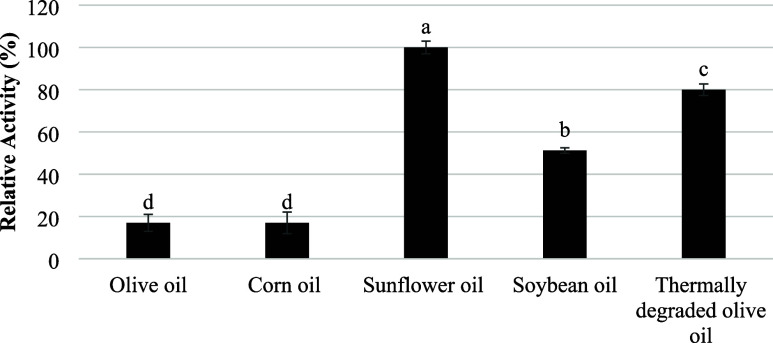 Figure 3
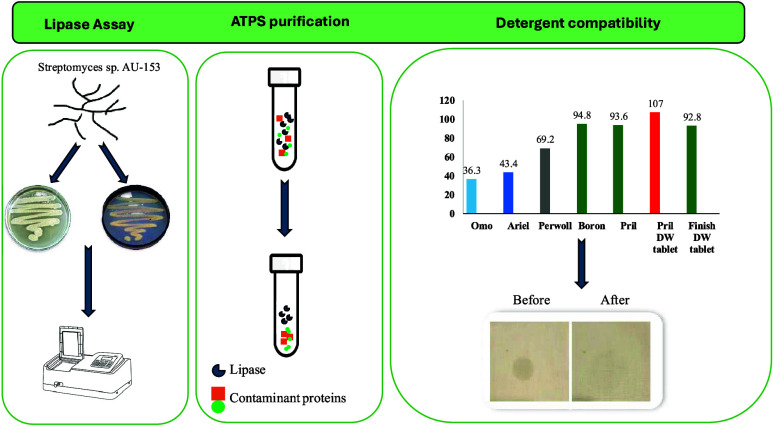 Figure 4
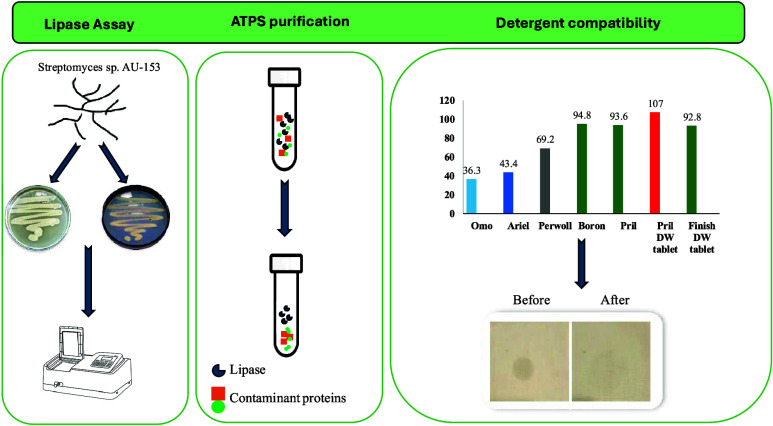 Figure 5
 Figure 6
 Figure 7
 Figure 8
 Figure 9
 Figure 10
 Figure 11
 Figure 12
Peer Reviews
No public reviews on file for this paper yet. If you reviewed it on a platform where reviews are public (OpenReview, ICLR, NeurIPS, ICML), you can paste yours below so the community can read it here.
Videos
No videos yet. Explain this paper in a talk, walkthrough, or lecture? Add one.
Taxonomy
TopicsEnzyme Catalysis and Immobilization · Chemical and Physical Properties in Aqueous Solutions · Microbial Metabolic Engineering and Bioproduction