Zinc-Based Nanoparticles Reduce the Bacterial Burden and Protect Collagen in a Mouse Cutaneous Wound Model
Rafael Bianchini Fulindi, Thulio Wliandon Lemos Barbosa, Vanessa Enriquez, Claudia L. Charles-Niño, Natália Galvão de Freitas, Mariana Picchi Salto, Leila Aparecida Chiavacci, Sebastião Pratavieira, João Pessoa Araújo Junior, Paulo Inácio da Costa, Luis R. Martinez

TL;DR
Zinc nanoparticles reduce bacteria in skin wounds and protect collagen in mice, offering a new approach for wound treatment.
Contribution
Zinc sulfide nanoparticles disrupt biofilms and protect collagen in mouse wounds, showing dual therapeutic potential.
Findings
Zinc sulfide nanoparticles effectively disrupt bacterial biofilms and reduce bacterial burden in mouse skin wounds.
ZnS nanoparticles inhibit collagen degradation and maintain collagen levels in wound tissue.
ZnS nanoparticles downregulate genes involved in Pseudomonas aeruginosa biofilm formation.
Abstract
The persistent threat of multidrug-resistant bacteria, particularly within biofilms, continues to undermine conventional antimicrobial therapies. In this study, we explored the potential of zinc oxide (ZnO) and zinc sulfide (ZnS) nanoparticles (NPs) as alternative strategies to target clinically relevant bacteria such as Staphylococcus aureus, Klebsiella oxytoca, and Pseudomonas aeruginosa. Both NPs exhibited effective antibacterial activity against planktonic forms, with ZnO more potent in vitro. However, ZnS-NPs were more efficacious in disrupting mature biofilms by compromising their metabolic activity. Scanning electron and confocal microscopy revealed that Zn-NP treatment compromised the structural integrity of the biofilms. ZnS-NPs also triggered a marked downregulation of genes associated with P. aeruginosa exopolysaccharide biosynthesis (e.g., pslA and algC), suggesting specific…
Genes, proteins, chemicals, diseases, species, mutations and cell lines named across the full text — each resolved to its canonical identifier and authoritative record.
Click any figure to enlarge with its caption.
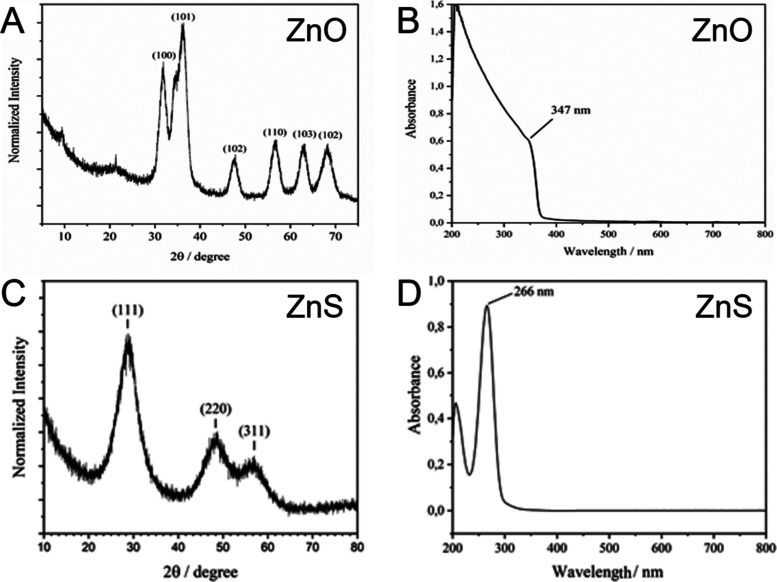 Figure 1
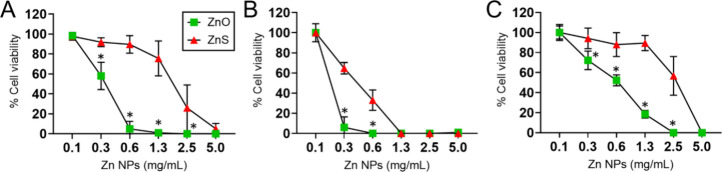 Figure 2
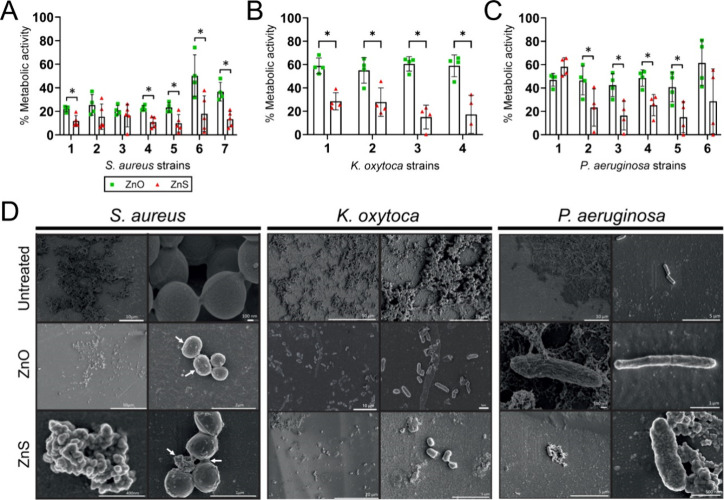 Figure 3
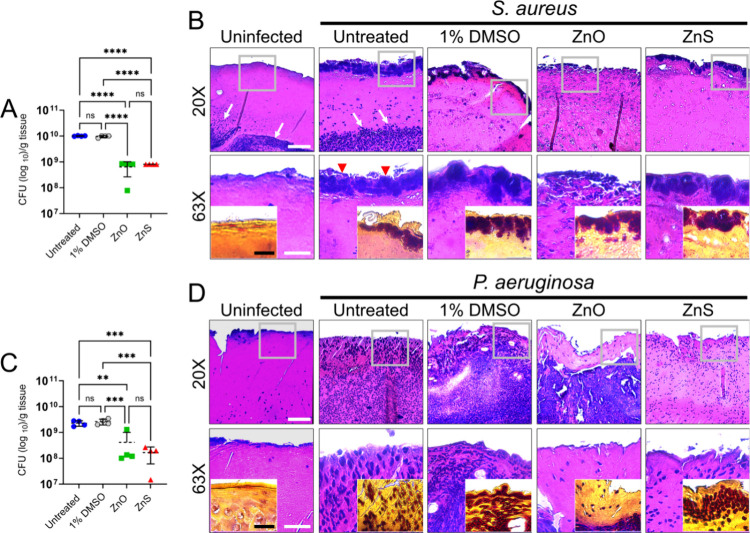 Figure 4
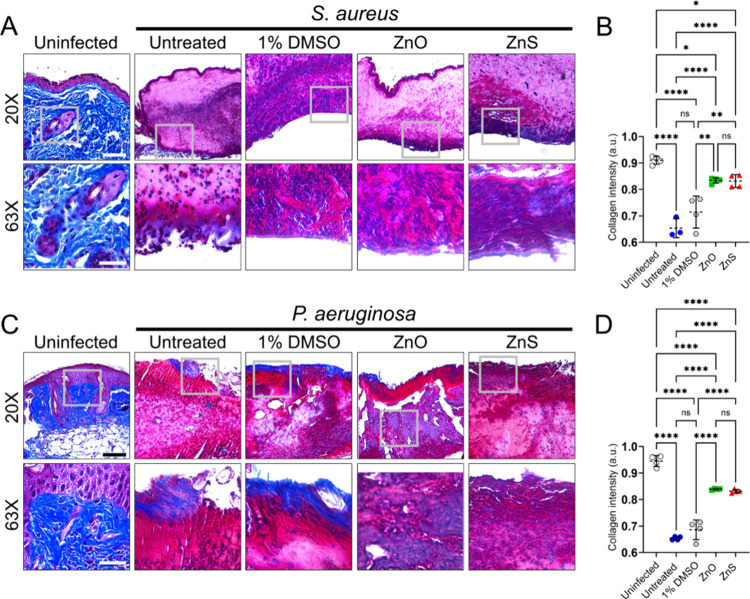 Figure 5
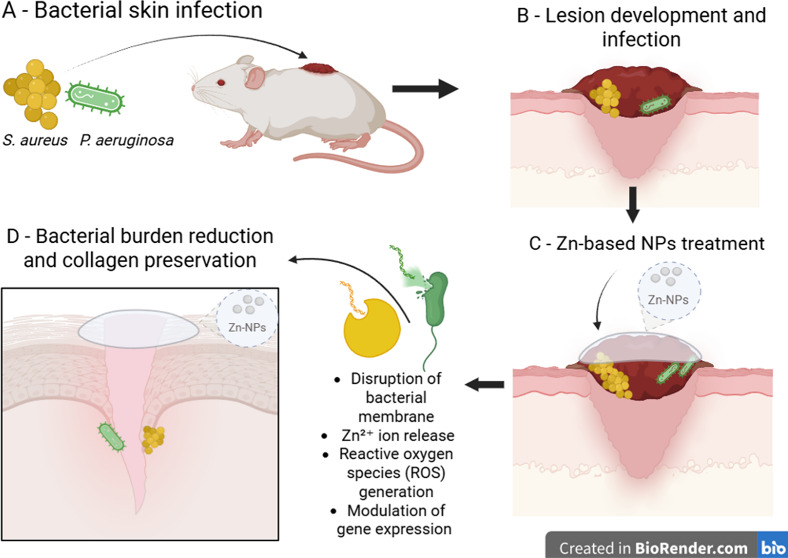 Figure 6
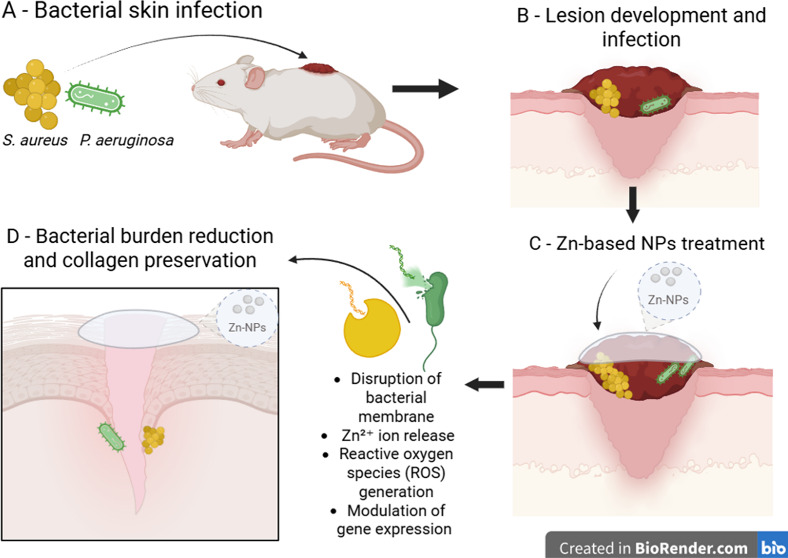 Figure 7
Peer Reviews
No public reviews on file for this paper yet. If you reviewed it on a platform where reviews are public (OpenReview, ICLR, NeurIPS, ICML), you can paste yours below so the community can read it here.
Videos
No videos yet. Explain this paper in a talk, walkthrough, or lecture? Add one.
Taxonomy
TopicsWound Healing and Treatments · Bacterial biofilms and quorum sensing · Collagen: Extraction and Characterization