Domestication‐Admixed Atlantic Salmon ( Salmo salar ) Establish a Productive Population in the Wild
Alison C. Harvey, Øystein Skaala, Francois Besnier, Britt Iren Østebø, Anne Grete Sørvik, Per Tommy Fjeldheim, Laila Unneland, Marine S. O. Brieuc, Fernando Ayllon, Kjell R. Utne, Monica F. Solberg, Kevin A. Glover

TL;DR
Domesticated Atlantic salmon with high admixture can form productive wild populations, challenging previous assumptions about their fitness.
Contribution
First evidence that domestication-admixed salmon can establish productive wild populations.
Findings
Domestication-admixed salmon colonized a river and showed productivity similar to wild populations.
High domestication admixture did not prevent successful population establishment.
Absence of local competition likely facilitated population success.
Abstract
Widespread aquaculture escapes have led to domestication‐admixture in many wild Atlantic salmon populations, widely regarded as a threat to their evolutionary trajectory and persistence amid historically low population numbers. Although decades of research document reduced fitness of domesticated‐admixed offspring in the wild, productivity measurements of domestication‐admixed or feral salmon populations are lacking. Over a 10‐year period, we document colonisation of a river by highly (average 37%) domestication‐admixed salmon using up‐ and downstream traps, genomic data and genetic identification of over 4000 spawners and smolts. Colonisers were identified as strays originating from admixed neighbouring rivers. The resulting population now displays freshwater and marine productivity within ranges observed in wild populations. Our data therefore demonstrate that domestication‐admixed…
Genes, proteins, chemicals, diseases, species, mutations and cell lines named across the full text — each resolved to its canonical identifier and authoritative record.
Click any figure to enlarge with its caption.
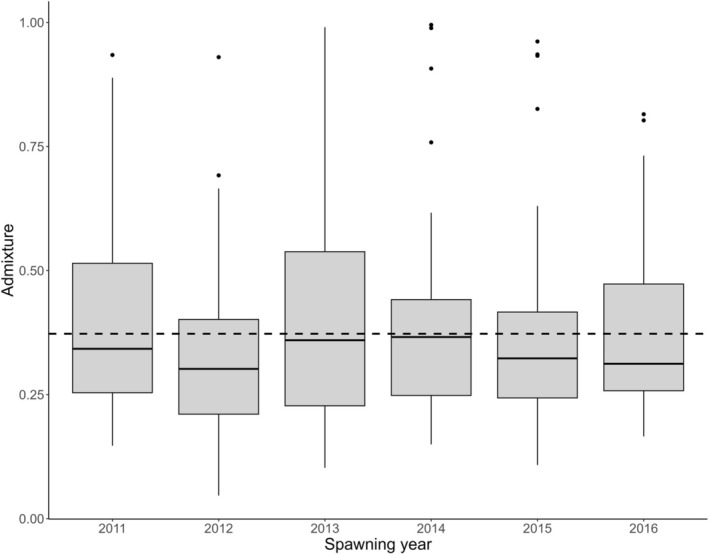 Figure 1
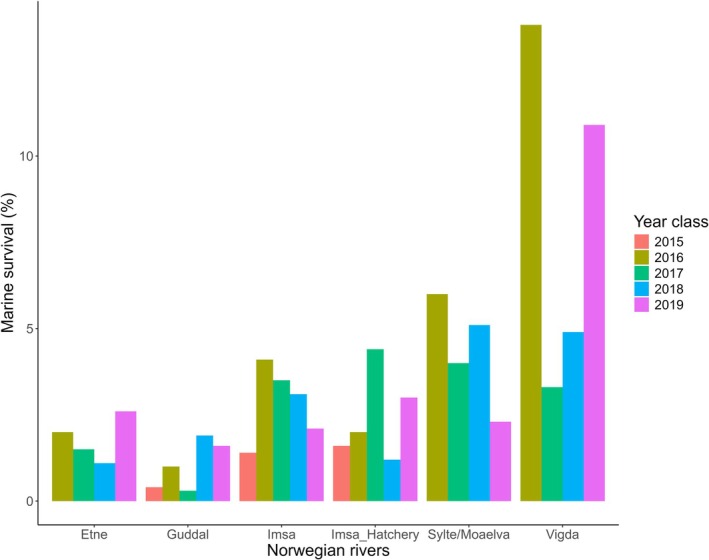 Figure 2
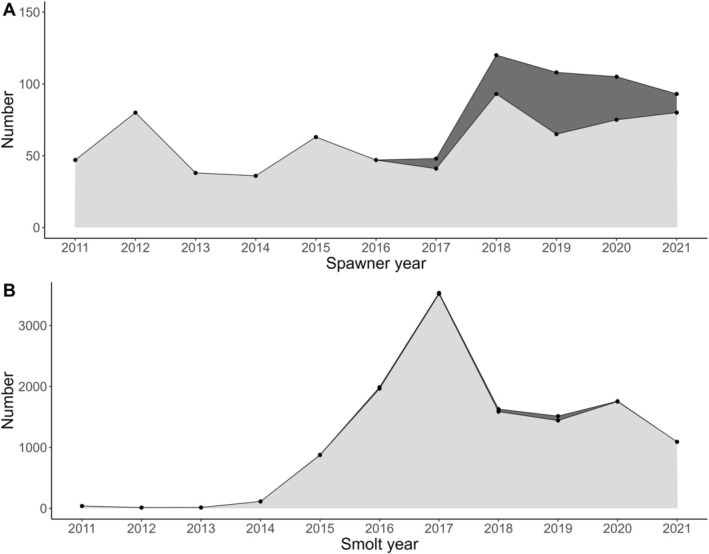 Figure 3
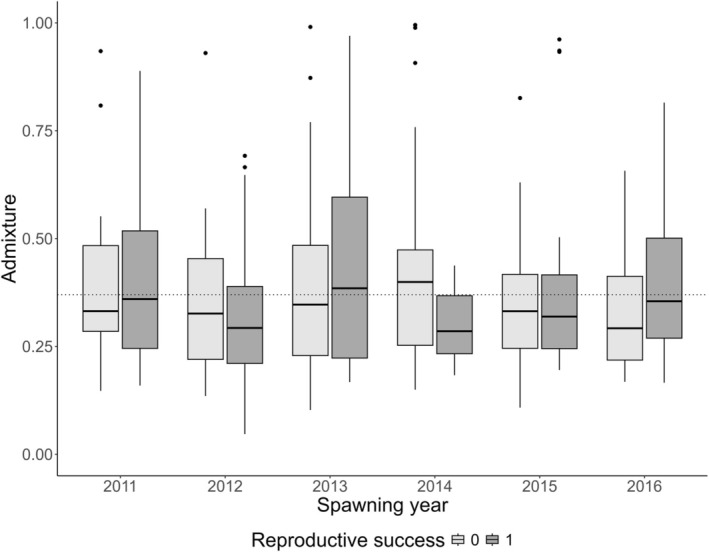 Figure 4
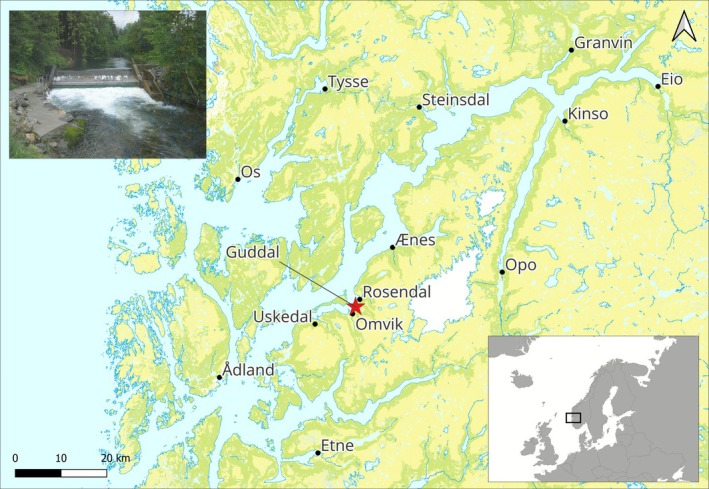 Figure 5
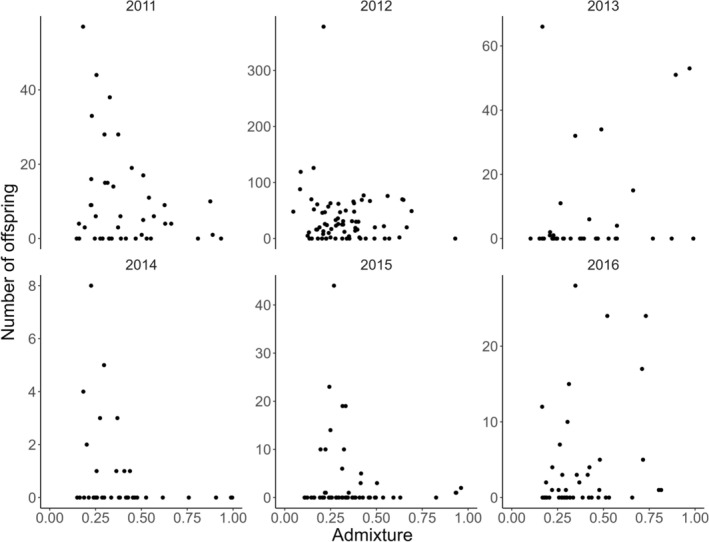 Figure 6
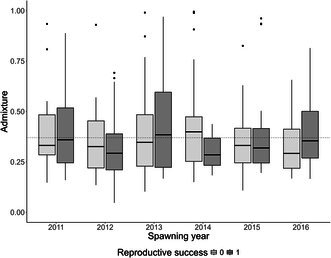 Figure 7
Peer Reviews
No public reviews on file for this paper yet. If you reviewed it on a platform where reviews are public (OpenReview, ICLR, NeurIPS, ICML), you can paste yours below so the community can read it here.
Videos
No videos yet. Explain this paper in a talk, walkthrough, or lecture? Add one.
Taxonomy
TopicsFish Ecology and Management Studies · Reproductive biology and impacts on aquatic species · Marine and fisheries research