Incidence and Predictors of Hypoattenuated Thickening and Device‐Related Thrombus at Three Months Postprocedural CT Assessment Following Left Atrial Appendage Occlusion With Amplatzer Devices—A Single‐Center Cohort
Pierre Guilleminot, Carole Richard, Antoine Roger, Marlène Daller, Gabriel Laurent, Catherine Vergely, Charles Guenancia, Thibaut Pommier

TL;DR
This study examines the occurrence of hypoattenuated thickening and device-related thrombus after left atrial appendage occlusion, finding that clinical factors like female sex and prior stroke are more predictive than anatomical ones.
Contribution
The study identifies clinical predictors of postprocedural complications after LAAO, emphasizing the protective role of dual antiplatelet therapy and the lack of value in anatomical predictors.
Findings
Hypoattenuated thickening occurred in 24% of patients and device-related thrombus in 2.9% at 3 months post-LAAO.
Female sex and prior stroke/TIA were significantly associated with hypoattenuated thickening.
Dual antiplatelet therapy was linked to a lower incidence of hypoattenuated thickening and device-related thrombus.
Abstract
Left atrial appendage occlusion (LAAO) has become a valuable alternative to long‐term anticoagulation for stroke prevention in patients with non‐valvular atrial fibrillation (AF), especially in those at high bleeding risk. Hypoattenuated thickening (HAT) and device‐related thrombus (DRT) remain notable postprocedural concerns. Identifying reliable predictors is essential to optimize post‐LAAO management. The aim of this study was to assess the incidence of HAT and DRT at 3 months following percutaneous LAAO and to identify clinical, anatomical, and procedural predictors—based on CT imaging evaluation—that may guide optimization of postprocedural antithrombotic strategies. We conducted a retrospective single‐center study including adult patients who underwent percutaneous LAAO with Amplatzer Amulet or ACP devices at Dijon University Hospital between April 2016 and May 2024, with…
Genes, proteins, chemicals, diseases, species, mutations and cell lines named across the full text — each resolved to its canonical identifier and authoritative record.
Click any figure to enlarge with its caption.
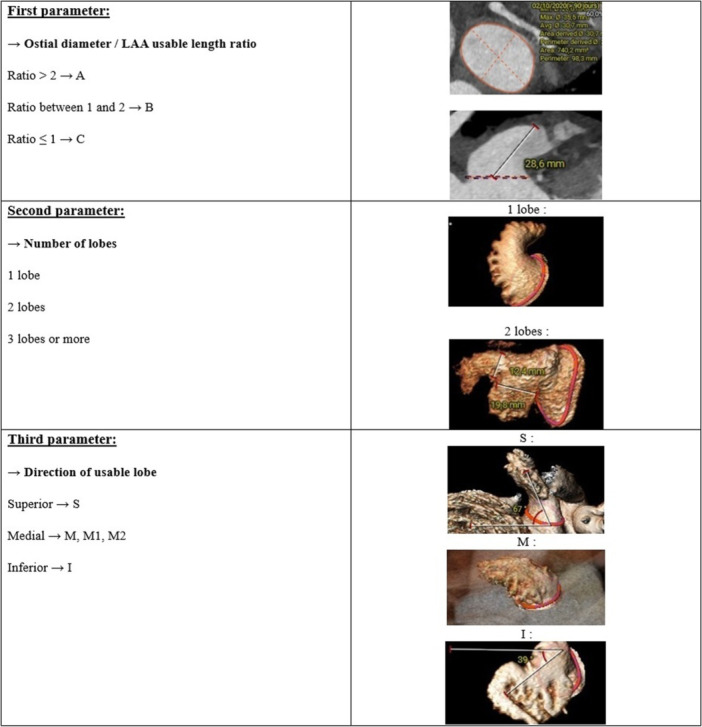 Figure 1
Peer Reviews
No public reviews on file for this paper yet. If you reviewed it on a platform where reviews are public (OpenReview, ICLR, NeurIPS, ICML), you can paste yours below so the community can read it here.
Videos
No videos yet. Explain this paper in a talk, walkthrough, or lecture? Add one.
Taxonomy
TopicsAtrial Fibrillation Management and Outcomes · Acute Myocardial Infarction Research · Cardiovascular Function and Risk Factors