Predicting the Course of Immunoglobulin A Nephropathy Using Urinary Soluble Cluster of Differentiation 163 as a Prognostic Biomarker
S. K. Afsana Hossain, Muhammad Nazrul Islam, A. H. Hamid Ahmed, H. M. Mohiuddin Alamgir, Md. Saiful Ahammad Sarker, Mohammad Kamrul Hasan, Tashnia Tamanna Chowdhury, Mamun Chowdhury Raju, A. K. M. Shahidur Rahman, S. M. Remin Rafi, Md. Masudul Karim

TL;DR
This study explores urinary soluble CD163 as a non-invasive biomarker to predict treatment response and disease activity in IgA nephropathy patients.
Contribution
The study introduces urinary sCD163 as a novel prognostic biomarker for IgAN treatment outcomes and histologic activity.
Findings
Baseline u-sCD163 levels significantly differ between partial and no-response groups.
u-sCD163 levels at six months are highest in patients with no treatment response.
Elevated u-sCD163 correlates with histologic features like endocapillary hypercellularity.
Abstract
Background: Immunoglobulin A nephropathy (IgAN) is the most prevalent primary glomerulonephritis (GN) worldwide and is often underdiagnosed because of its asymptomatic presentation. Proteinuria-based assessment in monitoring disease progression is limited. Early renal biopsy may fail to predict disease severity. So, the development of a non-invasive biomarker can predict early disease progression. Objective: To evaluate urinary soluble cluster differentiation 163 (u-sCD163) in predicting short-term treatment response and its correlation with histologic activity in biopsy-proven IgAN. Methodology: This prospective observational study was carried out at the Department of Nephrology, Bangladesh Medical University (BMU), Dhaka, Bangladesh. A total of 55 patients with biopsy-proven primary IgAN were enrolled. Urine routine microscopic examination (R/M/E), 24-hour urinary total protein…
Genes, proteins, chemicals, diseases, species, mutations and cell lines named across the full text — each resolved to its canonical identifier and authoritative record.
Click any figure to enlarge with its caption.
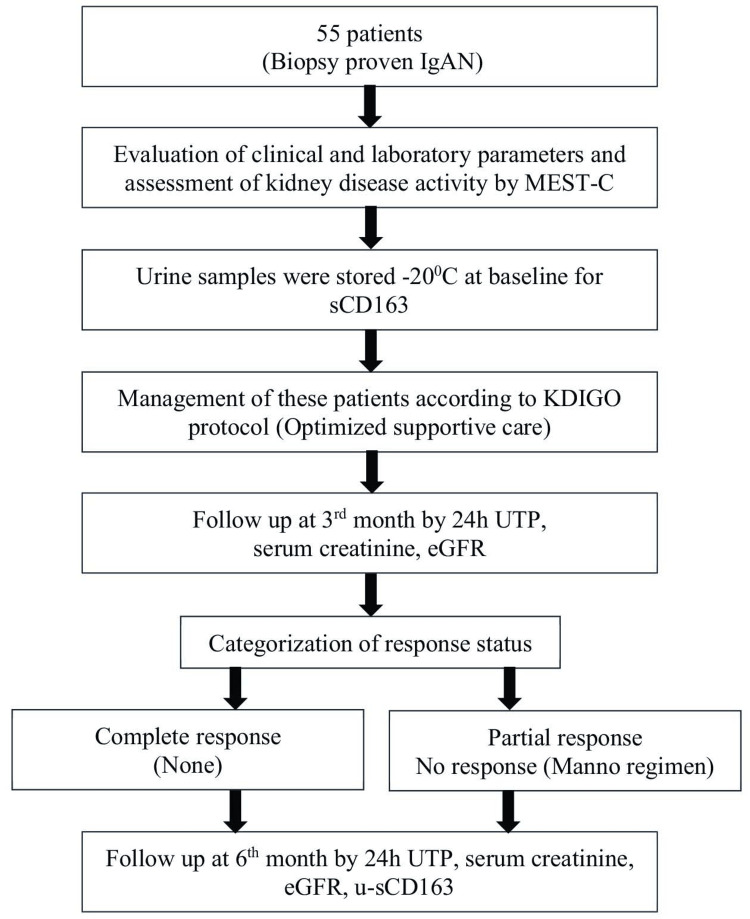 Figure 1
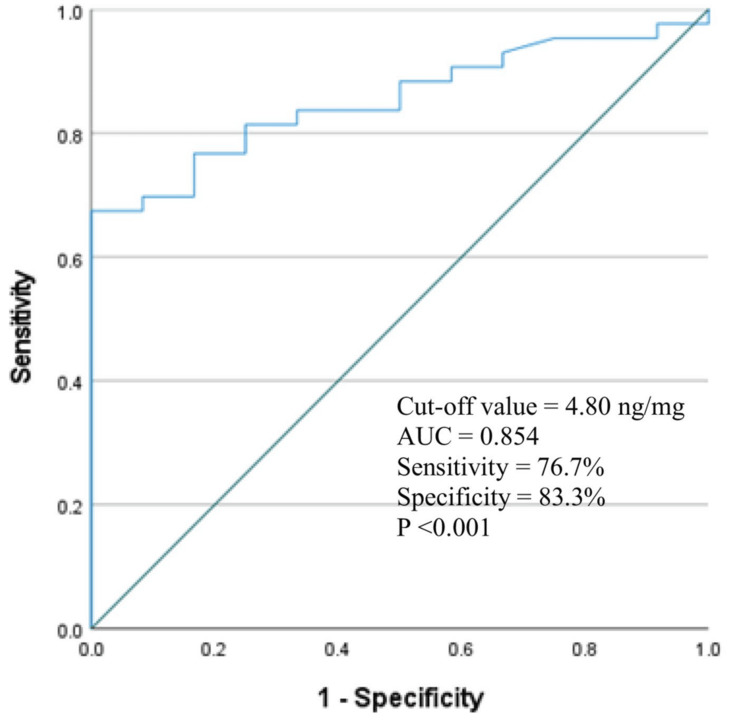 Figure 2
Peer Reviews
No public reviews on file for this paper yet. If you reviewed it on a platform where reviews are public (OpenReview, ICLR, NeurIPS, ICML), you can paste yours below so the community can read it here.
Videos
No videos yet. Explain this paper in a talk, walkthrough, or lecture? Add one.
Taxonomy
TopicsRenal Diseases and Glomerulopathies · Chronic Kidney Disease and Diabetes · Single-cell and spatial transcriptomics