Structured Promoter Variability in Epigenetically Regulated Operons Contributes to Surface Adaptation in Salmonella
Rocío Fernández‐Fernández, Gabriel Gutiérrez, Francine Piubeli, Junkal Garmendia, Carmen R. Beuzón, María Antonia Sánchez‐Romero

TL;DR
Salmonella adapts to its environment by using structured variations in its gene promoters, which help control surface structures and improve survival.
Contribution
The study identifies structured promoter variability as a new evolutionary mechanism for bacterial adaptation.
Findings
The opvAB promoter in Salmonella shows mutations at specific, recurring positions.
Structured promoter variation allows fine-tuning of gene expression in bacterial populations.
This mechanism complements genetic and epigenetic strategies for environmental adaptation.
Abstract
Bacterial adaptation to dynamic and hostile environments often relies on the ability to modify surface structures, which are subjected to strong selective pressures. While mutations in coding sequences that alter surface structures have long been recognised as key drivers of bacterial adaptation, this study reveals structured promoter variation as a novel additional layer of functional adaptation. Focusing on the opvAB operon in Salmonella, epigenetically regulated by the coordinated action of Dam methylation and OxyR binding, we investigated the evolutionary dynamics and regulatory architecture of its regulatory region. Comparative genomics of Salmonella subspecies revealed striking variability in this regulatory region. Notably, the opvAB promoter exhibited mutations clustering at specific, recurrent positions, suggesting lineage‐specific fine‐tuning through structured and potentially…
Genes, proteins, chemicals, diseases, species, mutations and cell lines named across the full text — each resolved to its canonical identifier and authoritative record.
Click any figure to enlarge with its caption.
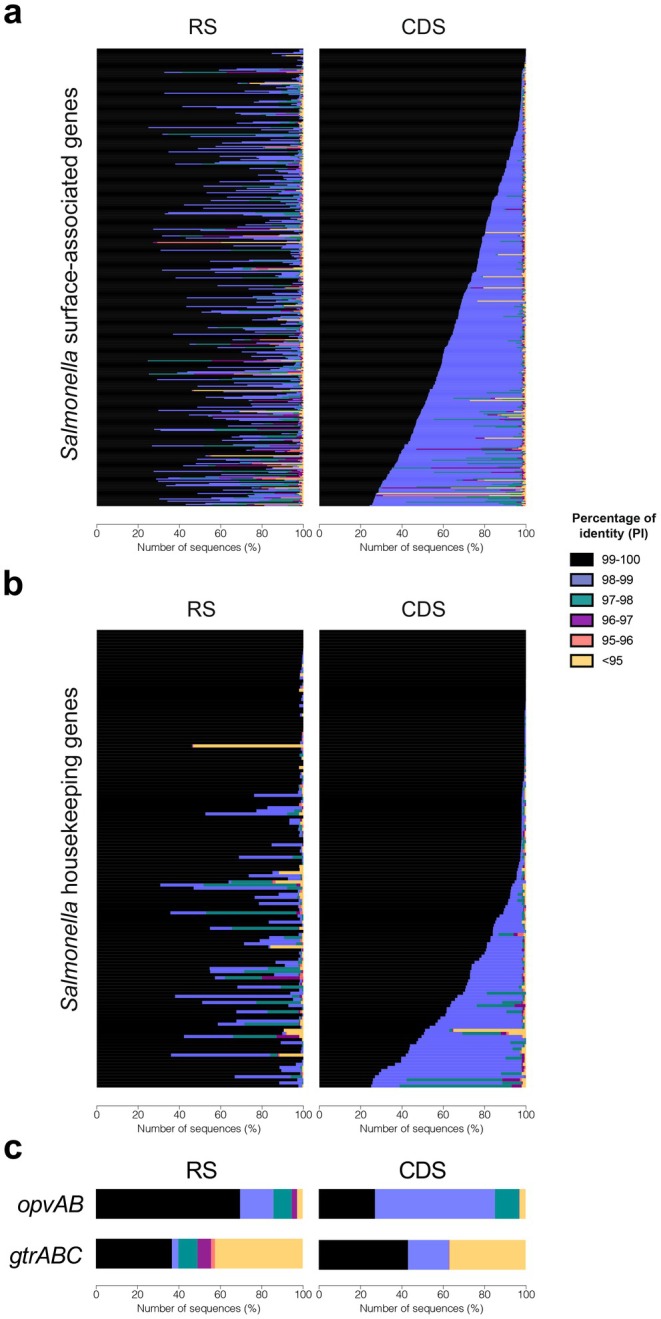 Figure 1
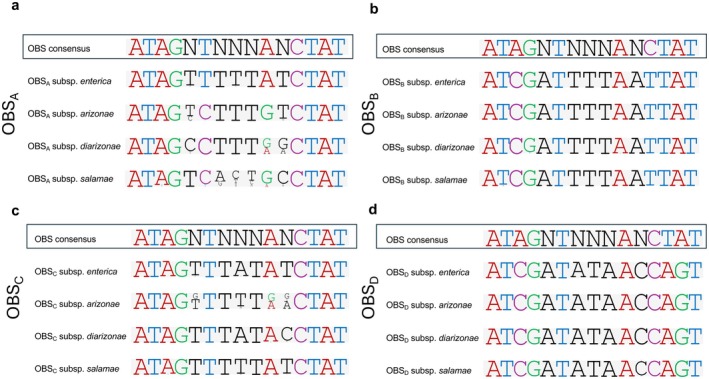 Figure 2
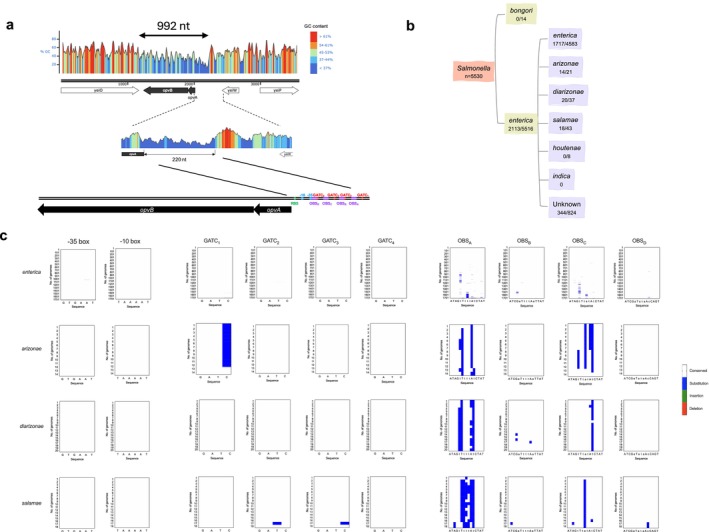 Figure 3
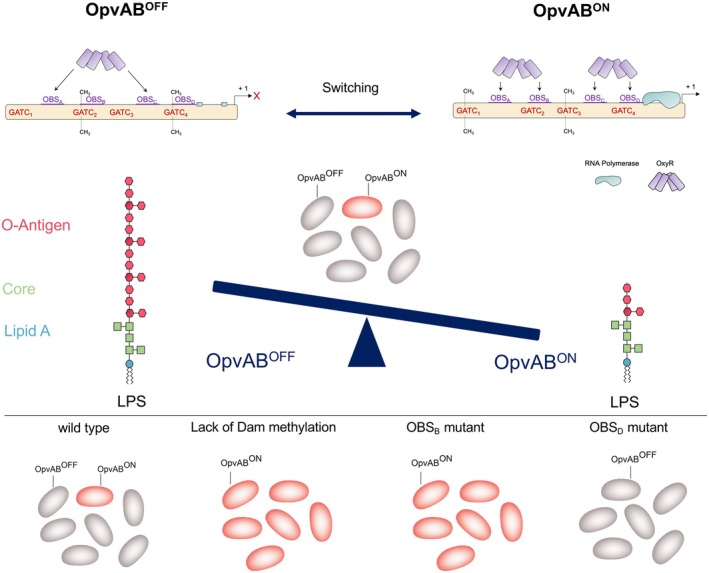 Figure 4
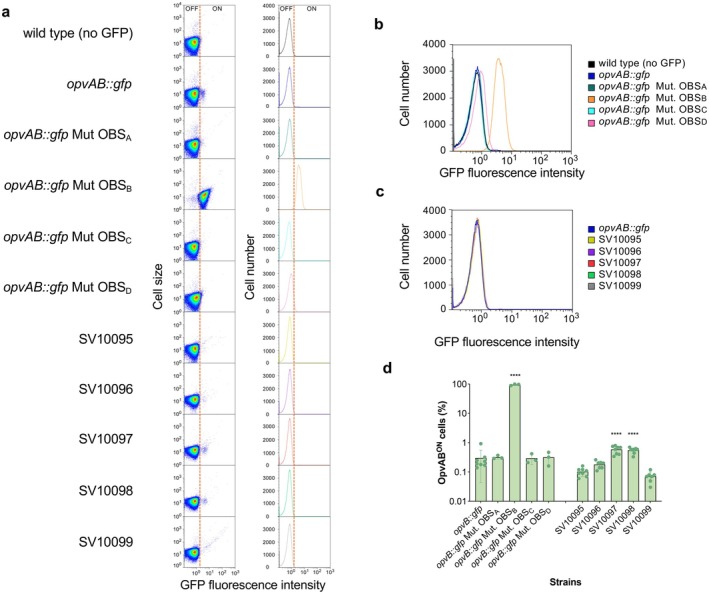 Figure 5
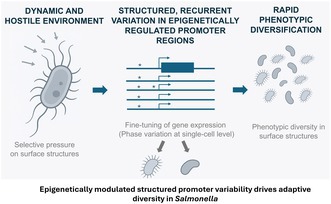 Figure 6
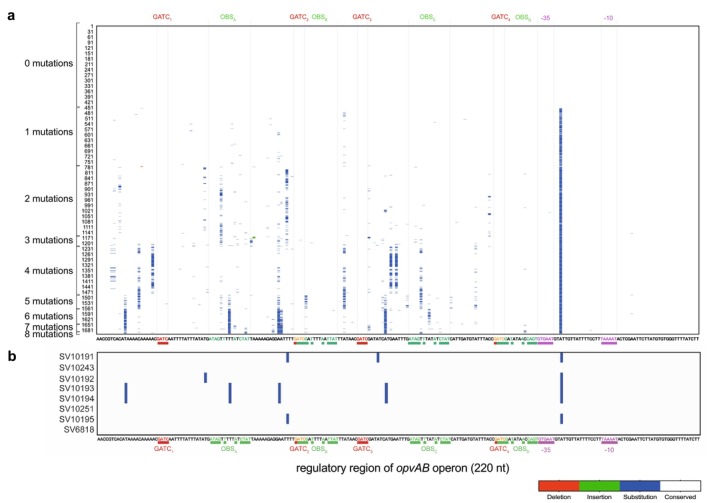 Figure 7
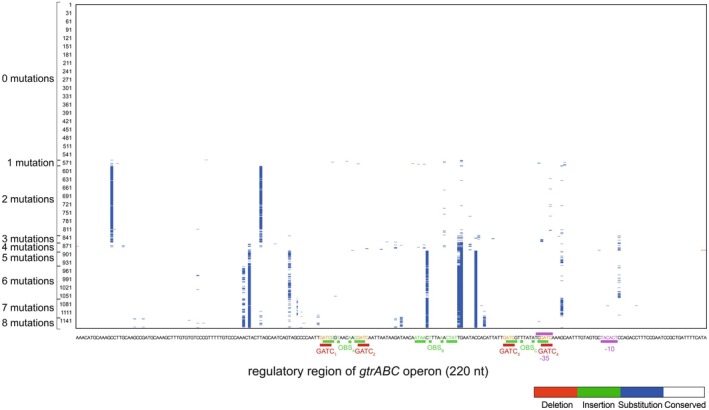 Figure 8
Peer Reviews
No public reviews on file for this paper yet. If you reviewed it on a platform where reviews are public (OpenReview, ICLR, NeurIPS, ICML), you can paste yours below so the community can read it here.
Videos
No videos yet. Explain this paper in a talk, walkthrough, or lecture? Add one.
Taxonomy
TopicsBacterial Genetics and Biotechnology · Bacterial biofilms and quorum sensing · Bacteriophages and microbial interactions