A transposon insertion in the 5′ UTR of OsPT1 reprograms its expression pattern and promotes cadmium accumulation in rice grains
Shasha Peng, Dan Wang, Jinling Liu, Su Jiang, Yuchen Xu, Yufei Deng, Xiaolong Zhou, Fangzhi Hu, Zhuo Liu, Ye Peng, Hejun Ao, Yinghui Xiao, Jiurong Wang, Junliang Zhao, Bin Liu, Keke Yi, Lianyang Bai, Guo-Liang Wang, Houxiang Kang

TL;DR
A transposon insertion in the OsPT1 gene helps rice absorb more cadmium, a harmful metal, and this discovery could help breed safer rice varieties.
Contribution
A novel genetic mechanism involving a transposon and a transcription factor that increases cadmium accumulation in rice grains is identified.
Findings
A transposon insertion in the 5′ UTR of OsPT1 alters its expression and increases cadmium accumulation in rice grains.
The transcription factor OsbHLH35 binds to the OsPT1 promoter and regulates its transcription in response to cadmium stress.
CRISPR-Cas9 gene editing of OsPT1 or OsbHLH35 reduced grain cadmium content by 61.7% to 80.6%.
Abstract
Cadmium (Cd) accumulation in rice grains presents a serious risk to human health; however, the mechanisms underlying this process remain incompletely understood. In this study, a genome-wide association analysis identified 29 loci associated with grain Cd content (LAGCCs). Among these, one of the most strongly associated loci, LAGCC4, contains the transporter gene OsPT1, whose haplotypes show a strong correlation with Cd content in rice grains. A transposon, H-MITE, inserts into the 5′ untranslated region (UTR) of OsPT1, altering its expression pattern and leading to increased Cd accumulation. Furthermore, we identified the transcription factor OsbHLH35, which specifically binds to the OsPT1H-MITE promoter to regulate its transcription in response to Cd stress. Targeted knockout of either OsPT1H-MITE or OsbHLH35 via CRISPR-Cas9 gene editing significantly reduced grain Cd content, with…
Genes, proteins, chemicals, diseases, species, mutations and cell lines named across the full text — each resolved to its canonical identifier and authoritative record.
Click any figure to enlarge with its caption.
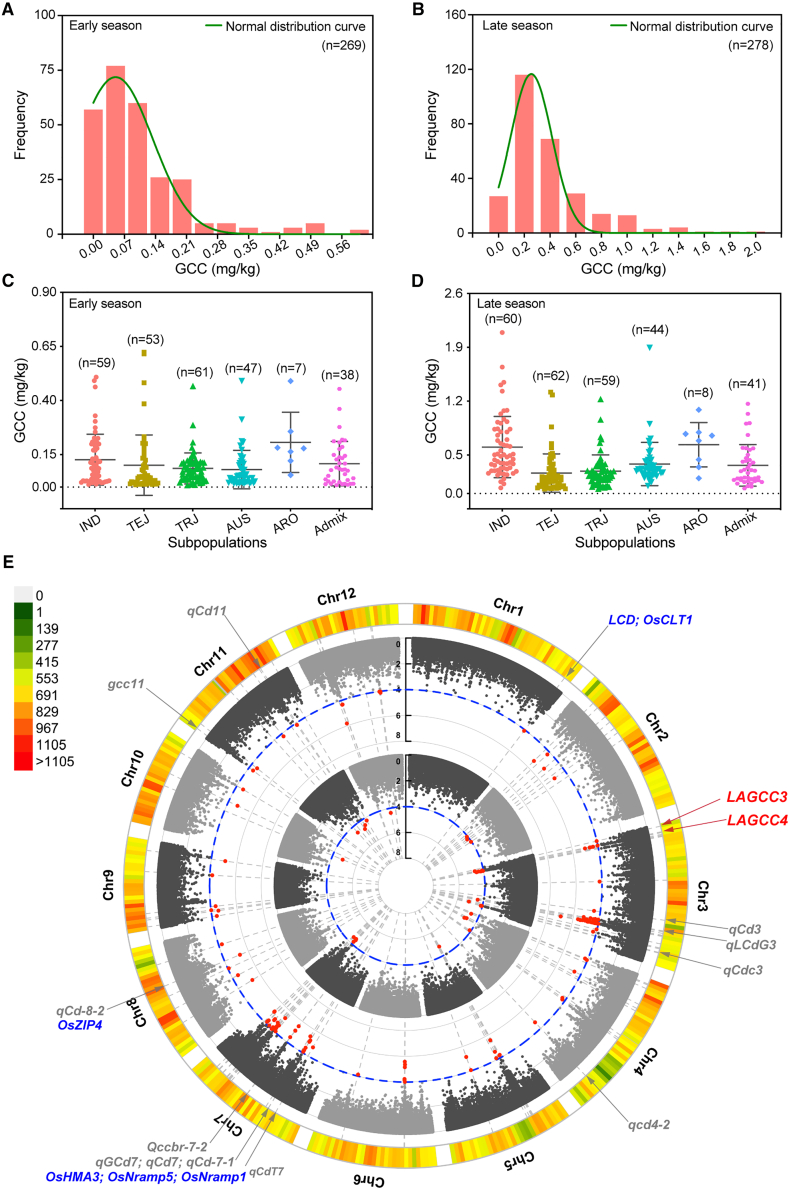 Figure 1
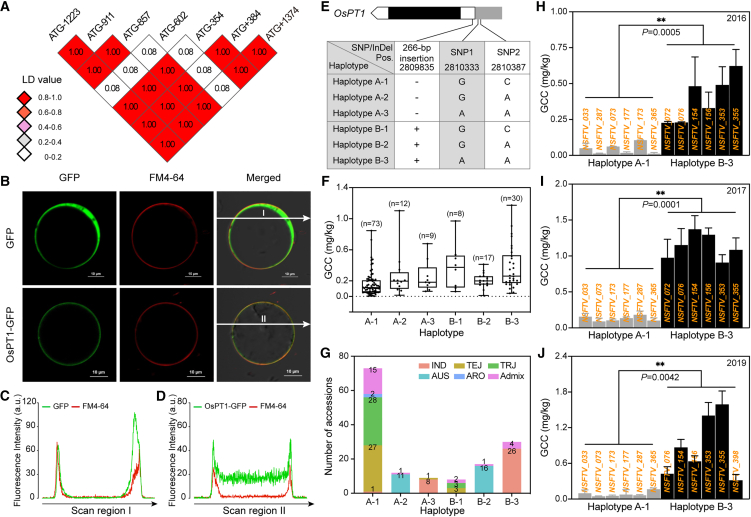 Figure 2
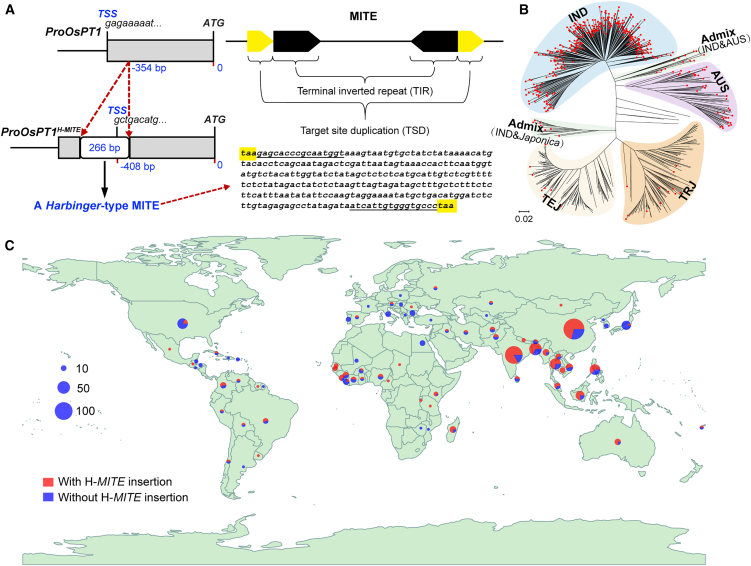 Figure 3
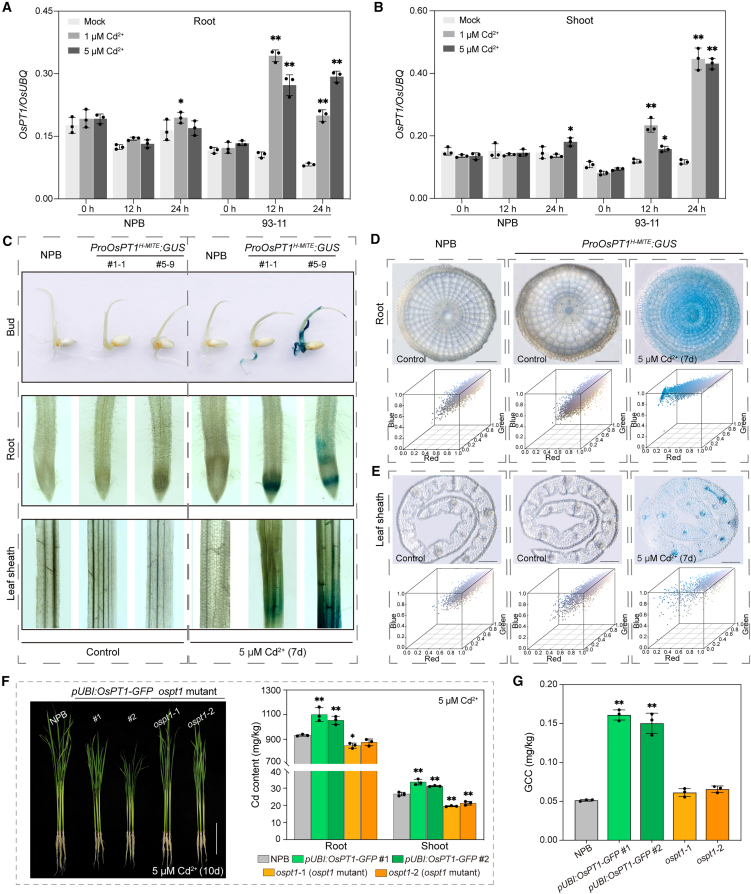 Figure 4
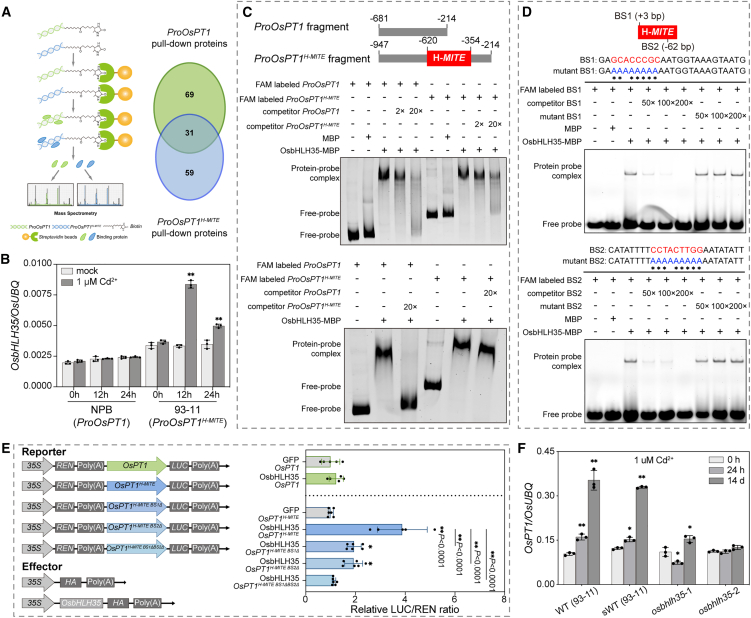 Figure 5
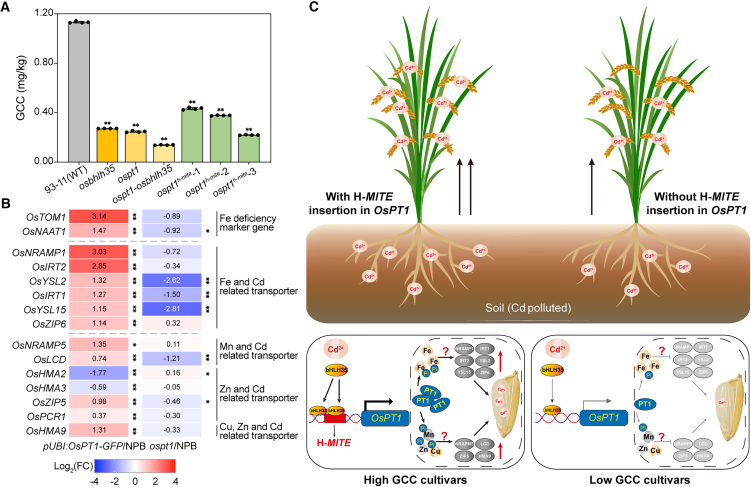 Figure 6
Peer Reviews
No public reviews on file for this paper yet. If you reviewed it on a platform where reviews are public (OpenReview, ICLR, NeurIPS, ICML), you can paste yours below so the community can read it here.
Videos
No videos yet. Explain this paper in a talk, walkthrough, or lecture? Add one.
Taxonomy
TopicsAluminum toxicity and tolerance in plants and animals