A genome- and phenome-wide association study of plasma procalcitonin concentrations in individuals of European ancestry
Wenbo Zhang, Peter J. van der Most, Siqi Wang, Zoha Kamali, Alice Giontella, Sofia Enhörning, Ron T. Gansevoort, Pim van der Harst, Stephan J.L. Bakker, Olle Melander, Frederik Keus, Gerton Lunter, Harold Snieder

TL;DR
This study identifies genetic variants linked to plasma procalcitonin levels and finds associations with traits related to calcium metabolism, bone health, and immune function.
Contribution
The study provides new insights into the genetic basis of procalcitonin and its links to various disease-related traits through genome-wide and phenome-wide analyses.
Findings
Four independent SNPs in three loci (CALCB, PBX4, PRDM15) were associated with plasma procalcitonin.
PRS for PCT was linked to calcium metabolism, vitamin D levels, bone fractures, and immune-related traits.
Genetically predicted PCT is associated with pathways involving bone health, kidney function, and type 2 diabetes.
Abstract
Procalcitonin (PCT) is a biomarker used to differentiate between viral and bacterial infections, though the underlying mechanisms are not yet fully understood. This study aimed to identify genetic variants associated with plasma PCT concentrations and explore the associations of genetically predicted PCT with a wide range of disease related traits in a PheWAS. We conducted GWAS and meta-analysis using data from the MDCS (n = 4007), MPP (n = 5097), and PREVEND (n = 3344) cohorts. We used fine-mapping to prioritise likely causal variants and explored regulatory effects using eQTL data, summary-data-based Mendelian randomisation (SMR) and colocalisation. To validate the PCT findings, we conducted multi-trait analysis of GWAS (MTAG) combining our results with CALCA data from a large pQTL study. The polygenic risk score (PRS) for PCT was calculated in the UK Biobank (n = 457,418) based on…
Genes, proteins, chemicals, diseases, species, mutations and cell lines named across the full text — each resolved to its canonical identifier and authoritative record.
Click any figure to enlarge with its caption.
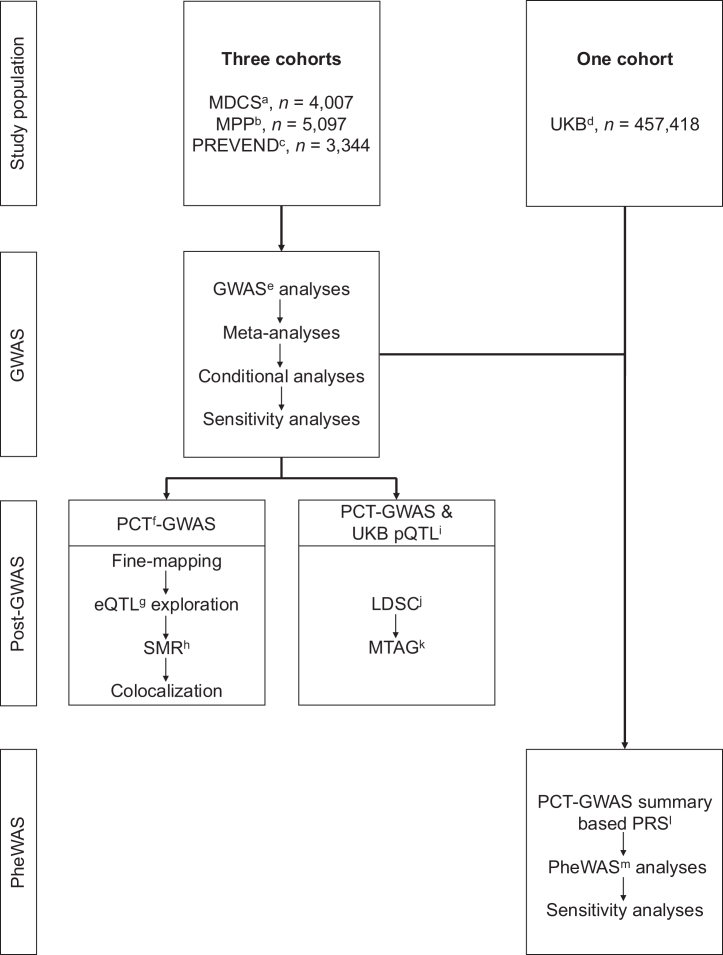 Figure 1
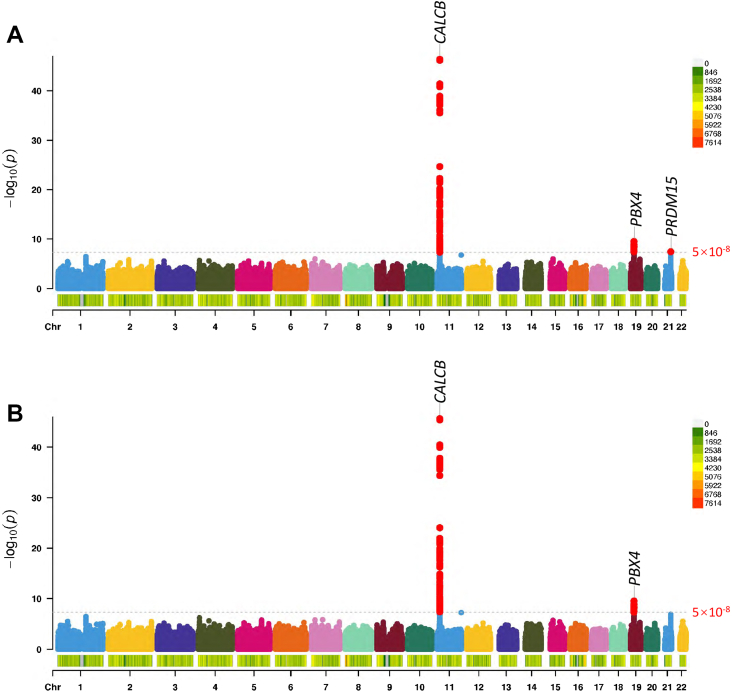 Figure 2
Peer Reviews
No public reviews on file for this paper yet. If you reviewed it on a platform where reviews are public (OpenReview, ICLR, NeurIPS, ICML), you can paste yours below so the community can read it here.
Videos
No videos yet. Explain this paper in a talk, walkthrough, or lecture? Add one.
Taxonomy
TopicsGenetic Associations and Epidemiology · Adipokines, Inflammation, and Metabolic Diseases · Sepsis Diagnosis and Treatment