Sleep Bruxism: Mapping Potential Direct and Indirect Risk Pathways in EPISONO Adult Population‐Based Study
Eduardo Machado, Jessica Klöckner Knorst, Milton Maluly Filho, Monica Levy Andersen, Sergio Tufik, Cibele Dal Fabbro, Dalva Poyares

TL;DR
This study explores how factors like age, insomnia, and anxiety influence sleep bruxism in adults using data from a population-based study.
Contribution
The study identifies direct and indirect risk pathways for sleep bruxism using structural equation modeling in a large adult cohort.
Findings
Sleep bruxism was directly linked to insomnia and younger age across all assessment methods.
Anxiety and depression indirectly influenced sleep bruxism through increased insomnia.
Smoking and sleep apnea were directly associated with polysomnography-based sleep bruxism.
Abstract
To explore the direct and indirect pathways through which sociodemographic, psychological, behavioural, and clinical factors influence sleep bruxism (SB). This cross‐sectional study was conducted with a sample of 686 adults (mean age of 50.1 years; 380 female and 306 male), from a total of 712 individuals from the Sao Paulo Epidemiological Sleep Study (EPISONO) follow performed in 2015. SB was assessed using self‐report, overnight polysomnography (PSG‐based), and combined methods. Sociodemographic, psychological, behavioural and clinical factors were assessed. Structural Equation Modelling was used to examine the pathways between potential risk factors and SB. From an initial sample of 1042, 712 returned for follow‐up and 686 individuals were eligible based on the SB outcomes evaluated and having undergone PSG. The SB self‐reported prevalence was 17.1%, 30.5% presented PSG‐based SB…
Genes, proteins, chemicals, diseases, species, mutations and cell lines named across the full text — each resolved to its canonical identifier and authoritative record.
Click any figure to enlarge with its caption.
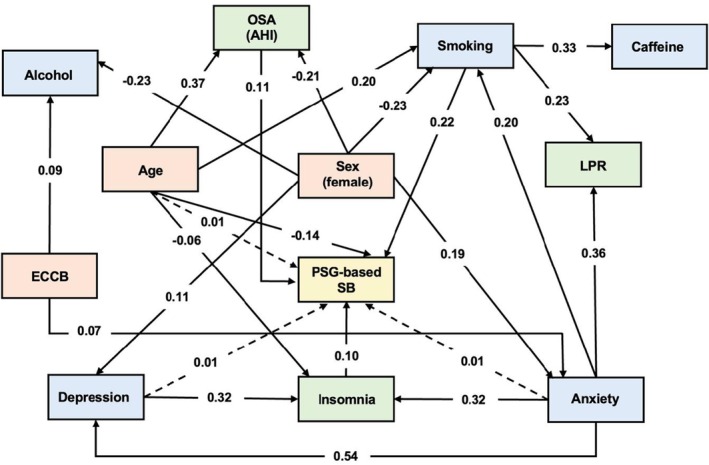 Figure 1
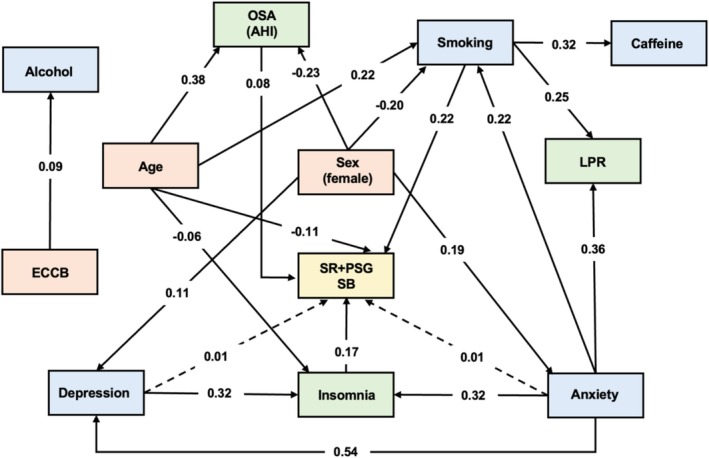 Figure 2
 Figure 3
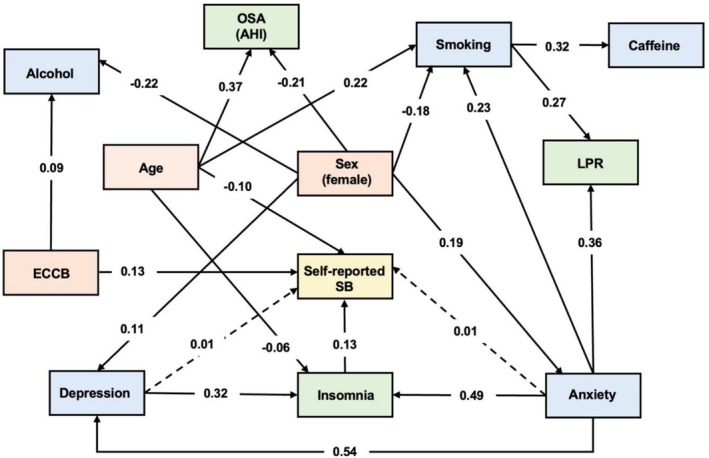 Figure 4
Peer Reviews
No public reviews on file for this paper yet. If you reviewed it on a platform where reviews are public (OpenReview, ICLR, NeurIPS, ICML), you can paste yours below so the community can read it here.
Videos
No videos yet. Explain this paper in a talk, walkthrough, or lecture? Add one.
Taxonomy
TopicsTemporomandibular Joint Disorders · Inflammatory Myopathies and Dermatomyositis · Botulinum Toxin and Related Neurological Disorders