Predictive Value of Diagnostic Methods for TMJ Hypermobility in the Associated Clinical and Functional Features of Temporomandibular Disorders: A Regression Study
Samilla Pontes Braga, Dyanne Medina Flores, Maria Emilia Servin Berden, Ana Claudia de Castro Ferreira Conti, Ambrosina Michelotti, Paulo César Rodrigues Conti

TL;DR
This study examines which diagnostic methods best predict masticatory dysfunction and TMD outcomes related to TMJ hypermobility.
Contribution
The study identifies specific diagnostic methods for TMJ hypermobility that independently predict distinct clinical and functional features of TMD.
Findings
Open-locking independently predicts TMJ subluxation and joint instability.
Increased condylar angle is associated with greater assisted opening and midline deviation.
Lateral condylar jump independently predicts functional limitations in wide-opening tasks.
Abstract
Joint hypermobility (JH), particularly at the temporomandibular joint (TMJ), has been proposed as a potential risk factor for temporomandibular disorders (TMD). However, its heterogeneous diagnostic approaches (clinical, anamnestic and imaging) limit the identification of reliable predictors of masticatory dysfunction and TMD outcomes. To determine which diagnostic methods for TMJ hypermobility best predict masticatory dysfunction and the clinical and functional repercussions of TMD. This cross‐sectional study included 126 adults recruited at the Bauru School of Dentistry. Participants were classified by Diagnostic Criteria for TMD (DC/TMD) into painful, dysfunction or combined groups, balanced by history of open‐locking. Assessments comprised DC/TMD and ICOP examinations, symptom intensity on the visual analog scale (VAS), Beighton score, pressure pain thresholds, bite‐force and…
Genes, proteins, chemicals, diseases, species, mutations and cell lines named across the full text — each resolved to its canonical identifier and authoritative record.
Click any figure to enlarge with its caption.
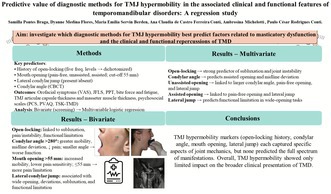 Figure 1
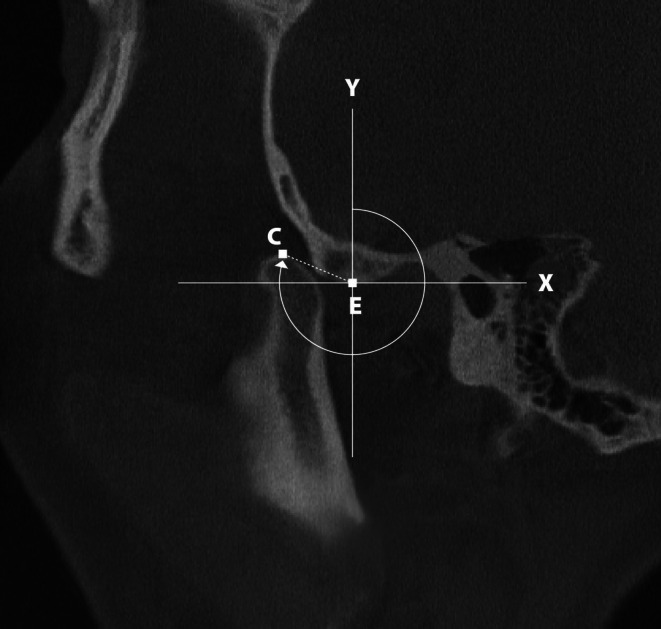 Figure 2
Peer Reviews
No public reviews on file for this paper yet. If you reviewed it on a platform where reviews are public (OpenReview, ICLR, NeurIPS, ICML), you can paste yours below so the community can read it here.
Videos
No videos yet. Explain this paper in a talk, walkthrough, or lecture? Add one.
Taxonomy
TopicsTemporomandibular Joint Disorders · Orthodontics and Dentofacial Orthopedics · Hip disorders and treatments