High-clockrate free-space optical in-memory computing
Yuanhao Liang, James Wang, Kaiwen Xue, Xinyi Ren, Ran Yin, Shaoyuan Ou, Lian Zhou, Yuan Li, Tobias Heuser, Niels Heermeier, Ian Christen, James A. Lott, Stephan Reitzenstein, Mengjie Yu, Zaijun Chen

TL;DR
A new optical computing system uses lasers and light modulators to perform fast, energy-efficient neural network computations for edge devices.
Contribution
The paper introduces FAST-ONN, a high-clockrate free-space optical in-memory computing system for efficient deep learning.
Findings
FAST-ONN achieves billions of optical convolutions per second with ultralow latency and power consumption.
The system enables accurate inference with signed weight values using parallel differential readout in a single shot.
VCSEL transmitters can improve clockrates to over gigahertz, enabling scalable free-space optical computing hardware.
Abstract
The ability to process and act on data in real time is increasingly critical for applications ranging from autonomous vehicles, three-dimensional environmental sensing, and remote robotics. However, the deployment of deep neural networks (DNNs) in edge devices is hindered by the lack of energy-efficient scalable computing hardware. Here, we introduce a fanout spatial time-of-flight optical neural network (FAST-ONN) that calculates billions of convolutions per second with ultralow latency and power consumption. This is enabled by the combination of high-speed dense arrays of vertical-cavity surface-emitting lasers (VCSELs) for input modulation with spatial light modulators of high pixel counts for in-memory weighting. In a three-dimensional optical system, parallel differential readout allows signed weight values for accurate inference in a single shot. The performance is benchmarked…
Genes, proteins, chemicals, diseases, species, mutations and cell lines named across the full text — each resolved to its canonical identifier and authoritative record.
Click any figure to enlarge with its caption.
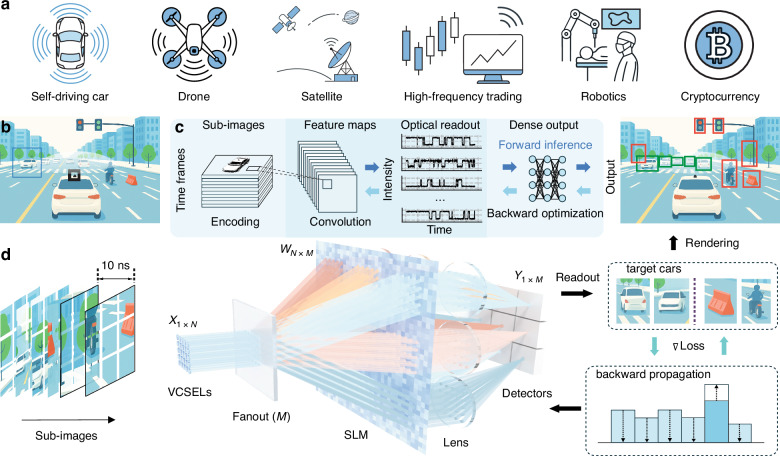 Figure 1
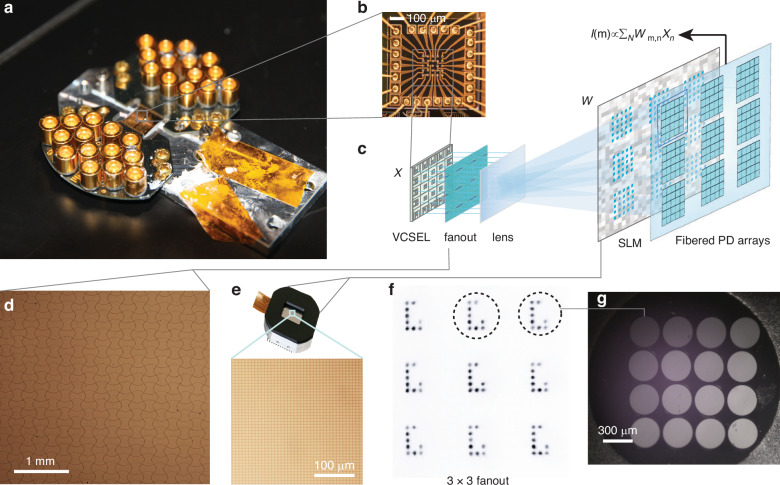 Figure 2
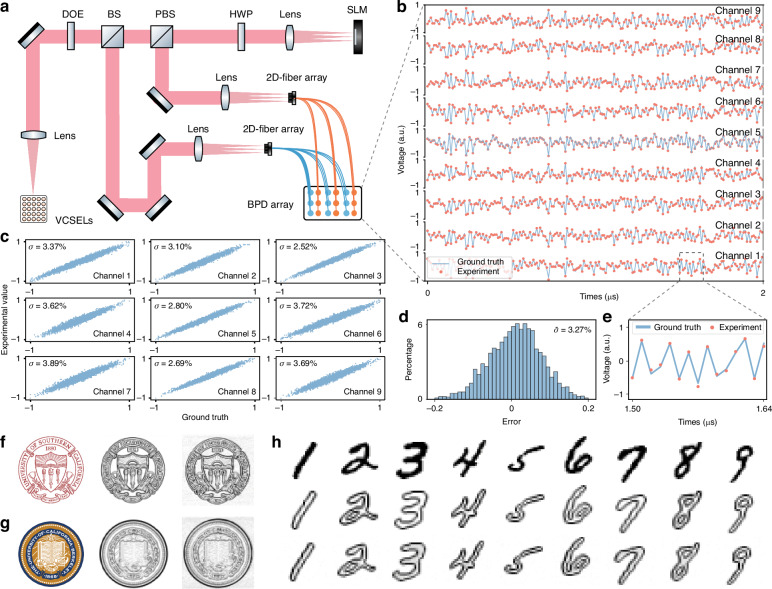 Figure 3
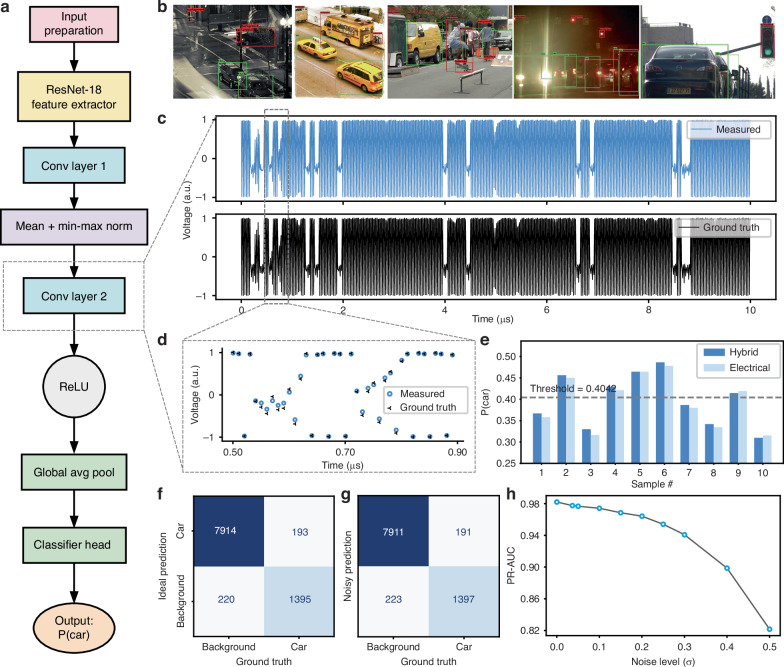 Figure 4
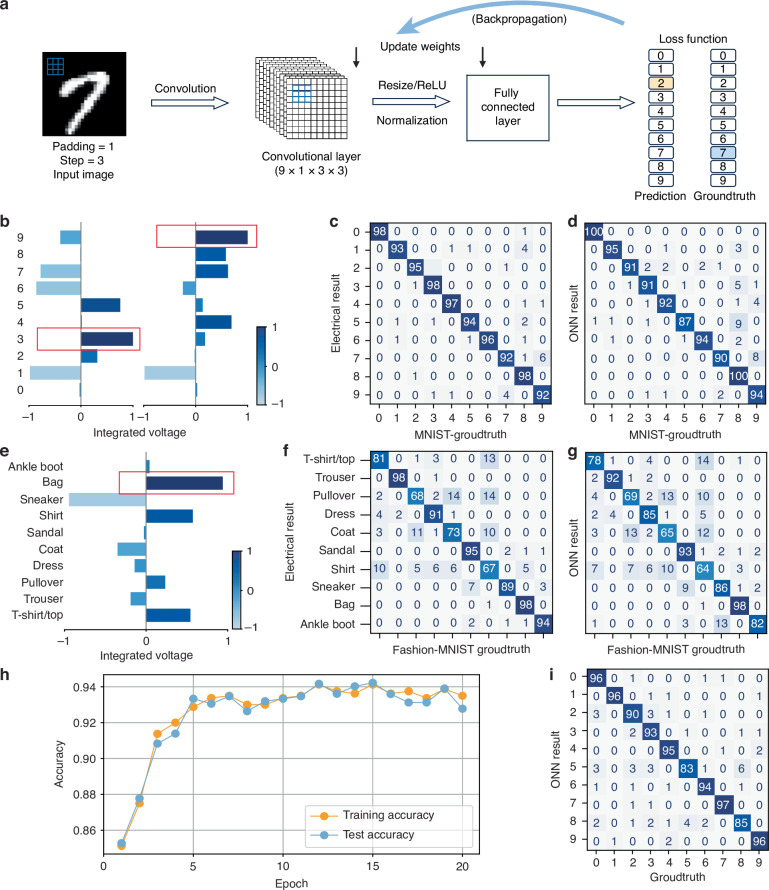 Figure 5
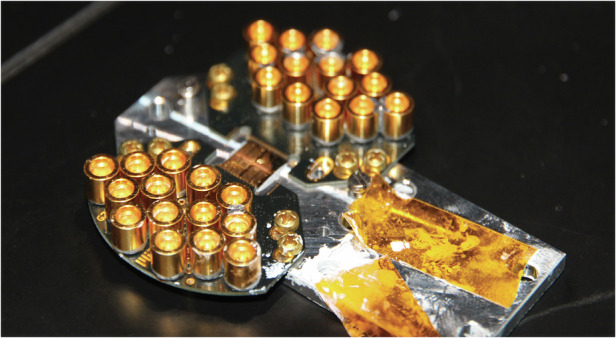 Figure 6
Peer Reviews
No public reviews on file for this paper yet. If you reviewed it on a platform where reviews are public (OpenReview, ICLR, NeurIPS, ICML), you can paste yours below so the community can read it here.
Videos
No videos yet. Explain this paper in a talk, walkthrough, or lecture? Add one.
Taxonomy
TopicsNeural Networks and Reservoir Computing · Photonic and Optical Devices · Semiconductor Lasers and Optical Devices