Fixations, blinks, and pupils differentially capture individual and interpersonal dynamics in role-asymmetric mutual gaze interaction
Mehtap Çakır, Anke Huckauf

TL;DR
This study explores how eye cues like fixations, blinks, and pupils help people understand emotions and coordinate attention during real-time interactions.
Contribution
The paper introduces a real-time dyadic paradigm with role asymmetry to study eye parameters in mutual gaze interactions.
Findings
Blinks reflect role-specific attentional demands and decrease in synchronization when attentional goals diverge.
Fixations indicate shared attention and active visual exploration during mutual gaze phases.
Pupil dilation signals arousal and cognitive effort, especially for observers.
Abstract
Although eye cues have proven effective in simulated gaze contact, it remains unclear how and through which eye parameters people interpret and use such cues in real interactions. We developed a real-time dyadic paradigm that restricted interaction to the eye region and incorporated asymmetrical roles and temporally structured interaction phases. One partner (listener) experienced emotion-inducing sounds, while the other (observer), unaware of the timing or content, attempted to infer the listener’s emotions solely from eye cues. Using a multi-measure approach, we analyzed fixation, blink, and pupil parameters in 25 dyads. Results showed that the parameters were shaped primarily by role- and phase-related processing demands rather than emotional valence. Blinks indexed role-specific processing demands, adapting to attentional priorities. Interpersonal blink synchronization decreased…
Genes, proteins, chemicals, diseases, species, mutations and cell lines named across the full text — each resolved to its canonical identifier and authoritative record.
Click any figure to enlarge with its caption.
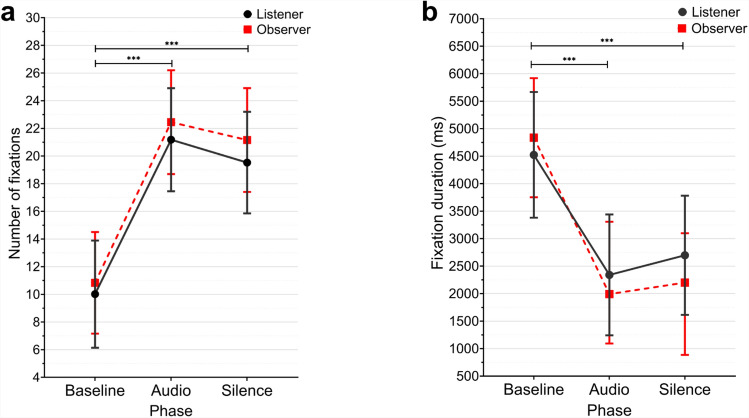 Figure 1
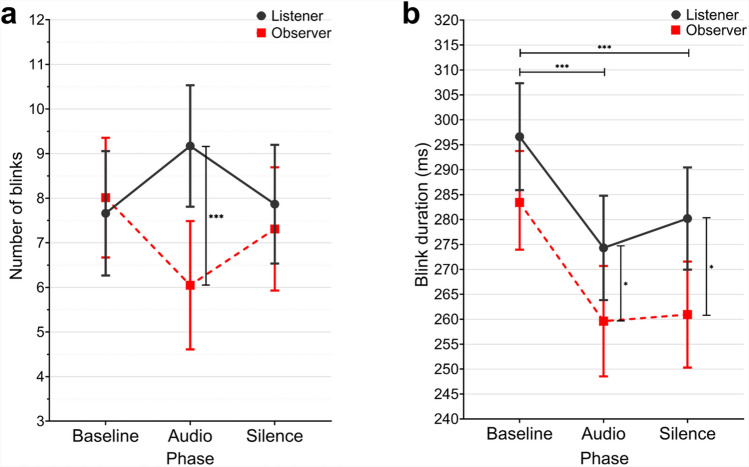 Figure 2
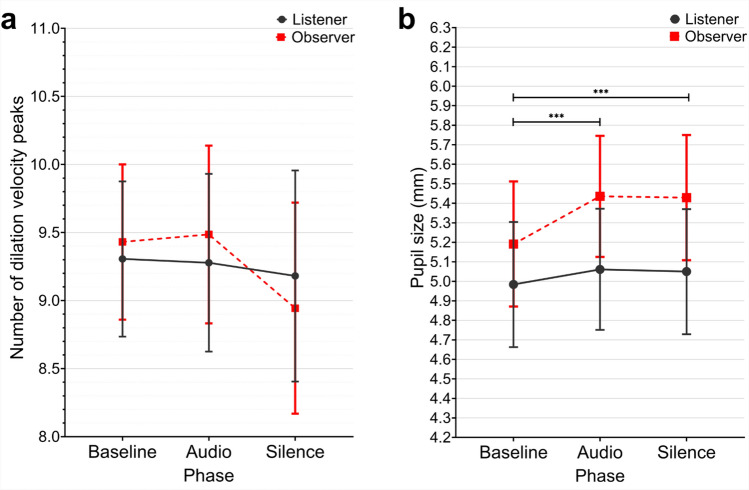 Figure 3
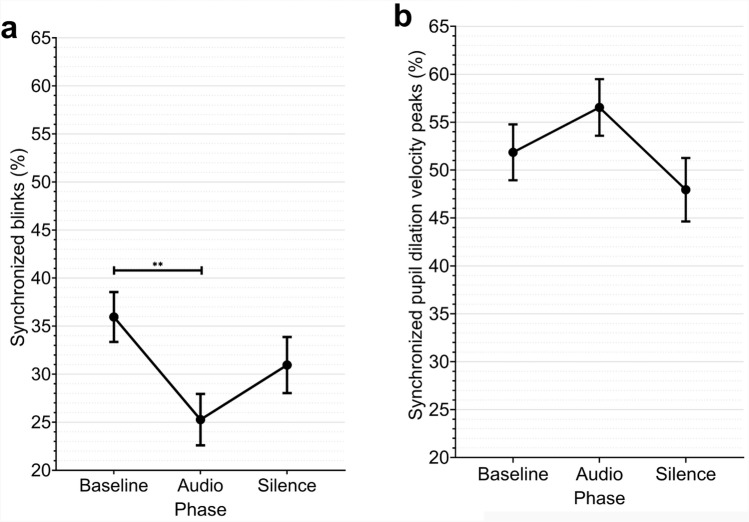 Figure 4
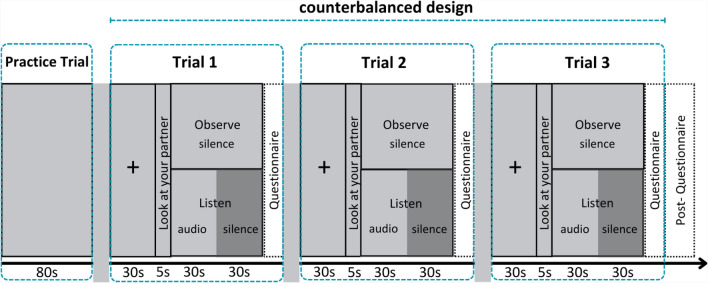 Figure 5
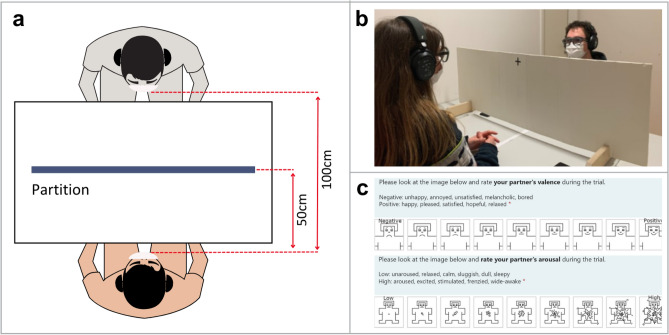 Figure 6
Peer Reviews
No public reviews on file for this paper yet. If you reviewed it on a platform where reviews are public (OpenReview, ICLR, NeurIPS, ICML), you can paste yours below so the community can read it here.
Videos
No videos yet. Explain this paper in a talk, walkthrough, or lecture? Add one.
Taxonomy
TopicsFace Recognition and Perception · Social Robot Interaction and HRI · Gaze Tracking and Assistive Technology