A transpupillary approach for crosslinking Guinea pig sclera using WST11 and near-infrared light
Demi H. J. Vogels, Yusupjan Abdulla, William Myles, Sara Cummings, Lilach Agemy, Tamar Yechezkel, Arie L. Marcovich, Avigdor Scherz, Vanessa L. S. LaPointe, Sally A. McFadden, Mor M. Dickman

TL;DR
This study explores using WST11 and near-infrared light to strengthen the sclera in guinea pigs, finding effective crosslinking parameters that work better in older animals.
Contribution
The novel contribution is the transpupillary crosslinking method using WST11 and NIR light in guinea pigs, demonstrating age-related efficacy differences.
Findings
Ex vivo treatment with WST-D and NIR light significantly increased scleral thermal stability compared to controls.
In vivo treatment showed significant crosslinking in both equatorial and posterior scleral regions.
Crosslinking efficacy was greater in older guinea pigs compared to younger ones.
Abstract
Crosslinking strengthens the sclera and holds potential as a treatment for myopia. This study aims to identify optimal crosslinking parameters in guinea pigs using WST11 with dextran followed by near-infrared (NIR) illumination. Guinea pig eyes were incubated in WST11 with 2, 5 or 10% dextran, and penetration depth was assessed by fluorescence microscopy. Crosslinking efficacy was measured as thermal stability using a thermal degradation assay, following incubation in WST11 + 10% dextran (WST-D) for 30 min and NIR irradiation at 10 mW/cm2 or 20 mW/cm2 for 10, 20 and 30 min. The optimized parameters were then applied in vivo in 6-month-old guinea pigs. Ex vivo treatment using the optimal crosslinking parameters (WST-D, 30 min; NIR, 10 mW/cm2, 30 min) resulted in the highest thermal degradation midpoint (ΔT50: 6.8), significantly higher than untreated controls (p = 0.0006), with WST-D…
Genes, proteins, chemicals, diseases, species, mutations and cell lines named across the full text — each resolved to its canonical identifier and authoritative record.
Click any figure to enlarge with its caption.
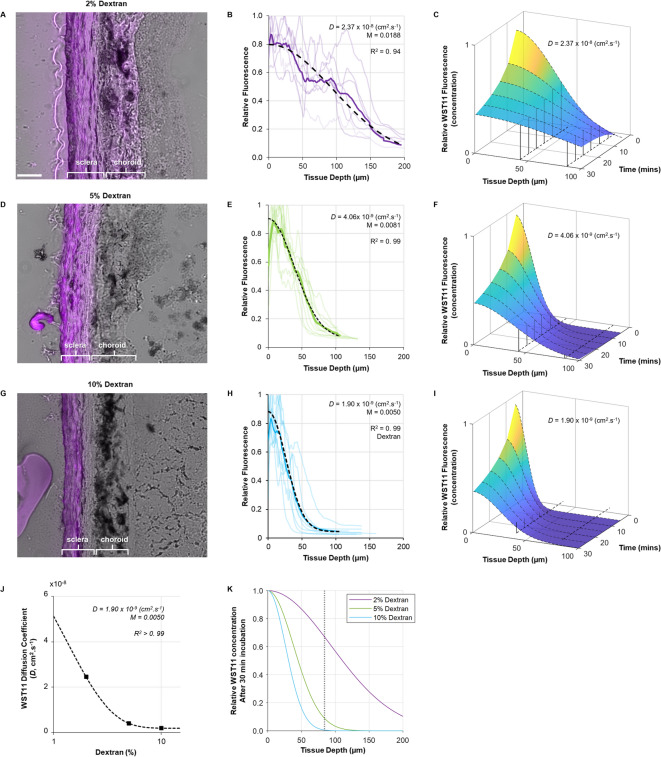 Figure 1
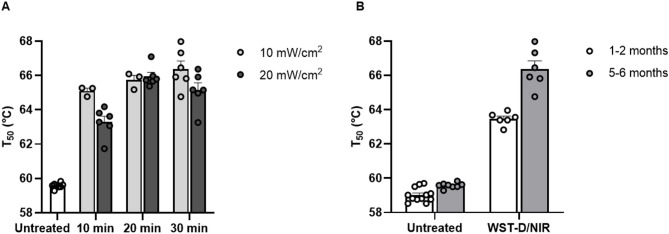 Figure 2
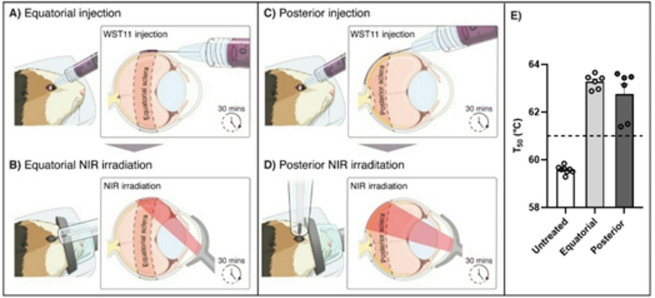 Figure 3
Peer Reviews
No public reviews on file for this paper yet. If you reviewed it on a platform where reviews are public (OpenReview, ICLR, NeurIPS, ICML), you can paste yours below so the community can read it here.
Videos
No videos yet. Explain this paper in a talk, walkthrough, or lecture? Add one.
Taxonomy
TopicsCorneal surgery and disorders · Ophthalmology and Visual Impairment Studies · Ocular Disorders and Treatments