Experimental study of multiple-shot unitary channels discrimination using the IBM Q computers
Adam Bílek, Jan Hlisnikovský, Tomáš Bezděk, Ryszard Kukulski, Paulina Lewandowska

TL;DR
This paper experiments with quantum channel discrimination on IBM's quantum computers, showing that simpler circuits perform better in noisy environments.
Contribution
The study reveals that theoretically optimal quantum circuits are not always best for real-world noisy quantum hardware.
Findings
Deep quantum circuits and high entanglement reduce discrimination performance on IBM Q hardware.
Circuits with minimal entanglement and limited depth are more resilient to hardware noise.
Theoretically suboptimal circuits often outperform optimal ones in practical quantum computing.
Abstract
Tasks involving black boxes appear frequently in the theory of quantum information, with quantum channel discrimination as a central example that has been deeply studied. In this work, we experimentally study the discrimination between two unitary quantum channels in the multiple-shot scenario. We challenge the theoretical results concerning the probability of correct discrimination with the results collected from experiments performed on the IBM Brisbane. Our analysis shows that neither too deep quantum circuits nor circuits that create too much entanglement are suitable for the discrimination task. We conclude that circuit architectures which minimize entanglement overhead while preserving discrimination power are significantly more resilient to hardware noise if their depth does not exceed a threshold value. Consequently, our findings necessitate a paradigm shift: for execution on…
Genes, proteins, chemicals, diseases, species, mutations and cell lines named across the full text — each resolved to its canonical identifier and authoritative record.
Click any figure to enlarge with its caption.
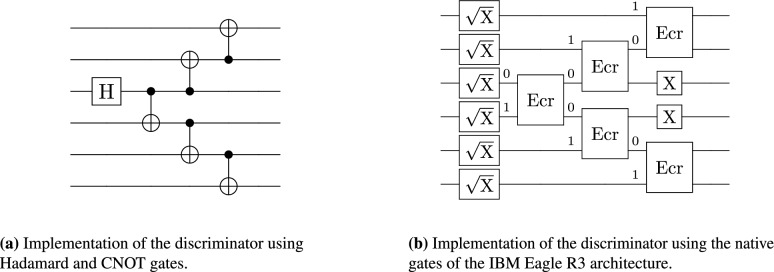 Figure 1
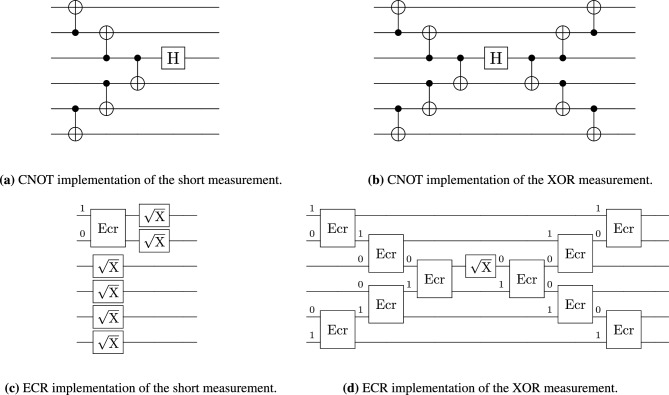 Figure 2
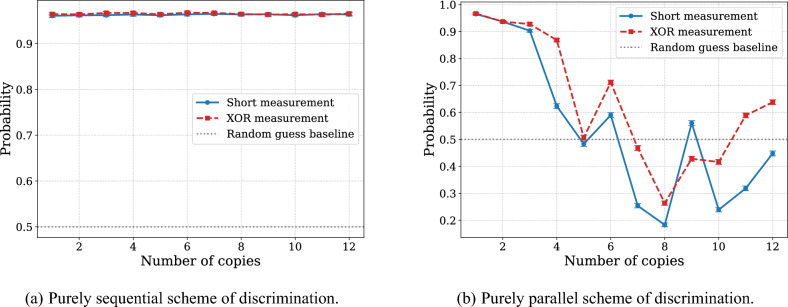 Figure 3
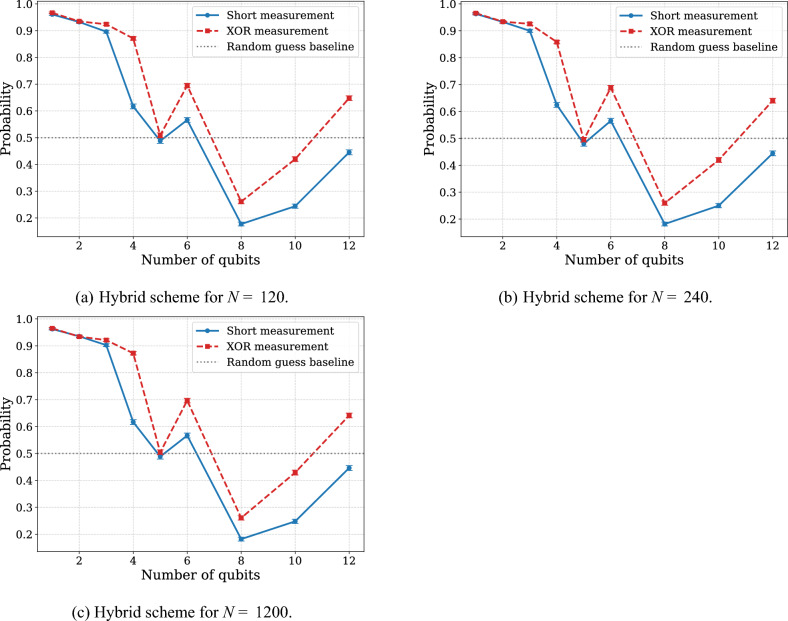 Figure 4
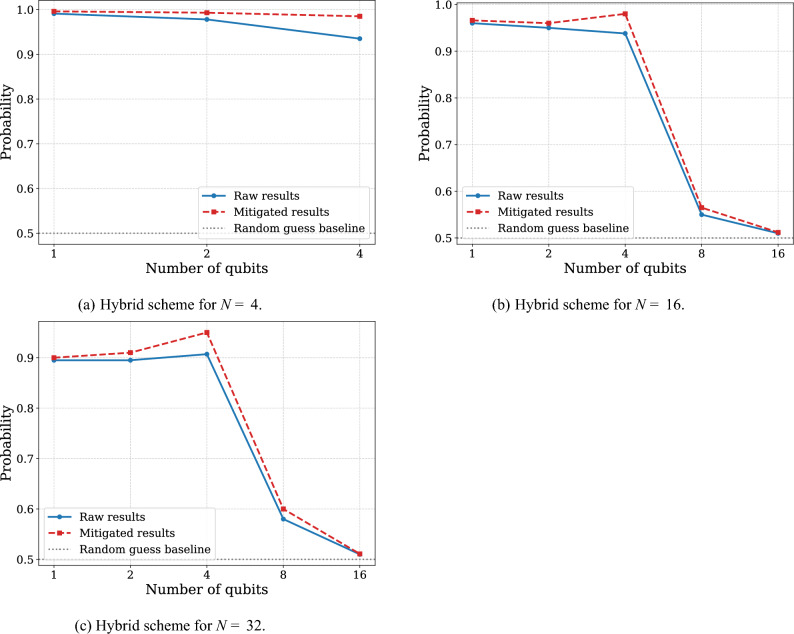 Figure 5
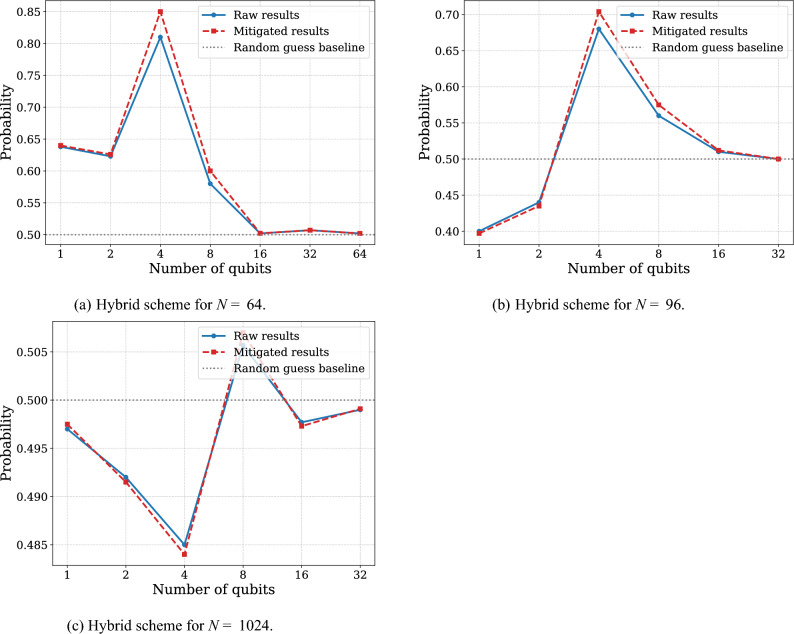 Figure 6
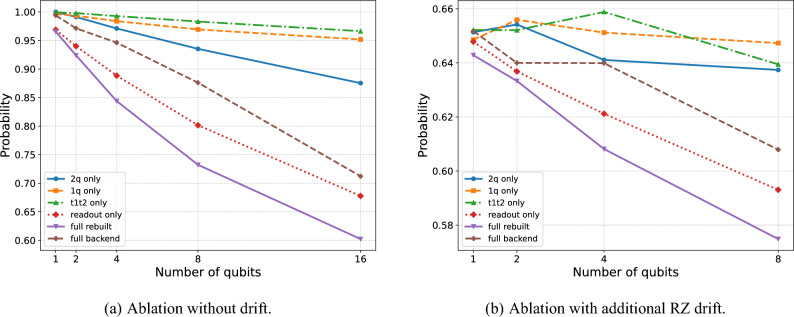 Figure 7
Peer Reviews
No public reviews on file for this paper yet. If you reviewed it on a platform where reviews are public (OpenReview, ICLR, NeurIPS, ICML), you can paste yours below so the community can read it here.
Videos
No videos yet. Explain this paper in a talk, walkthrough, or lecture? Add one.
Taxonomy
TopicsQuantum Computing Algorithms and Architecture · Quantum Information and Cryptography · Quantum Mechanics and Applications