Long-term follow-up demonstrates the curative potential of dual CD19/CD22 CAR-T-cell therapy alone or combined with autologous stem cell transplantation in TP53-altered relapsed/refractory B-cell non-Hodgkin lymphoma
Zekai Mao, Juan Peng, Yang Cao, Na Wang, Jue Wang, Yang Yang, Jinghuan Xu, Fankai Meng, Liting Chen, Xia Mao, Jiaqi Guo, Xiaoxi Zhou, Yicheng Zhang, Jia Wei

TL;DR
This study shows that dual CD19/CD22 CAR-T therapy, especially with ASCT, can offer long-term benefits for B-cell lymphoma patients with TP53 mutations.
Contribution
Demonstrates the long-term curative potential of dual CAR-T therapy in TP53-altered B-cell lymphoma.
Findings
TP53 alterations did not significantly affect survival outcomes in patients receiving dual CAR-T therapy.
Combining CAR-T with ASCT improved 5-year OS and PFS compared to CAR-T alone.
The therapy showed a favorable long-term safety profile with low rates of serious side effects.
Abstract
The prognostic implications of TP53 alterations in patients with relapsed or refractory (r/r) aggressive B-cell non-Hodgkin lymphoma (B-NHL) treated with chimeric antigen receptor (CAR) T-cell therapy remain inadequately characterized, particularly with respect to long-term outcomes. We report extended follow-up (median: 77.77 months) of 122 patients with r/r B-NHL who received either dual-targeted CD19/CD22 CAR-T-cell therapy alone (cohort A, n = 65) or following sequential autologous stem cell transplantation (ASCT; cohort B, n = 57). TP53 alterations were identified in 59 patients (48.4%). Within both cohorts, overall survival (OS) and progression-free survival (PFS) did not significantly differ between the TP53-altered subgroup and the wild-type subgroup (P >0.05). Notably, compared with CAR-T-cell monotherapy, the sequential ASCT-CAR-T-cell approach (cohort B) was associated with…
Genes, proteins, chemicals, diseases, species, mutations and cell lines named across the full text — each resolved to its canonical identifier and authoritative record.
Click any figure to enlarge with its caption.
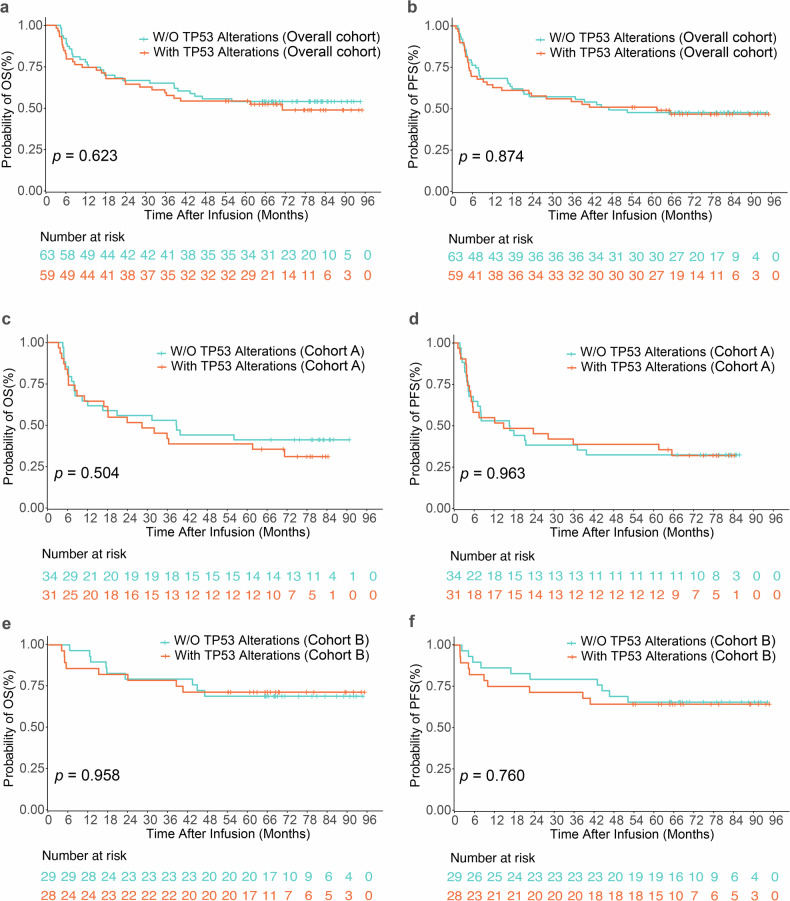 Figure 1
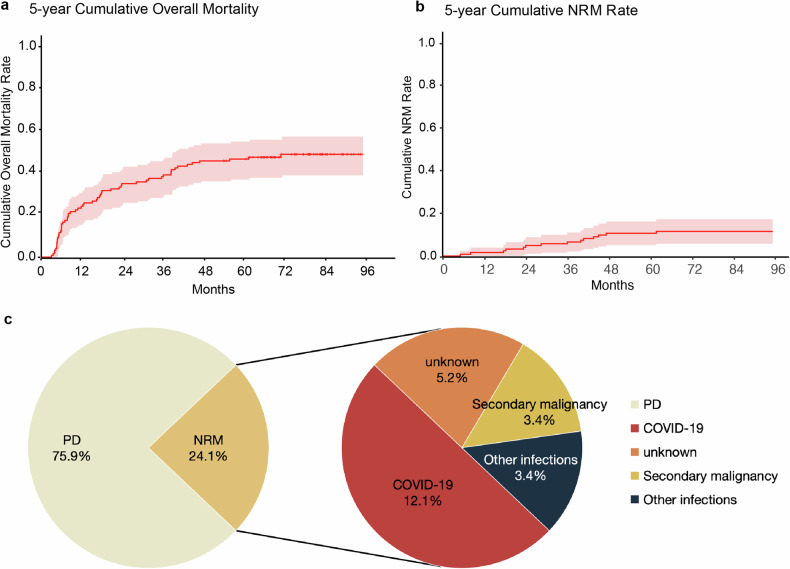 Figure 2
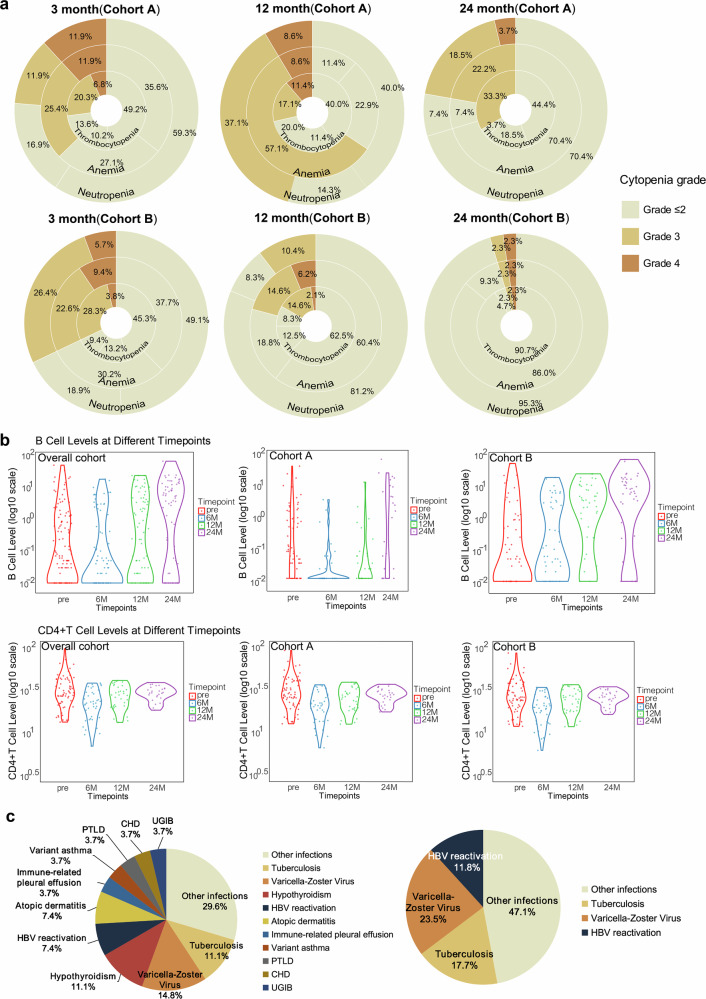 Figure 3
Peer Reviews
No public reviews on file for this paper yet. If you reviewed it on a platform where reviews are public (OpenReview, ICLR, NeurIPS, ICML), you can paste yours below so the community can read it here.
Videos
No videos yet. Explain this paper in a talk, walkthrough, or lecture? Add one.
Taxonomy
TopicsCAR-T cell therapy research · Lymphoma Diagnosis and Treatment · Cutaneous lymphoproliferative disorders research