A proteomics and redox proteomics approach to understanding ARDS heterogeneity
Thomas E. Forshaw, Kirtikar Shukla, Hanzhi Wu, Susan Sergeant, Jingyun Lee, Allen W. Tsang, Peter E. Morris, Kevin W. Gibbs, D. Clark Files, Cristina M. Furdui

TL;DR
Researchers used proteomics to identify distinct molecular patterns in ARDS patients, which could help improve treatment strategies.
Contribution
The study introduces a novel framework for ARDS molecular heterogeneity using longitudinal proteomics and redox proteomics.
Findings
Three distinct molecular patterns (Groups A, B, and C) were identified in ARDS patients.
Key pathways like ROS detoxification, LXR/RXR activation, and IL-12 signaling distinguish these patterns.
BAL fluid data provided more mechanistic insights than plasma proteomics.
Abstract
Acute Respiratory Distress Syndrome (ARDS) is a severe and heterogeneous critical illness characterized by systemic inflammation, lung injury, and profound hypoxemia. To investigate the temporal evolution of molecular features underlying ARDS heterogeneity, we applied advanced proteomics and redox proteomics to matched plasma and bronchoalveolar lavage (BAL) fluid samples collected longitudinally from 16 intensive care unit (ICU) ARDS patients during hospitalization. Exploratory, data-driven hierarchical clustering (Ward method) identified three distinct molecular patterns across patients represented as Groups A, B, and C. This framework was associated with illness severity at study enrollment (Group A profiling patients with more severe illness at enrollment), demonstrated temporal stability across sampling timepoints, and revealed molecular features associated with clinical…
Genes, proteins, chemicals, diseases, species, mutations and cell lines named across the full text — each resolved to its canonical identifier and authoritative record.
Click any figure to enlarge with its caption.
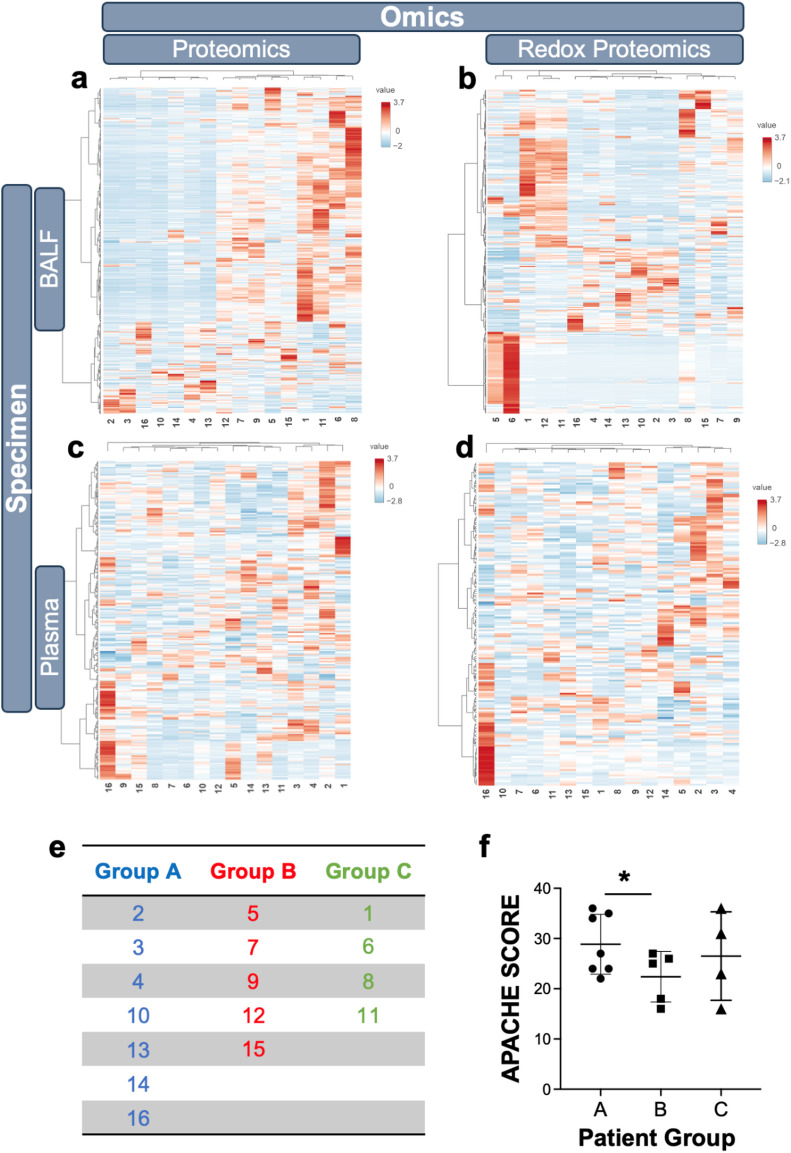 Figure 1
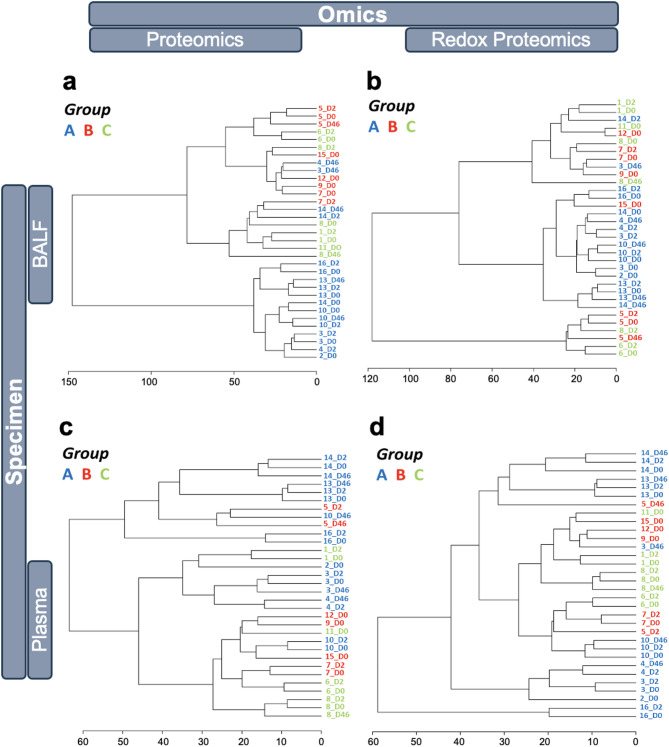 Figure 2
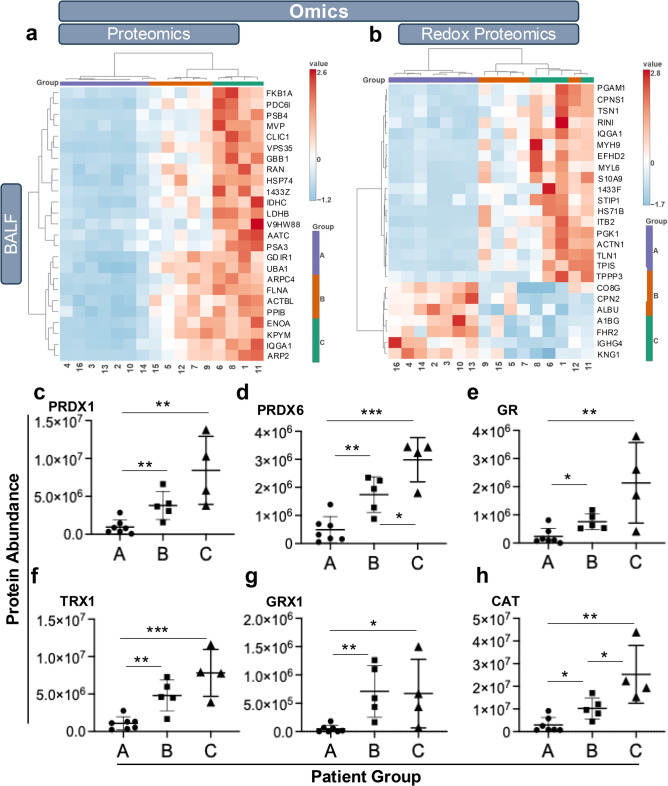 Figure 3
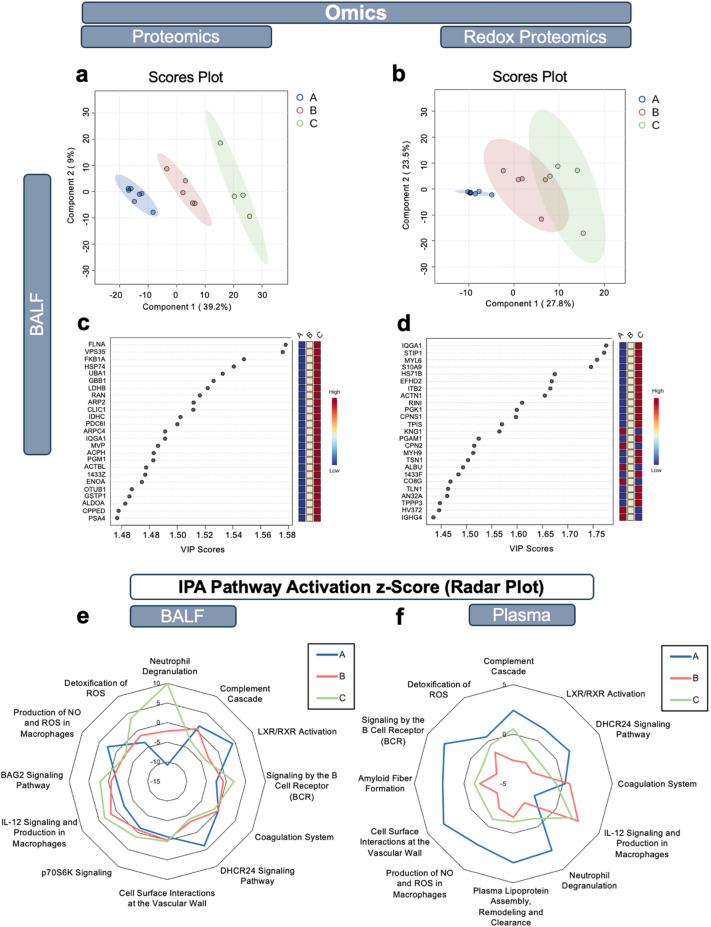 Figure 4
Peer Reviews
No public reviews on file for this paper yet. If you reviewed it on a platform where reviews are public (OpenReview, ICLR, NeurIPS, ICML), you can paste yours below so the community can read it here.
Videos
No videos yet. Explain this paper in a talk, walkthrough, or lecture? Add one.
Taxonomy
TopicsRespiratory Support and Mechanisms · Neutrophil, Myeloperoxidase and Oxidative Mechanisms · Sepsis Diagnosis and Treatment