Methyl linolenate suppresses the growth and proliferation of Ehrlich ascites carcinoma (EAC) cells by inducing intrinsic mitochondrial apoptosis
Azmin Akter, Tasnima Kamal, M. Matakabbir Hossain, Abdul Auwal, Khan Mohammad Rashel, Tasfik Ul Haque Pronoy, Asmaulhusna Biswas, Sharmin Akter, Mahmud Ismail, M. Rowshanul Habib, Farhadul Islam

TL;DR
Methyl linolenate, a compound from Clerodendrum viscosum, inhibits cancer cell growth and extends survival in mice by triggering mitochondrial apoptosis.
Contribution
Methyl linolenate is a novel anticancer compound that induces apoptosis and inhibits angiogenesis in EAC cells.
Findings
ML inhibited EAC cell growth by 67% at 3.0 mg/kg/day and increased survival time in mice.
ML treatment upregulated pro-apoptotic genes and downregulated anti-apoptotic genes in EAC cells.
ML reduced tumor weight, cell volume, and angiogenesis in EAC-bearing mice.
Abstract
A new bioactive compound, methyl linolenate (Methyl-octadeca-9,12,15-trienote), designated as ML, was isolated and purified from Clerodendrum viscosum leaves. Treatment of Ehrlich ascites carcinoma (EAC) cells with ML induced cancer growth inhibition dose-dependently, with a maximum cell growth inhibition of 67 % at a dose of 3.0 mg/kg/day (p<0.001). It also inhibits EAC cell volume and tumor weight and increases the survival time of EAC-bearing mice (25 versus 41 days) (p<0.001). In addition, EAC-bearing control mice exhibited a drastic deterioration of blood parameters, and treatment of EAC-bearing mice with ML prevented the deterioration of hematological parameters compared to untreated EAC-bearing mice. Also, ML abrogates angiogenesis by inhibiting the development of new blood vessels in the peritoneum of EAC-bearing mice. ML-treated cells exhibited apoptotic features such as…
Genes, proteins, chemicals, diseases, species, mutations and cell lines named across the full text — each resolved to its canonical identifier and authoritative record.
Click any figure to enlarge with its caption.
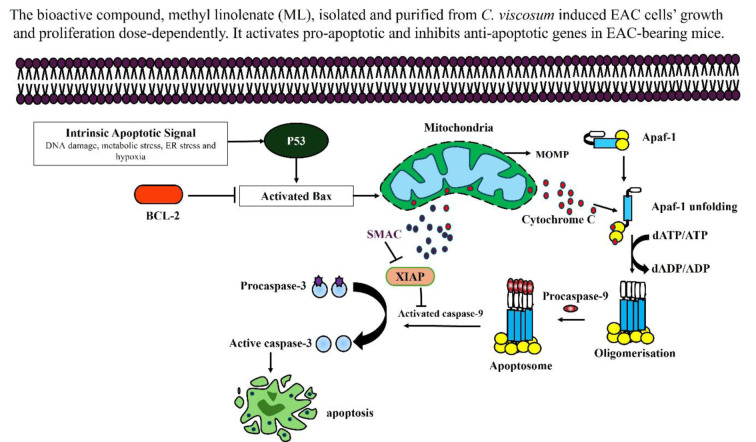 Figure 1
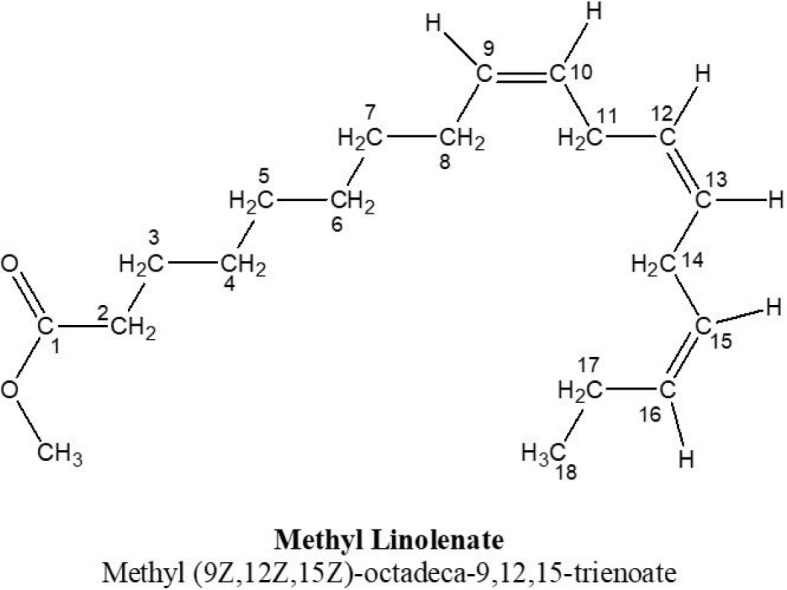 Figure 2
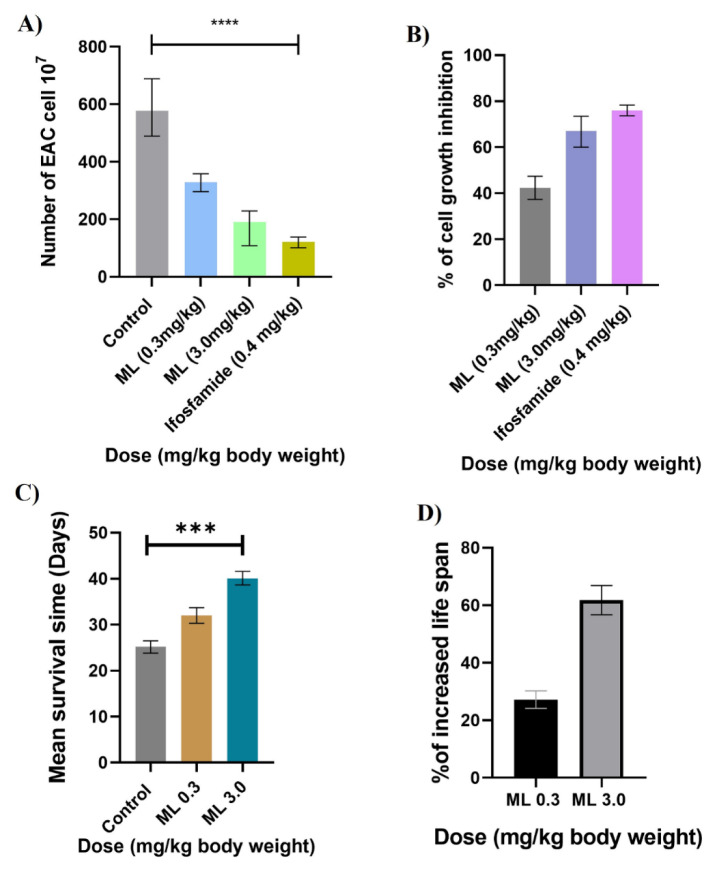 Figure 3
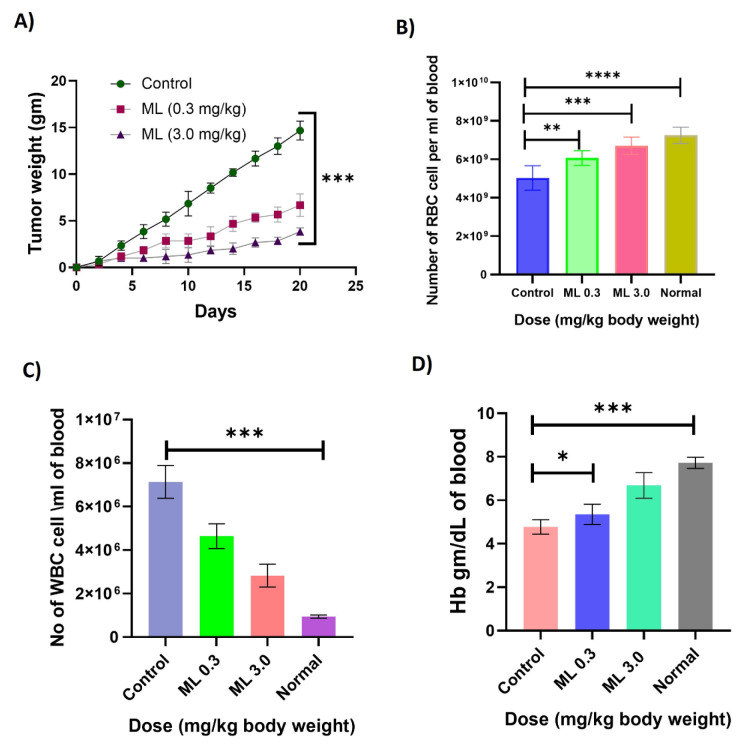 Figure 4
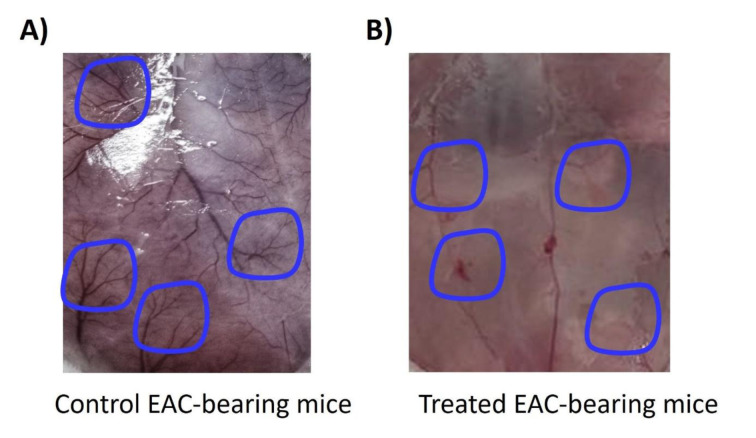 Figure 5
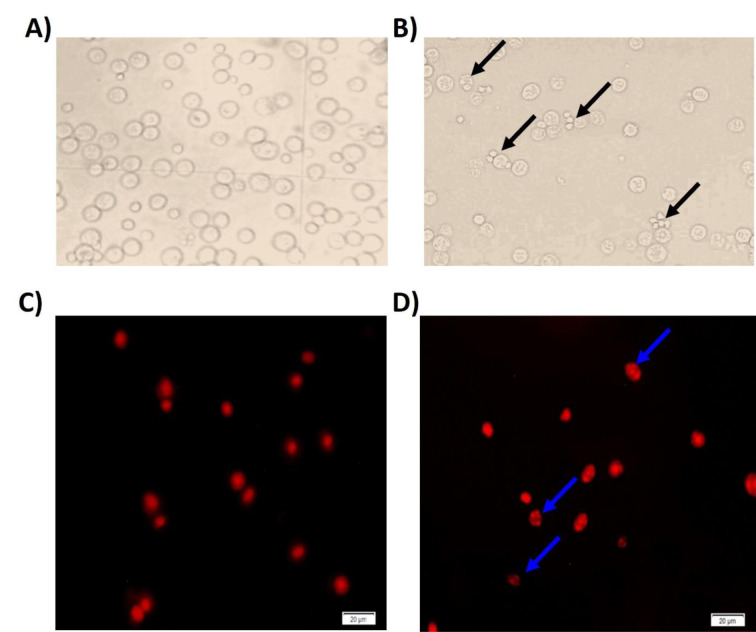 Figure 6
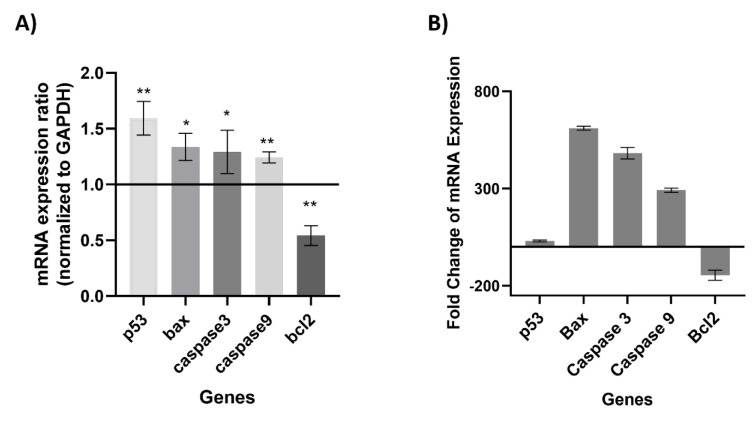 Figure 7
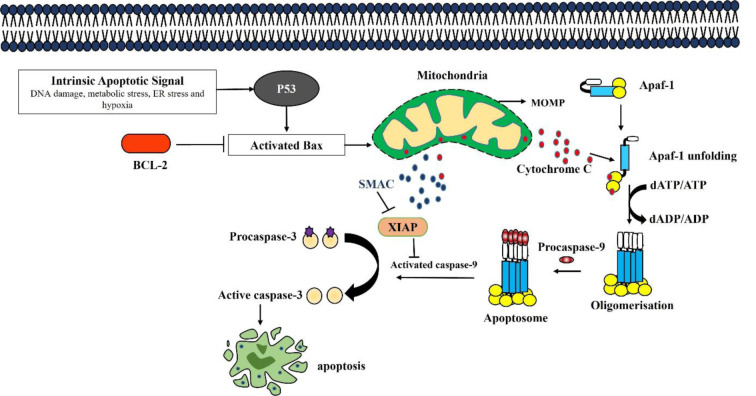 Figure 8
Peer Reviews
No public reviews on file for this paper yet. If you reviewed it on a platform where reviews are public (OpenReview, ICLR, NeurIPS, ICML), you can paste yours below so the community can read it here.
Videos
No videos yet. Explain this paper in a talk, walkthrough, or lecture? Add one.
Taxonomy
TopicsPlant-Derived Bioactive Compounds · Sesquiterpenes and Asteraceae Studies · Bioactive Compounds in Plants