Analysis of Spatial, Binaural, and Better-Ear Benefits for Different Degrees of Hearing Loss Using a Binaural Speech Intelligibility Model
Saskia Röttges, Christopher Hauth, Kirsten C. Wagener, Thomas Brand

TL;DR
This study examines how hearing loss affects speech recognition in noise and evaluates a model to predict these effects using audiograms and suprathreshold factors.
Contribution
The study introduces individual suprathreshold components to a binaural speech intelligibility model, improving prediction accuracy for specific noise conditions.
Findings
Individual suprathreshold components improved model predictions for S0N90 conditions but not for spatial or binaural benefits.
Listeners showed more variability in SRTs than in spatial or binaural benefits, regardless of hearing loss severity.
No additional parameters significantly improved the model's prediction accuracy beyond the suprathreshold adjustments.
Abstract
This study analyzed speech recognition thresholds (SRTs) in noise of 738 listeners with different degrees of hearing loss, including normal hearing. Speech was presented from the front, while noise was presented from either the front or from +90° or −90° azimuth, corresponding to the ear with the worse hearing threshold. The latter condition was tested binaurally and monaurally (using the only better ear (BE)). Listeners showed larger variance in SRTs than in spatial, binaural, and BE benefits, regardless of their hearing loss. A model consisting of a blind equalization-cancellation (EC) front-end and the non-blind speech intelligibility index (SII, ANSI S3.5-1997) was used to predict the measured SRTs. This model used a pure-tone audiogram to simulate hearing loss. We evaluated whether an individual suprathreshold component improves the model's prediction accuracy. This component was…
Genes, proteins, chemicals, diseases, species, mutations and cell lines named across the full text — each resolved to its canonical identifier and authoritative record.
Click any figure to enlarge with its caption.
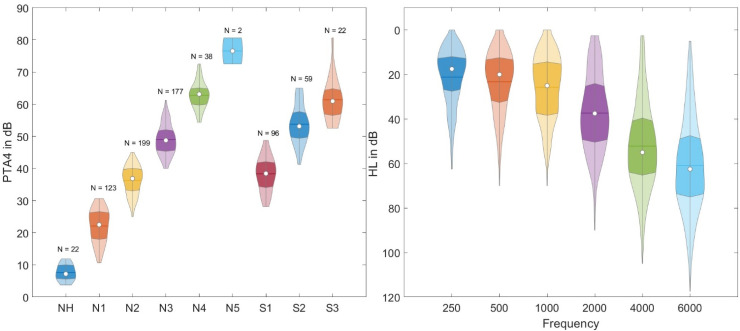 Figure 1
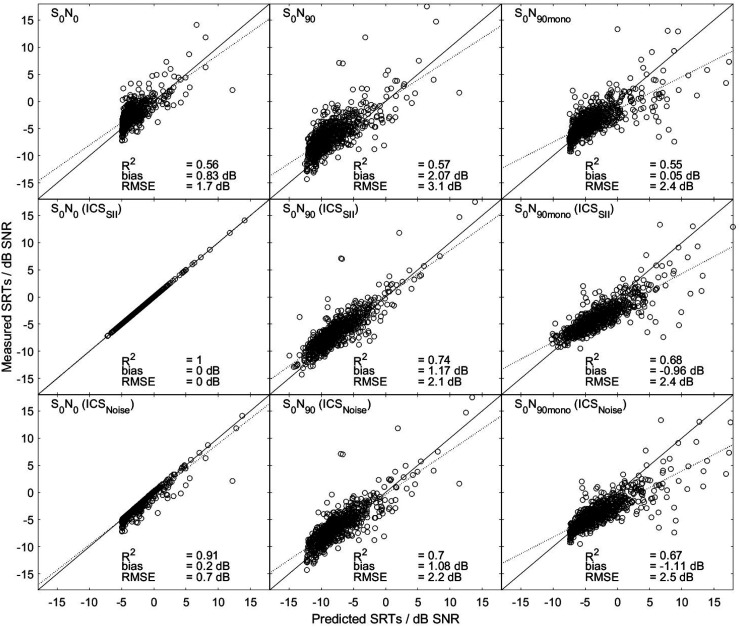 Figure 2
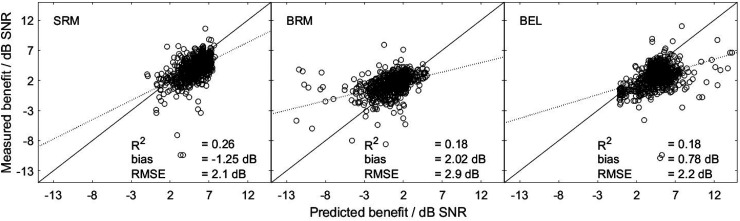 Figure 3
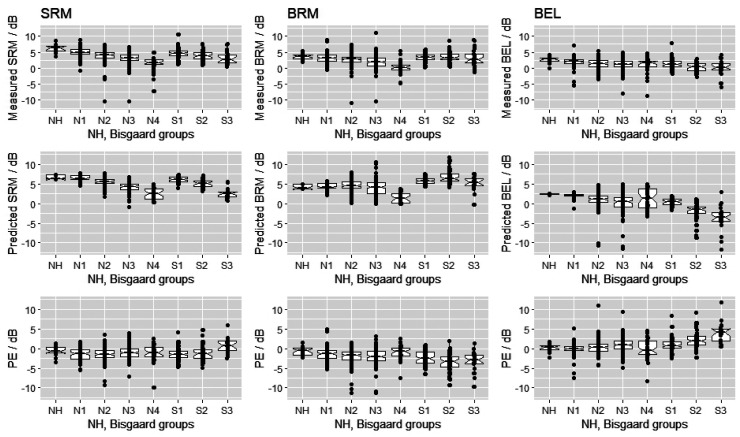 Figure 4
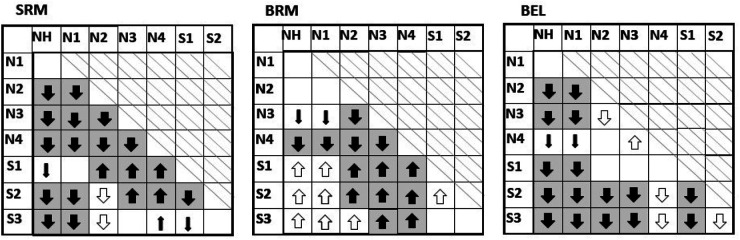 Figure 5
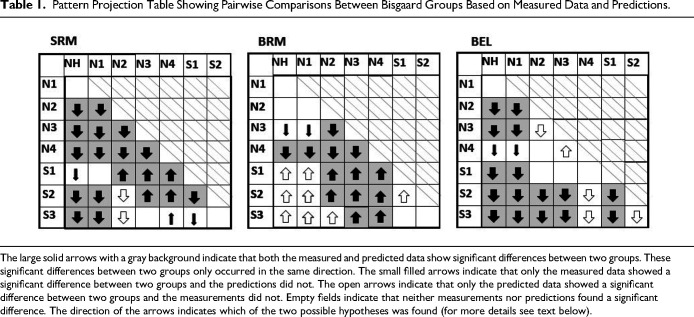 Figure 6
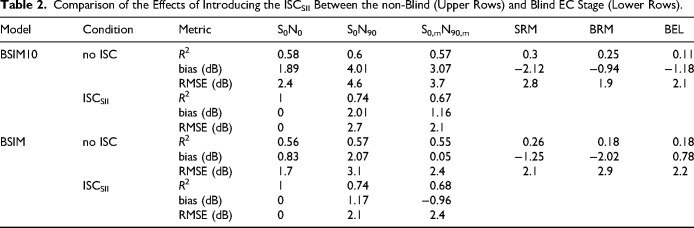 Figure 7
Peer Reviews
No public reviews on file for this paper yet. If you reviewed it on a platform where reviews are public (OpenReview, ICLR, NeurIPS, ICML), you can paste yours below so the community can read it here.
Videos
No videos yet. Explain this paper in a talk, walkthrough, or lecture? Add one.
Taxonomy
TopicsHearing Loss and Rehabilitation · Hearing, Cochlea, Tinnitus, Genetics · Speech and Audio Processing