Sex, drugs, and arousal—two randomized trials on the effects of ketamine on sexual arousal and calcarine gyrus activity
Manfred Klöbl, Thomas Liebe, Gregor Dörl, Peter Stöhrmann, Clemens Schmidt, Elisa Briem, Christian Milz, Gabriel Schlosser, Maximilian Kathofer, David Gomola, Godber Mathis Godbersen, Julia Sophia Crone, Rupert Lanzenberger, Marie Spies

TL;DR
Ketamine reduces sexual arousal in men and women and changes brain activity in a sex-specific way, which may explain its role in chemsex.
Contribution
The study reveals sex-specific effects of ketamine on sexual arousal and calcarine gyrus activity using fMRI.
Findings
Subacute S-ketamine reduced sexual arousal to heterosexual stimuli in women and lesbian stimuli in men.
Late racemic ketamine decreased arousal to heterosexual stimuli in men and increased aversion to gay stimuli in women.
Ketamine reduced calcarine gyrus activation in men compared to women, independent of sexual arousal.
Abstract
Ketamine, a well-established antidepressant and dissociative anesthetic, is also used recreationally in the club and chemsex scene. Survey and qualitative data suggest that while ketamine facilitates chemsex encounters, it diminishes the intensity of the sexual experience. To investigate this phenomenon from a neuroscientific perspective while considering ketamine’s sex-specific effects. Two randomized, placebo-controlled crossover studies using intranasal S-ketamine (double-blinded) or intravenous racemic ketamine (single-blinded). Subjective sexual arousal in response to a newly compiled set of erotic stimuli was assessed following subacute S-ketamine and late racemic ketamine administration across two studies. Overall, 67 healthy volunteers (26 females) participated in the studies. Functional magnetic resonance imaging (fMRI) was performed during sexual arousal assessment under…
Genes, proteins, chemicals, diseases, species, mutations and cell lines named across the full text — each resolved to its canonical identifier and authoritative record.
Click any figure to enlarge with its caption.
 Figure 1
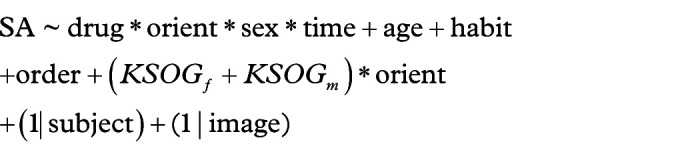 Figure 2
 Figure 3
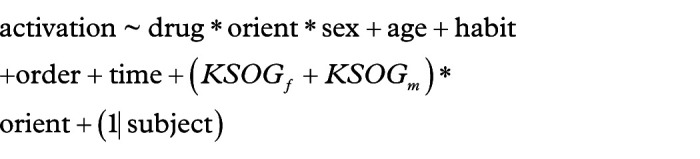 Figure 4
 Figure 5
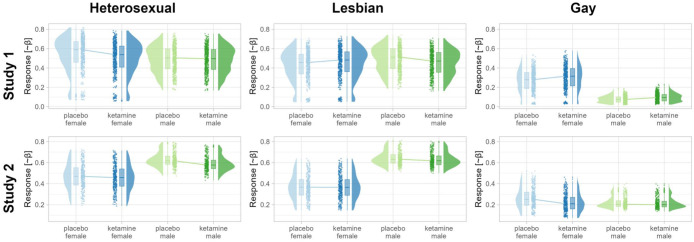 Figure 1
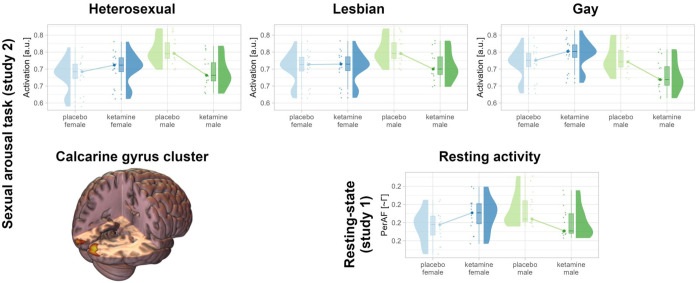 Figure 2
 Figure 8
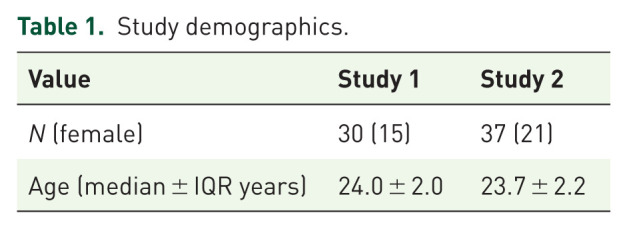 Figure 9
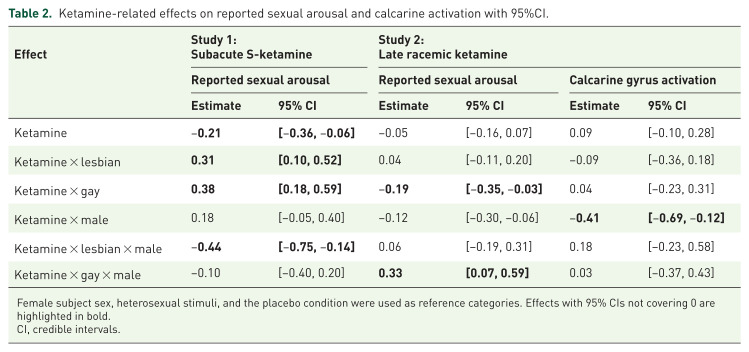 Figure 10
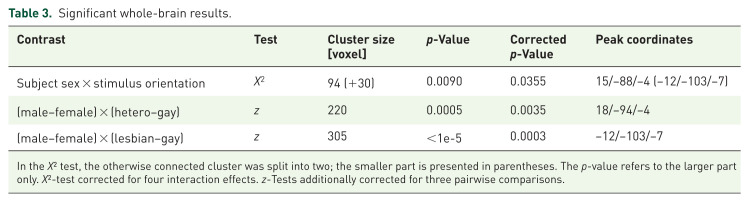 Figure 11
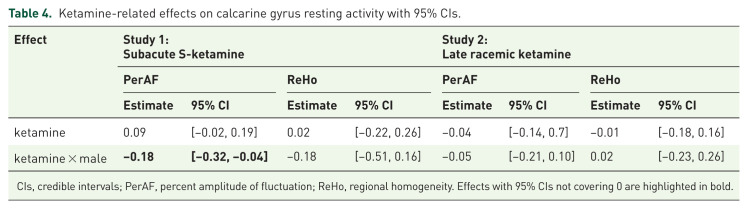 Figure 12
Peer Reviews
No public reviews on file for this paper yet. If you reviewed it on a platform where reviews are public (OpenReview, ICLR, NeurIPS, ICML), you can paste yours below so the community can read it here.
Videos
No videos yet. Explain this paper in a talk, walkthrough, or lecture? Add one.
Taxonomy
TopicsTreatment of Major Depression · Forensic Toxicology and Drug Analysis · Tryptophan and brain disorders