Benefits of Enhanced Phase-Locking for Binaural Coding of Amplitude-Modulated Sounds
Go Ashida

TL;DR
This paper shows how enhanced phase-locking in certain brain cells improves the brain's ability to locate sounds based on differences in timing and volume between ears.
Contribution
The study provides computational evidence that bushy cells enhance binaural sound localization by improving envelope-ITD sensitivity.
Findings
Adding bushy cells in the model sharpens LSO's envelope-ITD tuning.
Envelope-ITD sensitivity extends up to 600 Hz with bushy cells included.
The model matches physiological limits observed in previous studies.
Abstract
The neural processing of interaural time and level differences (ITDs/ILDs) underlies binaural sound localization. Neurons of the mammalian lateral superior olive (LSO) are sensitive to ILDs and envelope-ITDs of acoustic stimuli. Bushy cells in the anteroventral cochlear nucleus convey relevant information from auditory nerve (AN) fibers to the LSO. More specifically, spherical bushy cells (SBCs) send ipsilateral excitatory inputs, while globular bushy cells (GBCs) project to the contralateral medial nucleus of the trapezoid body that provides inhibitory inputs to the LSO. Previous studies in vivo reported an enhancement of phase-locking in bushy cells compared to AN. This enhancement has been hypothesized to benefit temporal coding in binaural neurons, but its actual contribution in LSO remains unclear. Here we investigate this question by computational modeling of binaural circuity…
Genes, proteins, chemicals, diseases, species, mutations and cell lines named across the full text — each resolved to its canonical identifier and authoritative record.
Click any figure to enlarge with its caption.
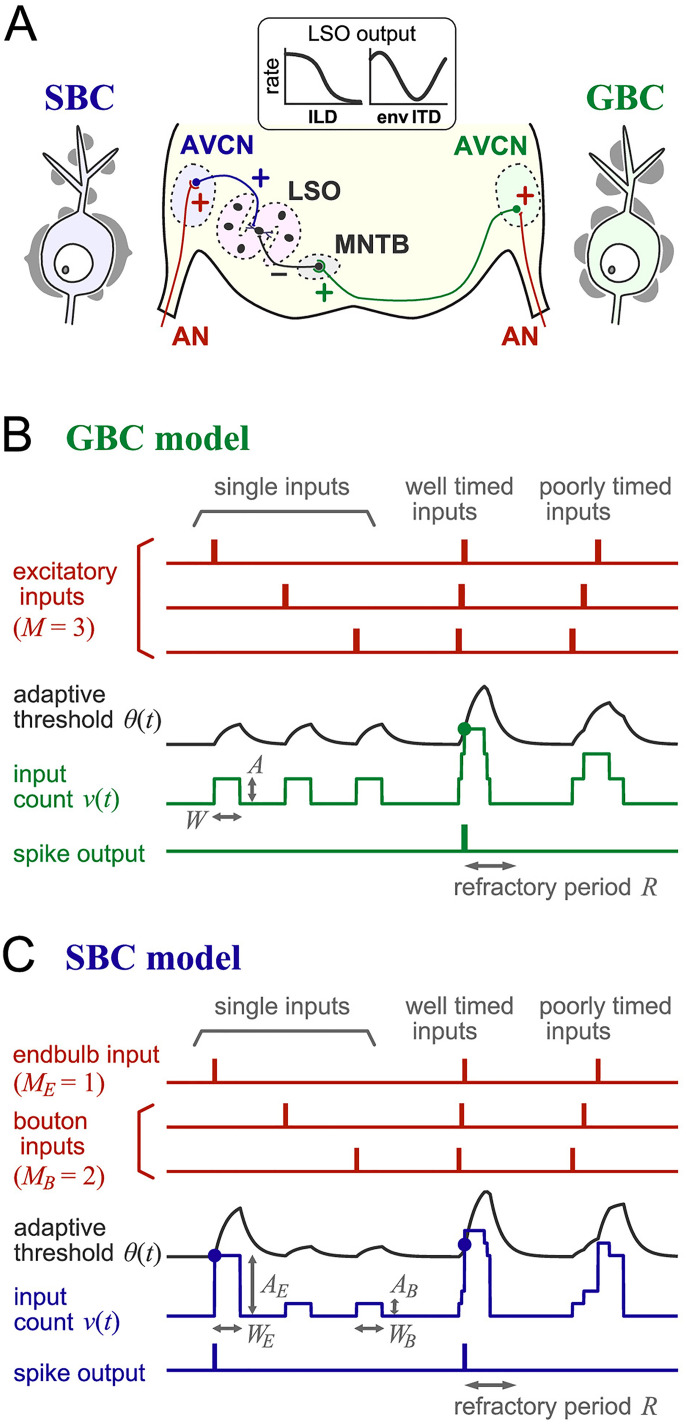 Figure 1
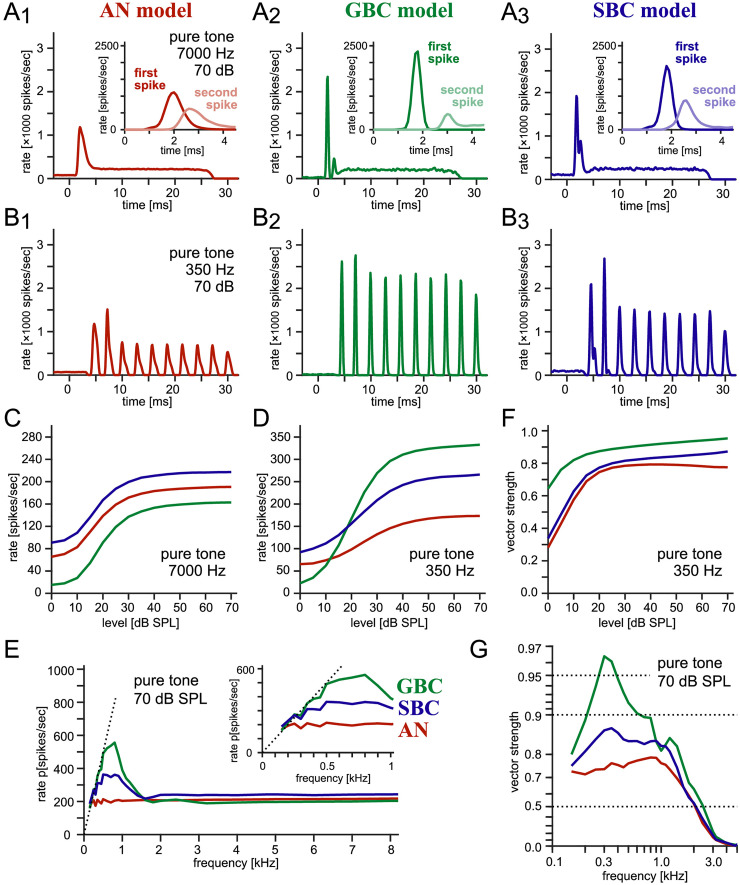 Figure 2
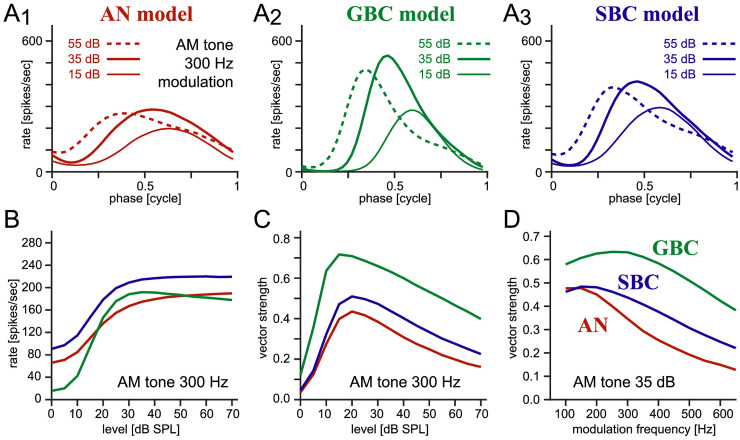 Figure 3
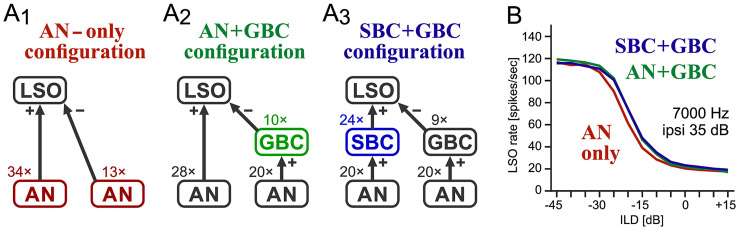 Figure 4
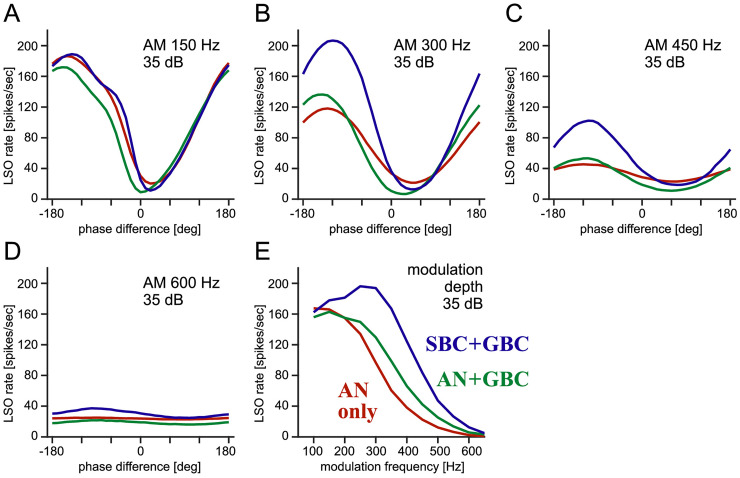 Figure 5
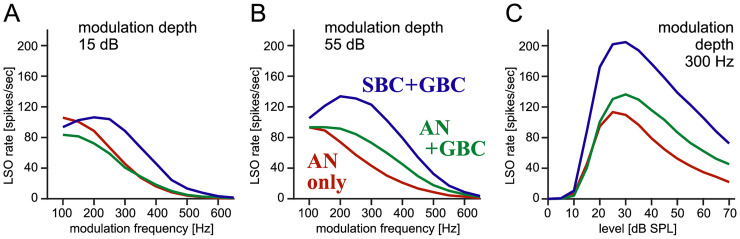 Figure 6
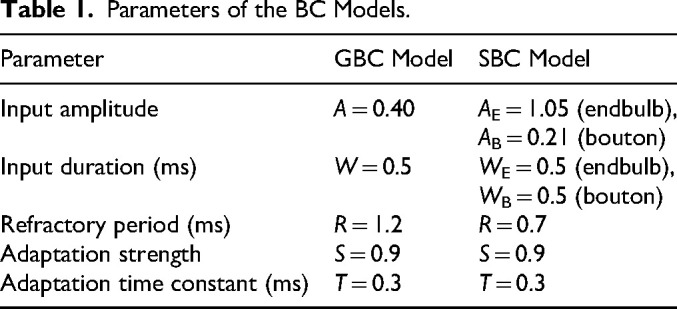 Figure 7
Peer Reviews
No public reviews on file for this paper yet. If you reviewed it on a platform where reviews are public (OpenReview, ICLR, NeurIPS, ICML), you can paste yours below so the community can read it here.
Videos
No videos yet. Explain this paper in a talk, walkthrough, or lecture? Add one.
Taxonomy
TopicsHearing, Cochlea, Tinnitus, Genetics · Neuroscience and Music Perception · Hearing Loss and Rehabilitation