Tracking Cell Movement in Two‐Dimensional, Fragmented Microcosms Reveals Dispersal Syndromes and Strategies in Tetrahymena thermophila
Florent Manzi, Victor Brans, Michaëlla Dacek, Staffan Jacob, Nicolas Schtickzelle

TL;DR
Researchers studied how Tetrahymena thermophila ciliates move in fragmented environments, finding that they use different movement strategies during dispersal phases.
Contribution
The study introduces a novel method to track dispersal strategies in fragmented microcosms using continuous movement data across dispersal phases.
Findings
Two dispersal strategies were identified based on changes in swimming speed and linearity during transience.
Doubling corridor length affected dispersal timing but not emigration rates.
Immigration generally reduced movement traits, contradicting simulated predictions.
Abstract
A major challenge in dispersal ecology consists of testing whether distinct sets of phenotypic traits are associated with the three main phases of dispersal, requiring direct observations of disperser movements during emigration, transience, and immigration. Although freshwater ciliates have been used as a model in artificial dispersal landscapes for over 15 years, most studies would relate dispersal propensity to phenotypic traits measured at the end of dispersal assays. Using ‘two‐dimensional’ fragmented microcosms, abundance, movement and morphology data of Tetrahymena thermophila were collected at numerous time points throughout 6.5 h‐long dispersal assays. Data were compared across distinct zones (‘Start’ and ‘Target’ patches, connected by a ‘Corridor’) to identify shifts in the mean value and distribution of dispersal‐related traits. Inference on the existence of dispersal…
Genes, proteins, chemicals, diseases, species, mutations and cell lines named across the full text — each resolved to its canonical identifier and authoritative record.
Click any figure to enlarge with its caption.
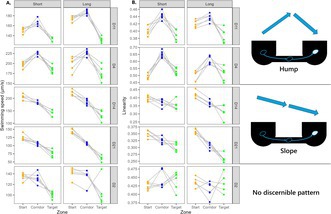 Figure 1
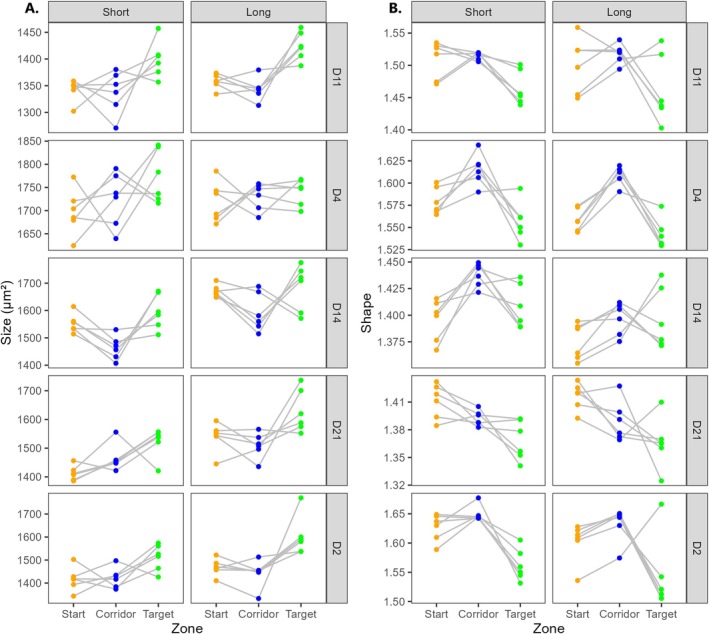 Figure 2
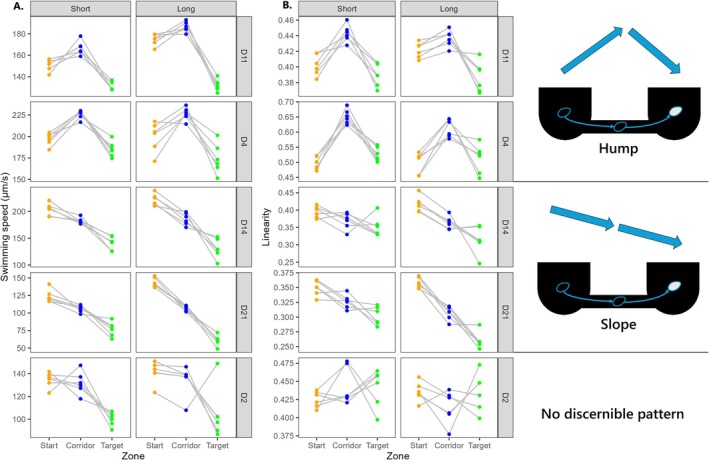 Figure 3
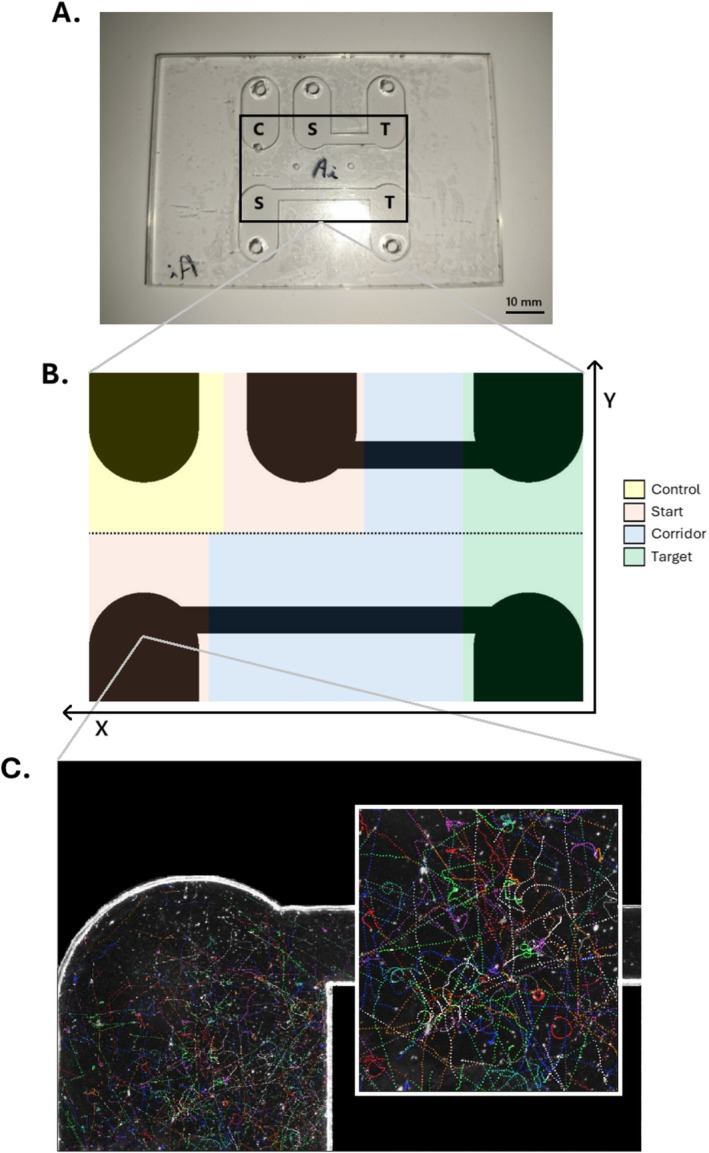 Figure 4
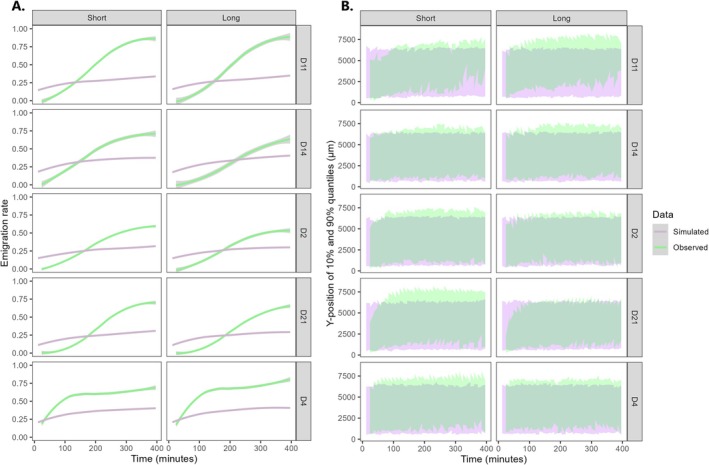 Figure 5
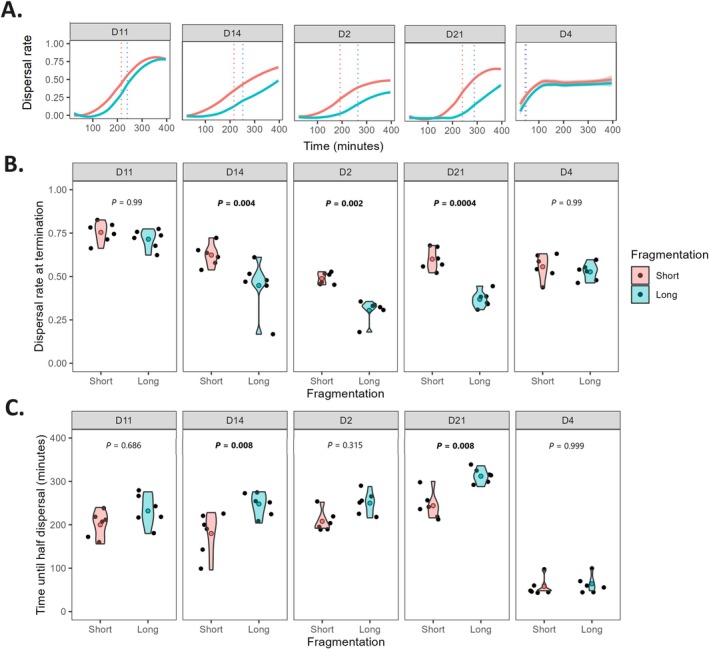 Figure 6
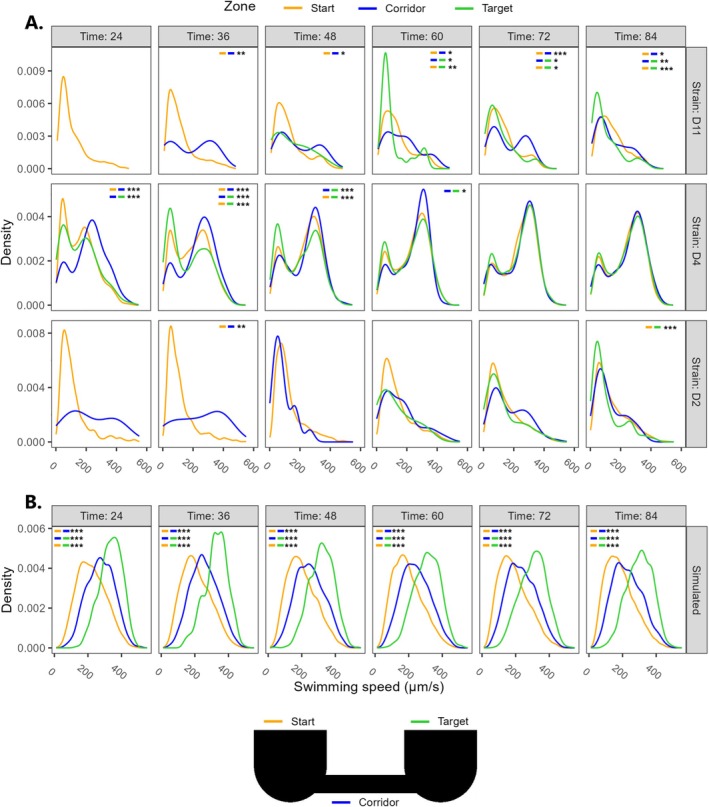 Figure 7
Peer Reviews
No public reviews on file for this paper yet. If you reviewed it on a platform where reviews are public (OpenReview, ICLR, NeurIPS, ICML), you can paste yours below so the community can read it here.
Videos
No videos yet. Explain this paper in a talk, walkthrough, or lecture? Add one.
Taxonomy
TopicsProtist diversity and phylogeny · Micro and Nano Robotics · Aquatic Ecosystems and Phytoplankton Dynamics