Comparison of wear on articular cartilage from polycarbonate-urethane and other implant biomaterials
Maha Ead, Andrea Dimitrov, Haoyang Li, Mohammadhamed Shahsavari, Kezhou Wu, Cameron Scott, Chester Jar, Jonelle Melissa Jn Baptiste, Nadr Jomha, Kajsa Duke, Lindsey Westover

TL;DR
This study compares how different implant materials affect cartilage wear in ankle joint replacements, finding that polycarbonate-urethane causes the least damage.
Contribution
The study introduces polycarbonate-urethane as a novel biomaterial with superior cartilage wear performance for talar implants.
Findings
Polycarbonate-urethane (PCU) caused the least cartilage wear compared to other materials.
PCU showed statistically insignificant differences from cartilage-on-cartilage wear in both macroscopic and microscopic analyses.
Ti-6Al-4V and PEEK caused the most cartilage wear in macroscopic and microscopic assessments, respectively.
Abstract
Talar replacement procedures offer good clinical outcomes for patients experiencing talar osteonecrosis with collapse. However, there is a potential for cartilage wear as the artificial talus prosthesis articulates against the native articular cartilage (AC) in the ankle joint. Therefore, this study investigated the wear of AC against candidate implant biomaterials with the aim of selecting an appropriate material for use in talar replacement procedures. Cobalt chrome alloy (Co-28Cr-6Mo), titanium alloy (Ti-6Al-4V), ultra-high molecular weight polyethylene (UHMWPE), industrial grade natural polyether ether ketone (PEEK), and polycarbonate-urethane (PCU) were tested against porcine AC submerged in bovine serum using an in vitro customized dual-motion wear testing setup. A total of 43,200 cycles at a frequency of 3 Hz were completed for each test. Both macroscopic and microscopic analyses…
Genes, proteins, chemicals, diseases, species, mutations and cell lines named across the full text — each resolved to its canonical identifier and authoritative record.
Click any figure to enlarge with its caption.
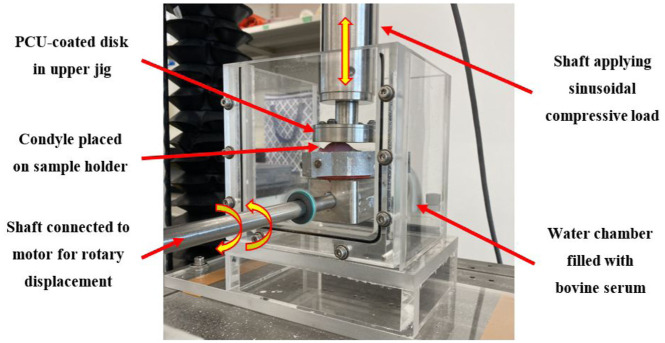 Figure 1
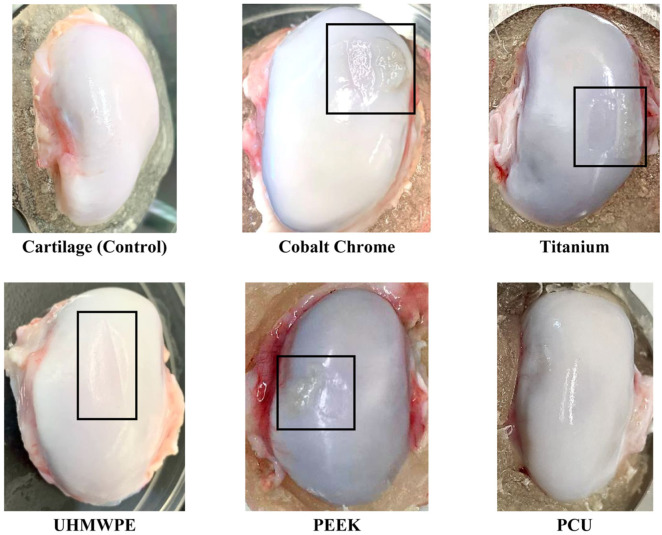 Figure 2
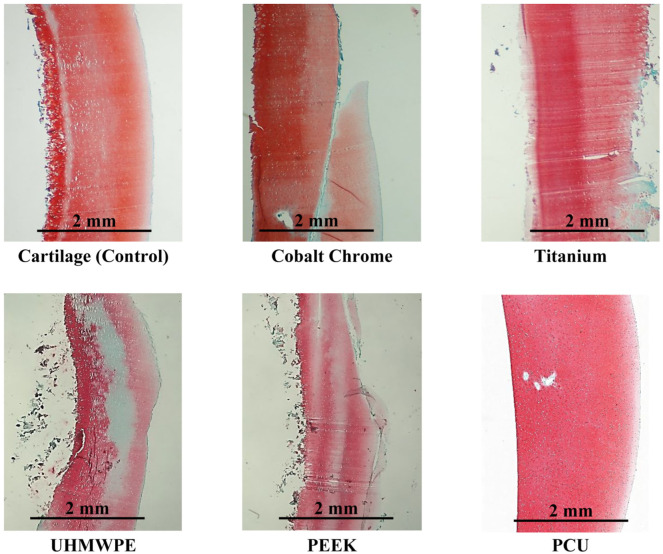 Figure 3
 Figure 4
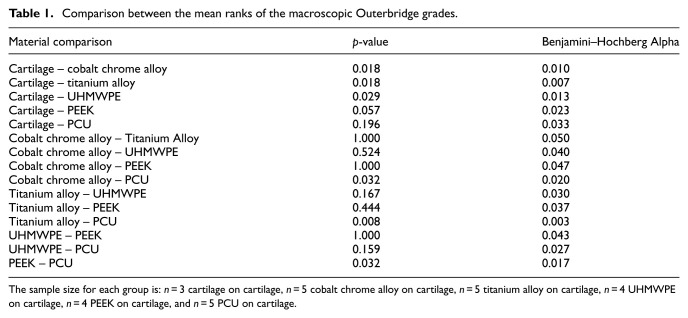 Figure 5
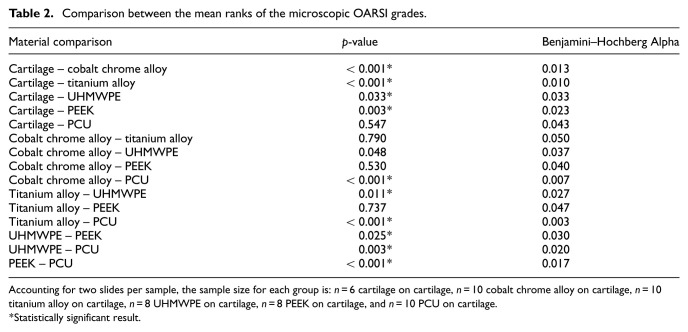 Figure 6
Peer Reviews
No public reviews on file for this paper yet. If you reviewed it on a platform where reviews are public (OpenReview, ICLR, NeurIPS, ICML), you can paste yours below so the community can read it here.
Videos
No videos yet. Explain this paper in a talk, walkthrough, or lecture? Add one.
Taxonomy
TopicsFoot and Ankle Surgery · Diabetic Foot Ulcer Assessment and Management · Facial Rejuvenation and Surgery Techniques