Can location cues facilitate attentional suppression?
Daniel Poole, Jim Grange, Elizabeth Milne

TL;DR
This study investigates whether location cues can help suppress attention to distracting stimuli, but finds no evidence that such cues enhance suppression.
Contribution
The study provides new empirical evidence challenging the idea that spatial cues can proactively suppress attention.
Findings
Across three experiments with 554 participants, no evidence was found for cueing-enhanced attentional suppression.
In some experiments, informative cues slightly slowed responses, suggesting attention was captured by the cues.
Participants did not learn the association between cues and distractor locations.
Abstract
The spatial cueing paradigm has illustrated that location cues result in attentional enhancement of target stimuli. However, evidence is mixed on whether proactive attentional suppression can be cued similarly. In this registered report, we used a hybrid flanker-visual search-spatial cueing paradigm in which participants were presented with informative or non-informative cues regarding the upcoming location of a target feature matching a distractor in the search array. We aimed to replicate and extend a previous study which found evidence that cues support attentional suppression. We repeated the experiment with informative and non-informative cue conditions blocked (Experiment 2) and with possible target and distractor locations separated (Experiment 3). Across all three experiments (total n = 554), we did not observe any evidence of cueing-enhanced attentional suppression. In…
Genes, proteins, chemicals, diseases, species, mutations and cell lines named across the full text — each resolved to its canonical identifier and authoritative record.
Click any figure to enlarge with its caption.
 Figure 1
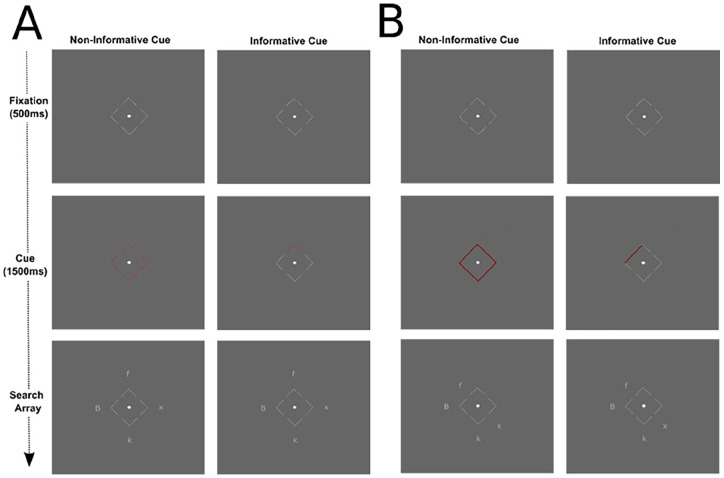 Figure 2
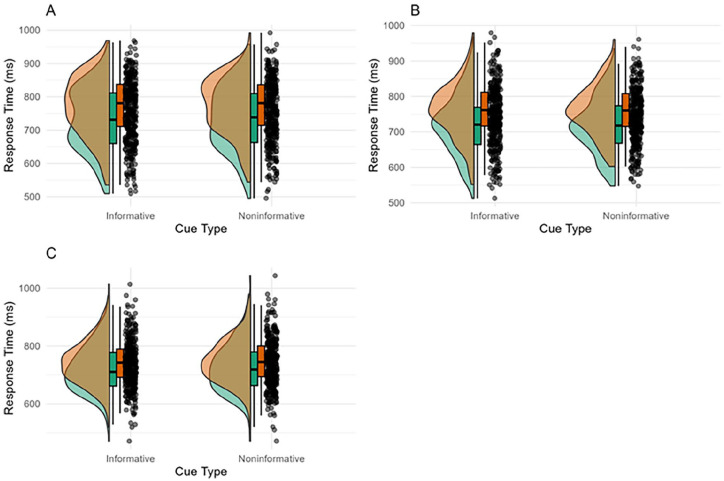 Figure 3
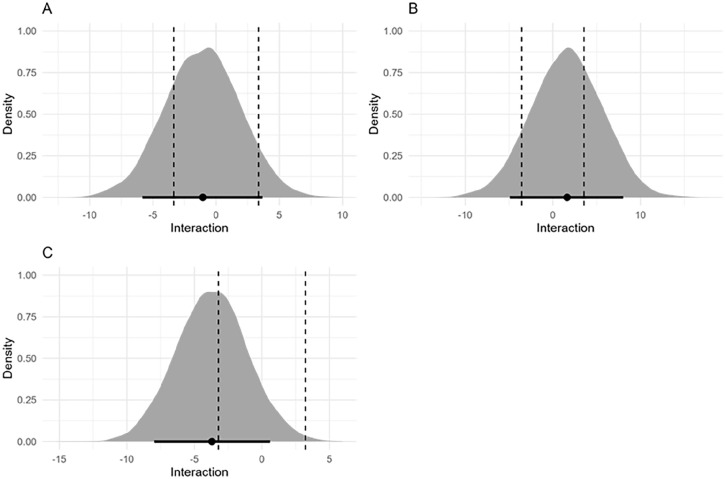 Figure 4
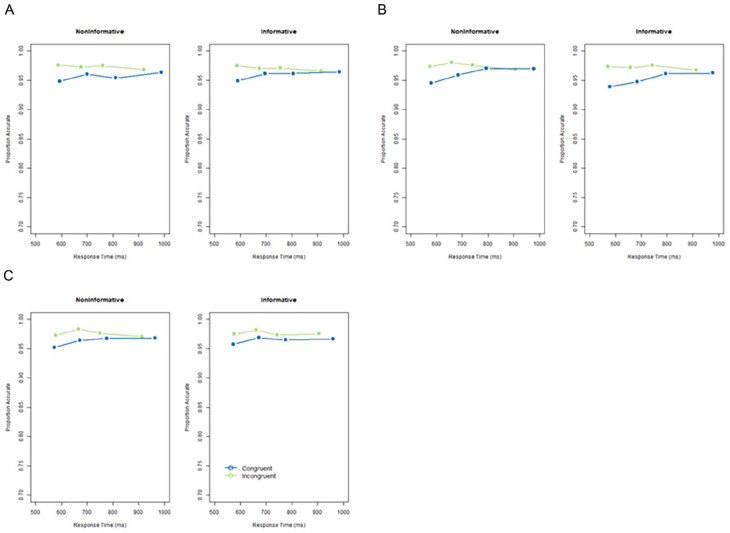 Figure 5
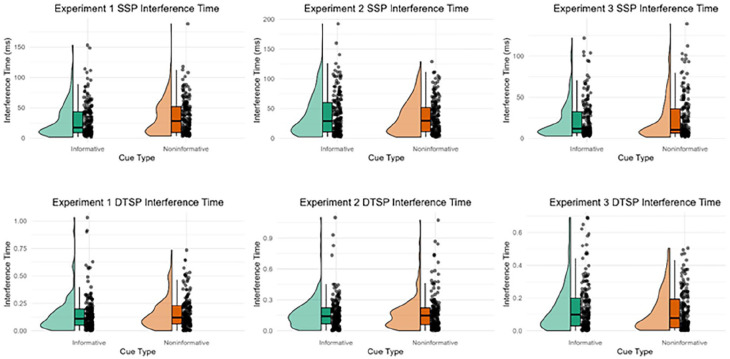 Figure 6
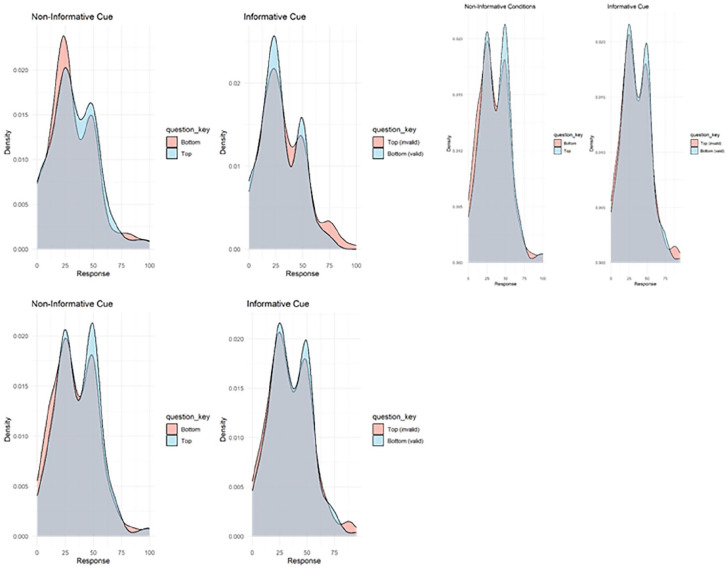 Figure 7
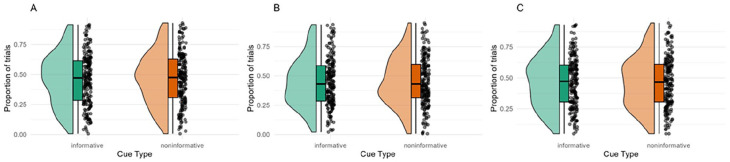 Figure 8
 Figure 9
 Figure 10
 Figure 11
 Figure 12
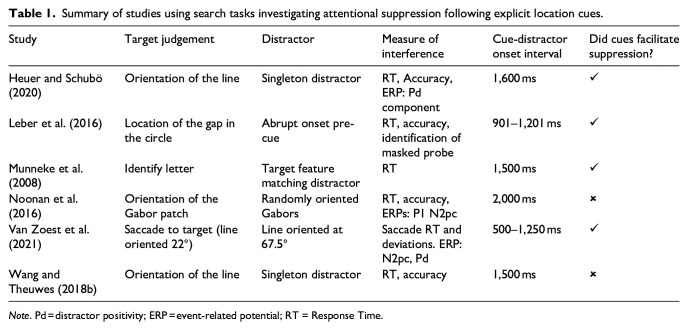 Figure 13
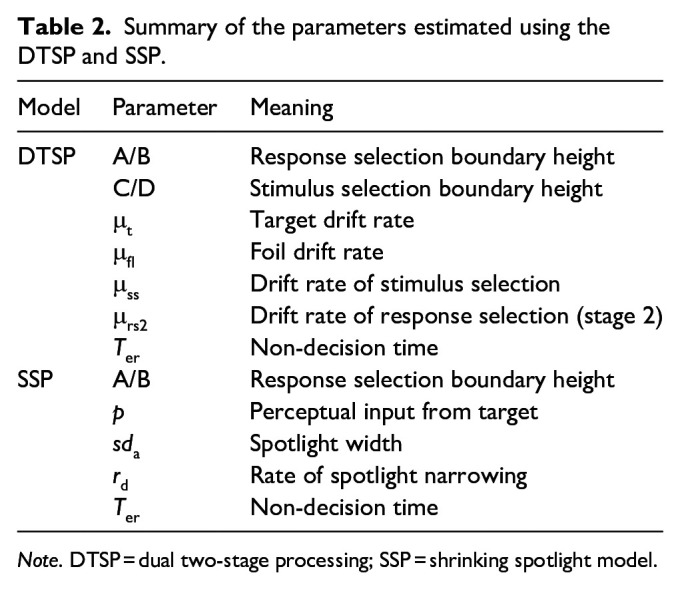 Figure 14
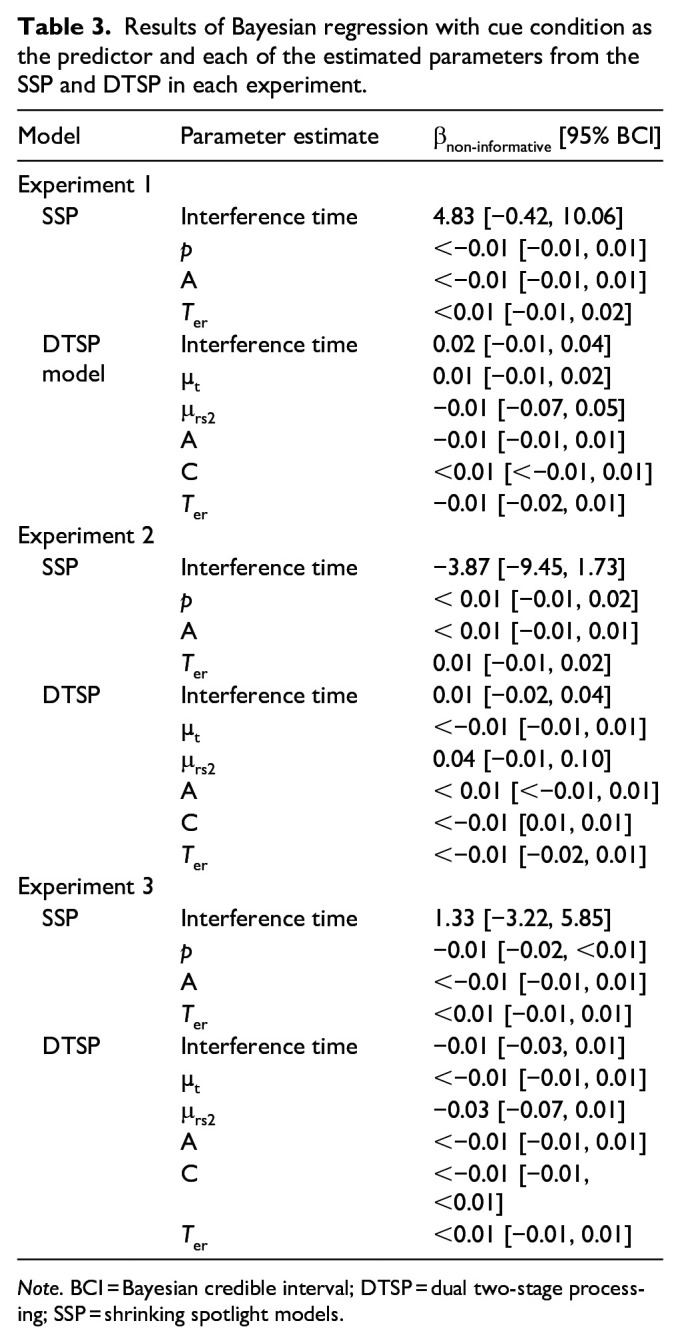 Figure 15
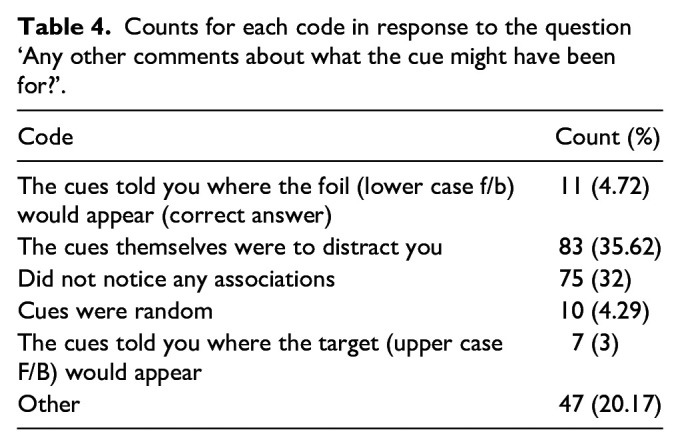 Figure 16
Peer Reviews
No public reviews on file for this paper yet. If you reviewed it on a platform where reviews are public (OpenReview, ICLR, NeurIPS, ICML), you can paste yours below so the community can read it here.
Videos
No videos yet. Explain this paper in a talk, walkthrough, or lecture? Add one.
Taxonomy
TopicsNeural and Behavioral Psychology Studies · Face Recognition and Perception · Visual perception and processing mechanisms