Poster Session I - A82 VIP-SECRETING NEUROBLASTOMA AS A RARE CAUSE OF PERSISTENT SECRETORY DIARRHEA IN INFANCY
A Aljaafari, P Church

TL;DR
A 12-month-old girl with persistent watery diarrhea was diagnosed with a rare VIP-secreting neuroblastoma, highlighting the importance of timely diagnosis in infants with unexplained secretory diarrhea.
Contribution
This case report presents a rare instance of VIP-secreting neuroblastoma in infancy, emphasizing its presentation with refractory secretory diarrhea and electrolyte disturbances.
Findings
The infant's persistent diarrhea was attributed to a VIP-secreting neuroblastoma, a rare cause of secretory diarrhea in infancy.
Despite various treatments, the patient required total parenteral nutrition and chemotherapy for management.
MRI and biochemical tests confirmed the diagnosis of neuroblastoma with elevated urinary markers.
Abstract
Secretory diarrhea in infancy is rare and can be associated with paraneoplastic syndromes such as vasoactive intestinal peptide (VIP)–secreting neuroblastoma. Less than 1% of patients with neuroblastoma have clinical evidence of VIP secretion, and in these rare cases, chronic secretory diarrhea may be one of the earliest presenting symptoms. Delay in recognition may result in severe electrolyte derangements and life-threatening complications. To report a case of an infant presenting with intractable watery diarrhea ultimately attributed to a VIP-secreting neuroblastoma. A 12-month-old girl presented with persistent watery, non-bloody diarrhea occurring several times per day, accompanied by poor oral intake, lethargy, vomiting, and ∼12% weight loss over 10 days. Initial admission identified adenovirus on stool PCR with partial improvement after correction of hypokalemia. Symptoms…
Genes, proteins, chemicals, diseases, species, mutations and cell lines named across the full text — each resolved to its canonical identifier and authoritative record.
Click any figure to enlarge with its caption.
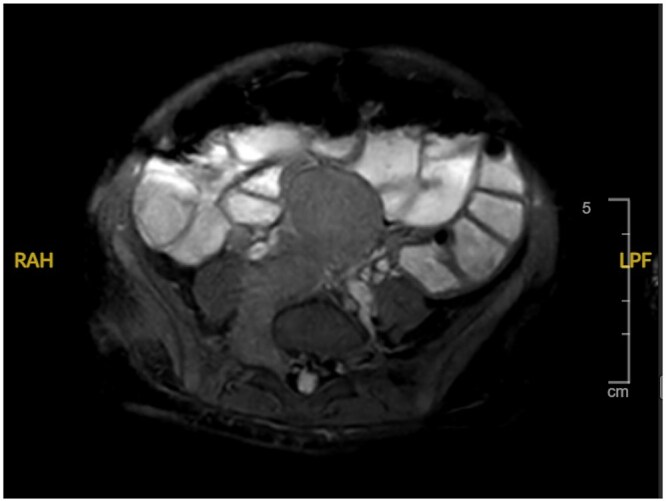 Figure 1
Peer Reviews
No public reviews on file for this paper yet. If you reviewed it on a platform where reviews are public (OpenReview, ICLR, NeurIPS, ICML), you can paste yours below so the community can read it here.
Videos
No videos yet. Explain this paper in a talk, walkthrough, or lecture? Add one.
Taxonomy
TopicsNeuroendocrine Tumor Research Advances · Congenital Ear and Nasal Anomalies · Amino Acid Enzymes and Metabolism