Avocado Consumption Patterns and Nutrient Contribution in the US: National Health and Nutrition Examination Survey 2017–March 2020 and August 2021–August 2023
Feon W. Cheng, Suzanne Morton, Megan A. McCrory, Alanna J. Moshfegh, Nikki A. Ford

TL;DR
This study examines how often Americans eat avocados and how much nutrition they get from them, finding that while avocado consumption is low, it provides significant nutrients like fiber and healthy fats.
Contribution
The study provides the first comprehensive national analysis of avocado consumption patterns and nutrient contributions in the U.S. population.
Findings
5.8% of participants consumed avocado, with the highest prevalence among women, adults aged 19–50, and Hispanic individuals.
Avocado consumption contributed notably to daily intake of beta-cryptoxanthin, alpha-carotene, fiber, and monounsaturated fatty acids.
Most avocado consumption occurred at dinner and at home, with plain avocado being the most common form consumed.
Abstract
Background/Objectives: Avocados are nutrient-dense fruits rich in monounsaturated fats, fiber, and key micronutrients. Although avocado purchases increased in recent years, comprehensive national data on consumption patterns remains limited. Thus, this study aimed to characterize the prevalence, quantity, and context of avocado intake among the US population and to evaluate its contribution to daily nutrient intake. Methods: Day 1 24-h dietary recall data were analyzed from 19,086 participants aged ≥1 year in NHANES 2017–March 2020 and August 2021–August 2023. Avocado intake was identified using consumption data coded as avocado, avocado for use on a sandwich, guacamole, and guacamole with tomatoes. Weighted estimates described consumption prevalence, amount, form, self-selected eating occasion, location, and source. Nutrient contributions from avocado were calculated overall and by…
Genes, proteins, chemicals, diseases, species, mutations and cell lines named across the full text — each resolved to its canonical identifier and authoritative record.
Click any figure to enlarge with its caption.
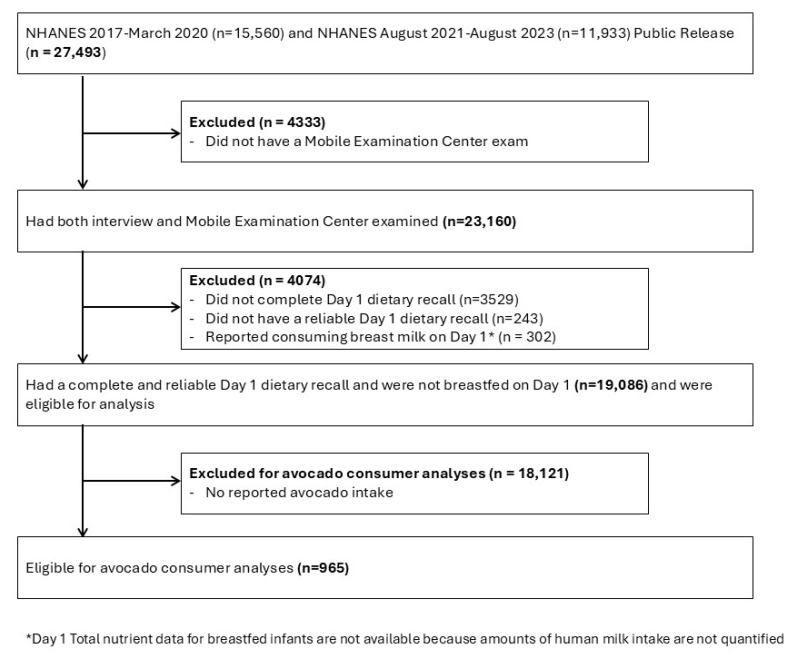 Figure 1
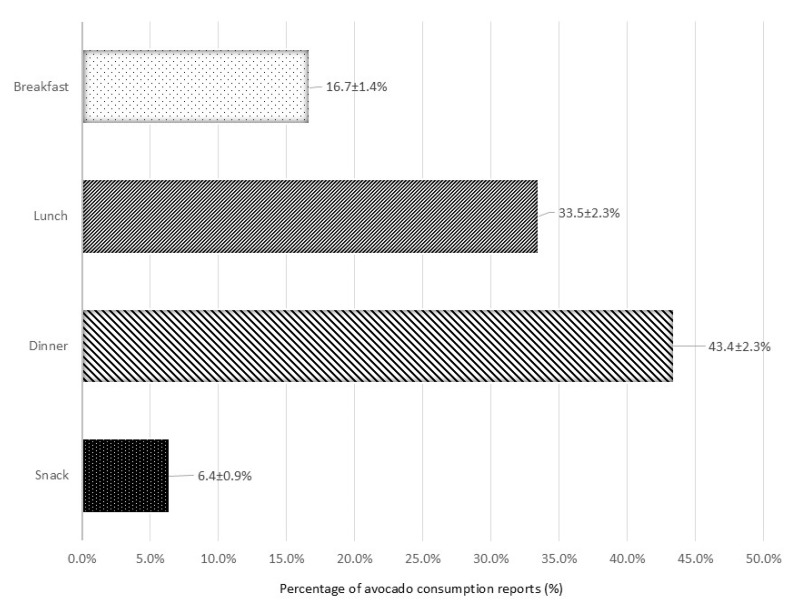 Figure 2
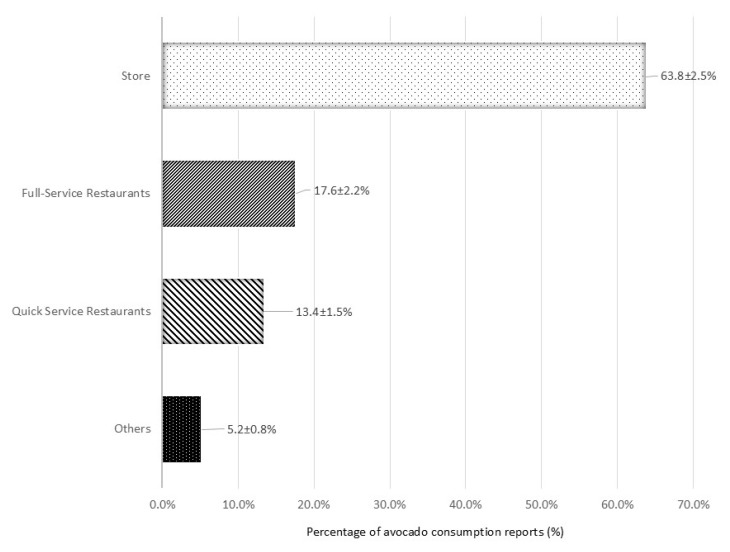 Figure 3
- —Avocado Nutrition Center
Peer Reviews
No public reviews on file for this paper yet. If you reviewed it on a platform where reviews are public (OpenReview, ICLR, NeurIPS, ICML), you can paste yours below so the community can read it here.
Videos
No videos yet. Explain this paper in a talk, walkthrough, or lecture? Add one.
Taxonomy
TopicsPlant Physiology and Cultivation Studies · Postharvest Quality and Shelf Life Management · Botanical Research and Applications
1. Introduction
Avocados (Persea americana) are nutrient-dense fruits that offer a unique combination of macronutrients and micronutrients, including monounsaturated fats, dietary fiber, potassium, magnesium, folate, and vitamins E and K [1]. Unlike most fruits, avocados are low in sugar and provide a substantial proportion of energy from unsaturated fats, a composition that has been associated with improved nutrient adequacy and favorable cardiometabolic markers in observational and clinical research [1,2,3,4,5,6,7]. As a result, avocados are nutritionally compatible with healthful dietary patterns, including Mediterranean-style and plant-based diets [8,9].
Worldwide avocado consumption has experienced sustained growth over recent decades, with total intake rising approximately threefold—from 6 billion to 18 billion pounds—between 2000 and 2020 [10]. In 2020, about one-third of global avocado consumption occurred in Asia-Oceania, Africa, and Europe, while the remaining two-thirds were consumed in the United States, Latin America, and the Caribbean. In the United States, avocado availability has increased substantially over the past two decades. According to the United States Department of Agriculture (USDA), per capita availability of avocados tripled between 2000 and 2021, exceeding 8 pounds per person annually [11]. Despite this growth, comprehensive data on avocado consumption behaviors, including typical amounts consumed, eating contexts, and nutrient contributions, remain limited.
Two prior analyses using earlier National Health and Nutrition Examination Survey (NHANES) cycles have examined avocado consumption in relation to overall diet quality and selected health outcomes. These studies primarily compared avocado consumers with non-consumers and reported average intake amounts or associations with total energy and nutrient intakes and cardiometabolic markers [12,13]. However, avocado intake in these analyses was restricted to plain avocado and avocado for use on a sandwich, while other commonly consumed mixed dishes, such as guacamole-based preparations, were not included. These studies also did not comprehensively characterize avocado consumption behaviors or quantify the relative contribution of avocado to daily energy and nutrient intakes across commonly consumed forms. Furthermore, both studies were based on earlier NHANES cycles (e.g., 2001–2008 and 2001–2012) that precede recent shifts in dietary patterns, food availability, and avocado consumption trends in the United States [11]. Given the substantial changes in avocado availability and consumption over the past decade [11], updated analyses using more recent NHANES data are warranted. Moreover, a detailed examination of avocado-derived nutrient contributions—expressed using both absolute and energy-adjusted measures—can provide important context for understanding the role of avocados within contemporary dietary patterns.
Therefore, the present study used recent data from the National Health and Nutrition Examination Survey (NHANES) to examine current patterns of avocado consumption in the US population. Specifically, it (1) estimates the percentage of individuals who consumed avocado on a given day, (2) quantifies the average amount consumed and the most common forms of consumption, (3) assesses the contribution of avocado to daily nutrient intakes, including the percentage of total energy and nutrients derived from avocado and energy-adjusted intakes per 1000 kcal, and (4) describes the self-selected eating occasions, location, and source of avocado consumption. By providing a detailed characterization of avocado consumption patterns and nutrient contributions, this study extends prior NHANES-based research and offers new insight into how avocados contribute to the diets of U.S. consumers.
2. Materials and Methods
2.1. Study Sample
Of 27,493 NHANES participants from 2017–March 2020 (pre-pandemic) and August 2021–August 2023, 19,086 had a complete and reliable Day 1 24-h multiple pass dietary recall interviews in What We Eat in America and were not breastfed on Day 1 (Figure 1). NHANES is a publicly available dataset administered by the National Center for Health Statistics (NCHS) at the Centers for Disease Control and Prevention (CDC). It employs a complex, multistage, stratified, and clustered probability sampling design and releases data in two-year intervals [14]. Due to disruptions caused by the COVID-19 pandemic, data from 2019–2020 were combined with the 2017–2018 cycle to form the NHANES 2017–March 2020 dataset, as the 2019–2020 cycle alone was not nationally representative [14]. All NHANES participants provided informed consent, and study protocols were approved by the NCHS Ethics Review Board. As NHANES data are de-identified and publicly available, this secondary analysis was exempt from additional ethical review.
2.2. Dietary Assessment
Trained interviewers collected dietary data using the USDA’s Automated Multiple-Pass Method [15]. For the NHANES 2017–March 2020 dataset, two 24-h dietary recalls were conducted: the first in person at a Mobile Examination Center (MEC) and the second by telephone 3–10 days later. For the August 2021–August 2023 dataset, both recalls were conducted by telephone. The present analysis used data from the first recall to estimate average population intake on a given day. For participants younger than 12 years old or unable to self-report, a parent or proxy may have responded on their behalf. Additional details on dietary data collection are available in the NHANES Interview Procedures Manual and related publications [16,17,18].
Avocado consumption was identified using four USDA food codes from the Food and Nutrient Database for Dietary Studies (FNDDS): avocado, avocado for use on a sandwich, guacamole, and guacamole with tomatoes. Participants who reported consuming any of these items on Day 1 were classified as avocado consumers. Nutrient intakes from avocados were estimated using FNDDS [19]. Participants also reported the eating occasion, food source, and whether it was consumed at home. Day 1 dietary recall data were used because the objective of this study was to characterize avocado consumption on a given day, including the prevalence of consumption, amounts consumed, forms of intake, eating occasions, and associated nutrient contributions [20]. The first recall generally has higher response rates and data completeness than the second recall across NHANES cycles [21,22]. Because avocados are episodically consumed, analyses focused on consumers provide more meaningful insight into consumption context and nutrient contribution on days avocados are eaten.
2.3. Demographic Characteristics
Demographic characteristics examined were age (<19, 19–50, >50 years), sex (men and women), race/ethnicity (Hispanic, non-Hispanic White, non-Hispanic Black, and other race—including multi-racial), marital status (married/living with partner, widowed/divorced/separated, and never married), education (<9th grade or 9–11th grade, high school grad/GED or equivalent, and some college or AA degree or college graduate or above), and family income to poverty ratio (<131%, 131–350%, and >350%).
2.4. Statistical Analysis
All analyses accounted for the complex, multistage sampling design of NHANES and applied appropriate survey weights to generate nationally representative estimates. Descriptive statistics were used to summarize participants’ demographic characteristics. Mean avocado intake (grams), avocado-derived energy and nutrient intakes (absolute), and energy-adjusted intakes expressed per 1000 kcal were estimated. Independent sample t-tests and chi-square tests were employed to compare mean gram, energy, and nutrient intakes from avocado consumption, as well as the percentage contribution of avocados to total nutrient intake, across sex, age group, and race/ethnicity. Percentages of total daily nutrient intake from avocado were calculated as the proportion of each nutrient derived from avocado relative to total daily intake of that nutrient. For comparisons involving multiple subgroups, one-way analysis of variance (ANOVA) with Tukey–Kramer post hoc test was used. Eating occasion type and source of avocado consumption were summarized using avocado consumption reports on Day 1 dietary recalls to estimate weighted percentages and standard errors; because participants could report avocado consumption more than once on the same day, the number of consumption reports exceeded the number of avocado consumers. All statistical analyses were performed using SAS version 9.4 (SAS Institute Inc., Cary, NC, USA), with statistical significance defined as p < 0.05.
2.5. Protocol Registration and Checklist
The study protocol was developed and preregistered prior to data analysis on the Open Science Framework at https://osf.io/4vcbm [23] (accessed on 23 November 2024). To ensure transparency and adherence to best practices in reporting, the study followed the Strengthening the Reporting of Observational Studies in Epidemiology checklist [24].
3. Results
3.1. Percentages of Avocado Consumers
Among participants who were included in the analysis, 5.8 ± 0.3% (weighted percentage ± standard error) reported consuming avocado (Table 1). Among avocado consumers, the majority (n = 874) reported a single avocado consumption event on Day 1, while fewer participants reported two (n = 81), three (n = 7), four (n = 2), or five (n = 1) avocado consumption reports on the same day. The prevalence of avocado consumption varied across demographic groups (Table 1A). Adults aged 19–50 years had the highest consumption rate, while those under 19 years had the lowest. Women were more likely to consume avocado than men. By race/ethnicity, Hispanic individuals had the highest percentages of avocado consumers. Consumption was more prevalent among individuals with higher educational attainment and income levels. As shown in Table 1B, avocado consumers had higher mean total energy intake, a greater percentage of energy from total fat and a lower percentage from carbohydrates, and higher fiber intake (g/1000 kcal) compared with non-consumers.
3.2. Mean Intake and Most Common Forms of Avocado Consumption
Among consumers (n = 965), the average avocado intake was 67.0 ± 2.9 g per day (Table 2). Plain avocado was the most frequently consumed form, reported by 54.8% ± 1.4% of consumers, with a mean intake of 70.8 ± 3.0 g per day. Guacamole was the second form most frequently reported by consumers (24.0% ± 2.1%, 65.1 ± 7.2 g per day), followed by avocado used in sandwiches (15.0% ± 1.4%, 32.6 ± 2.2 g per day) and guacamole with tomatoes (10.3% ± 1.0%, 74.7 ± 6.1 g per day). Plain avocado was also the most consumed form across all sex, age, and racial/ethnic groups.
3.3. Nutrient Contributions of Avocado Consumption
Avocados contributed key nutrients to consumers’ diets (Table 2). The average intake per day included 9.6 ± 0.4 g of total fat—primarily monounsaturated fat (6.4 ± 0.3 g)—5.7 ± 0.2 g of total carbohydrates (including 4.4 ± 0.2 g of dietary fiber), and 1.3 ± 0.1 g of protein. Avocados also supplied notable amounts of various micronutrients. Energy-adjusted (per 1000 kcal) daily intakes of avocado and avocado-derived energy and nutrients did not differ by sex. By age group, individuals <19 years had higher energy-adjusted beta-carotene intake compared with those aged 19–50 years. Post hoc comparisons using the Tukey–Kramer adjustment did not identify significant pairwise differences across other age groups or race/ethnicity.
3.4. Percentages of Total Nutrient Intakes from Avocado Consumption
Table 3 shows the percentage contribution of avocados to mean daily nutrient intake among avocado consumers, stratified by sex, age, and race/ethnicity. On average, avocado contributed 5.3 ± 0.2% of daily energy and 11.4 ± 0.4% of daily fat intake. Among fats, monounsaturated fats had the highest contribution. The top five nutrients with the greatest percentage contributions from avocado were beta cryptoxanthin, alpha carotene, dietary fiber, monounsaturated fat, and lutein + zeaxanthin. Significant age-related differences were observed in avocado’s contribution to mean daily intakes for several nutrients. Among individuals under 19 years old, avocado contributed a higher percentage to copper, vitamin B-6, beta carotene, lutein/zeaxanthin, vitamin E and vitamin K intake compared to individuals 19–50 years old. Avocados contributed a greater percentage of daily intake of vitamin C and lutein/zeaxanthin among males than females. Post hoc comparisons using the Tukey–Kramer adjustment revealed significant pairwise differences by race/ethnicity for saturated fat, dietary fiber, potassium, and copper.
3.5. Eating Occasion, Location, and Sources of Avocado
About two-thirds (67.7 ± 2.4%) of avocado consumption reports occurred at home. Most avocado consumption reports occurred during dinner (43.4 ± 2.3%), followed by lunch (33.5 ± 2.3%), breakfast (16.7 ± 1.4%), and snack (6.4 ± 0.9%) (Figure 2). Over 60% of avocado consumption reports were sourced from supermarkets or convenience stores, with smaller proportions obtained from full-service and quick-service restaurants (Figure 3).
4. Discussion
In this nationally representative dataset of US children and adults using NHANES data from 2017–March 2020 and August 2021–August 2023, 5.8% of participants reported consuming avocado on a given day, based on Day 1 dietary recall data. This prevalence surpasses previously reported estimates from earlier NHANES cycles, which documented avocado unweighted consumption rates of about 2.0% (2001–2008) and 2.2% (2001–2012) among adults aged 19 years and older [12,13]. In the current analysis, prevalence was 7.4% among adults aged 19–50 years and 5.5% among those over 50 years. The higher prevalences observed may be partially attributable to the broader classification criteria used to define avocado consumers. Specifically, the present study incorporated four USDA food codes, whereas earlier studies [12,13] relied exclusively on a single code for plain avocado, which also captured avocado for use on a sandwich reports. When our analysis was restricted to that code alone, the prevalence was lower (3.9%), though it remained higher than prior estimates. This comparison suggests that the higher prevalence observed in the present study reflects both broader capture of avocado-containing foods and increased reporting of avocado consumption relative to earlier NHANES cycles, rather than a definitional artifact alone (Appendix A Table A1). Formal trend analyses across multiple NHANES cycles, using consistent food-code definitions, are warranted in future studies to better characterize changes in avocado consumption over time.
Although avocado is considered an episodically consumed fruit, the proportion of individuals who report consuming any avocado on a given day is relatively comparable to that of other commonly consumed fruits. In NHANES 2017–2018, on any given day, 12% of US adults aged ≥19 years reported consuming bananas, followed by apples (8%), grapes (6%), oranges (6%), strawberries (4%), and mixed fruit (4%) [27]. Among children and adolescents, apples were the most commonly consumed fruit (19%), followed by bananas (10%), oranges (9%), grapes (7%), strawberries (7%), and watermelon (4%) [28]. It is also important to compare avocado consumption with vegetables, given that the USDA’s MyPlate program classifies avocados as vegetables. In the same survey cycle, 26% of adults reported consuming potatoes—primarily in the form of fries—followed by salad (18%), tomatoes (5%), carrots (5%), broccoli (4%), corn (4%), string beans (4%), and mixed vegetables (4%) [29]. Similarly, among children and adolescents, potatoes (mostly fries) were the most commonly consumed vegetable (27%), followed by salad (7%), broccoli (5%), carrots (5%), and corn (4%) [30].
The demographic patterns observed among individuals who reported consuming any avocado on a given day are consistent with findings from earlier NHANES cycles and consumer tracking reports [6,12,31,32,33]. The likelihood of reporting any avocado consumption was higher among women, individuals who were married, and those with higher educational attainment and income levels. This trend was also observed in studies of general fruit and vegetable consumption [27,28,29,30,34,35]. These differences likely reflect broader dietary behaviors and sociodemographic factors. Individuals with higher education and income may have greater access to a wider variety of foods, increased exposure to nutrition information, and more opportunities for home food preparation, all of which can influence food choice and consumption patterns [36,37,38]. Similarly, differences by sex may be associated with variations in dietary preferences, household food purchasing practices, and meal preparation behaviors [39,40]. Racial and ethnic differences were also evident and in line with previous NHANES-based studies on avocado [6,12]. Most avocado consumers identified as non-Hispanic White and Hispanic. Additionally, the findings show that avocado consumption rates were highest among Hispanic, whereas non-Hispanic Black individuals exhibited the lowest consumption. The higher prevalence observed among Hispanic populations may reflect longstanding cultural dietary practices in which avocados are commonly incorporated into traditional cuisines [41,42]. These patterns are also consistent with broader fruit intake trends, which show the highest intake among non-Hispanic Asians and Hispanics, followed by non-Hispanic Whites and non-Hispanic Blacks [27,28]. However, the pattern differs for vegetables, where intake was highest among non-Hispanic Asians and Whites, followed by non-Hispanic Blacks and Hispanics [29,30]. From a public health perspective, these findings suggest that longstanding dietary practices among Hispanic populations, in which avocados are commonly consumed, may be important to consider when developing or evaluating nutrition strategies, while also highlighting the need to better understand barriers to avocado and fruit intake among populations with lower consumption [43].
Although the mean avocado intake observed in this analysis amounted to slightly less than half of a medium avocado (75 g), it contributed meaningfully to daily nutrient intake. Among avocado users, on average, avocado consumption accounted for more than 10% of the mean daily intake of several key nutrients, including beta-cryptoxanthin (33.4 ± 1.5%), alpha-carotene (27.0 ± 1.3%), dietary fiber (19.9 ± 0.6%), monounsaturated fatty acids (19.7 ± 0.5%), lutein + zeaxanthin (16.8 ± 0.7), vitamin K (14.1 ± 0.6%), vitamin E (alpha-tocopherol) (13.8 ± 0.5%), vitamin C (12.9 ± 0.7%), folate, expressed as dietary folate equivalents (12.5 ± 0.4%), potassium (11.4 ± 0.3%), and copper (10.1 ± 0.3%). These contributions are particularly relevant given that a large proportion of the US population fails to meet recommended intake levels for some of these nutrients. According to NHANES 2017–March 2020 data (usual intake from food and beverages), 44% of individuals aged one years and older did not meet the Estimated Average Requirement (EAR) for vitamin C and 74% fell short for vitamin E [25]. Moreover, only 28% exceeded the Adequate Intake (AI) for potassium, 6% for dietary fiber, and 54% for vitamin K [25]. Both potassium and dietary fiber are classified as nutrients of public health concern in the 2020–2025 Dietary Guidelines for Americans [44]. Notably, 67 g of avocado provides 339.7 mg of potassium (7% daily value—DV), 4.6 g of dietary fiber (16% DV), 14.0 mcg of vitamin K (12% DV), 5.9 mg of vitamin C (7% DV), and 1.3 mg of vitamin E (9% DV) [1].
These nutrient contributions illustrate how avocados contribute to dietary recommendations, particularly within underconsumed nutrient categories. Consistent with these findings, previous research has shown that avocado consumers tend to have higher intakes of potassium, dietary fiber, vitamins K, C, and E, compared to non-consumers [13]. However, interpretation of these findings should be contextualized relative to other fruits and vegetables. Most prior studies examining individual fruits or vegetables have focused on differences in total energy intake, overall nutrient intake, or nutrient adequacy among consumers versus non-consumers [45,46,47,48], rather than quantifying the relative contribution of a specific food to daily energy and nutrient intakes, as was done in the present analysis. Therefore, future research should apply similar contribution-based approaches to other individual fruits and vegetables to help provide a more comprehensive basis for comparison. To provide context in the interim, Table A2 in the Appendix A presents nutrient composition per 100 g of avocados relative to the top five commonly consumed individual fruits and vegetables determined by Hoy et al. using NHANES 2017–2018 [27,28,29,30]. Compared with most fruits and vegetables, avocados are more energy-dense and provide higher amounts of total fat—predominantly monounsaturated fatty acids—as well as relatively higher dietary fiber, magnesium, potassium, folate, niacin, and vitamin E per 100 g. Although avocados are relatively energy-dense, existing randomized controlled trials and observational studies do not indicate an association between avocado consumption and weight gain [49,50,51,52].
Interpretation of avocado nutrient contributions should also consider broader contextual factors, including affordability, accessibility, and sustainability. When compared with the top five commonly consumed individual fruits and vegetables, the average price per cup equivalent in 2023 was among the highest for corn, broccoli, strawberry, and avocado (Table A3). In terms of accessibility, increased imports have contributed to year-round availability of avocados in the U.S. food supply [11]. From a sustainability perspective, avocados are tree-grown crops, and their production may incorporate agricultural practices that support natural resource management, including soil and ecosystem stewardship, depending on growing region and management practices [53].
In addition to their nutrient contributions, insights into how and when avocados are consumed provide important context for their role in the diet. In the present analysis, dinner was the most common eating occasion for avocado consumption, followed by lunch, breakfast, and snacks. This pattern aligns with findings from a consumer tracking report [33] and NHANES data on vegetable consumption among children, adolescents, and adults [29,30], which also identified dinner and lunch as the most frequent occasions, followed by snacks and breakfast. In contrast, fruit consumption among adults typically occurred during snacks, then breakfast, lunch, and dinner [27]. Similarly, a separate NHANES analysis reported that children and adolescents most often consumed fruits as snacks, followed by lunch, breakfast, and dinner [28]. Most avocado consumption in the present study took place at home. Supporting this, the consumer tracking report found that over 60% of participants purchased avocados to eat or serve at home at least a few times per month [33]. Avocados were primarily sourced from supermarkets and convenience stores, consistent with retail data indicating that 60–65% of sales occur through these outlets [54]. These findings suggest that retail availability/accessibility and home preparation play significant roles in consumption patterns. Regarding preparation, plain avocado was the most reported form, followed by guacamole, avocado in sandwiches, and guacamole with tomatoes. This differs slightly from consumer tracking data, which identified guacamole/dips as the most frequent preparation, followed by use in salads, sandwiches/wraps/burgers, and plain avocado [33]. One possible explanation for this discrepancy may lie in differences in the sampled populations. NHANES uses a complex, probability-based sampling design to ensure representation of the entire U.S. population across all age groups [16,17,18]. In contrast, the consumer tracking data were limited to individuals aged 18 years or older who shared grocery shopping responsibilities and were already aware of avocados [33]. The inclusion criteria in the latter study may have selected for more engaged or health-conscious consumers, potentially influencing reported preparation preferences.
The study received funding from the Avocado Nutrition Center (ANC), and some authors are affiliated with the organization as employees or advisors. To ensure transparency and minimize potential bias, the study protocol and analytic plan were developed and preregistered prior to data analysis on the Open Science Framework [23], and all analyses were conducted using publicly available NHANES data collected independently by the National Center for Health Statistics [16]. Although the ANC supports research related to Hass avocados, NHANES dietary data do not distinguish between avocado varieties; therefore, the analyses reflect consumption of all avocado types reported by participants. In addition, the study followed established reporting guidelines (STROBE) [24], and interpretation of findings was limited to descriptive characterization of avocado consumption patterns and nutrient contributions, without extrapolation to dietary recommendations or health outcomes.
The present study has several strengths. It draws on data from a large, nationally representative health and nutrition survey, which enhances the generalizability of the results. Moreover, dietary intake was assessed using the USDA’s Automated Multiple-Pass Method—a validated technique designed to reduce bias and improve recall accuracy [55]. Nonetheless, several limitations should be considered. First, reliance on 24-h dietary recall introduces the possibility of recall bias, as individuals may forget or omit certain food items [56]. Second, the relatively small sample of avocado consumers in the non-Hispanic Black and other race groups may limit the reliability of the comparison of results to these groups. Lastly, the analysis was limited to the two most recent NHANES cycles to reflect current consumption patterns, which may restrict the ability to evaluate trends or behaviors preceding this period. Future studies incorporating a broader range of survey years are warranted to examine trends in avocado consumption over time. Lastly, analyses were restricted to Day 1 dietary recall data and avocado consumers only, which precludes estimation of usual intake distributions or assessment of population-level nutrient adequacy [16]. This analytic approach was intentionally aligned with the study objective of characterizing avocado consumption on a given day, including prevalence of consumption, amounts consumed, forms of intake, eating occasions, and associated nutrient contributions. Accordingly, the findings should be interpreted as descriptive of consumption days rather than indicative of the potential effects of increasing avocado intake at the population level.
5. Conclusions
In this nationally representative data, fewer than 6% of individuals in the US reported consuming avocado on a given day. However, avocado consumption was higher among certain demographic groups, including women, adults aged 19–50 years, and Hispanic populations. Among consumers, avocado intake averaged 67 g (or slightly less than half of a medium avocado) per day, with plain avocado as the most common form and dinner as the most frequent eating occasion in which avocado was consumed. Although the overall prevalence of consumption was modest, avocados contributed substantially to the daily intake of several underconsumed nutrients for consumers, such as dietary fiber, and vitamins C and E. These findings characterize current avocado consumption patterns and nutrient contributions among U.S. consumers but do not evaluate overall diet quality or health outcomes. Further research is needed to assess how avocado consumption fits within broader dietary patterns and whether changes in intake are associated with improvements in nutrient adequacy at the population level.
The reference list from the paper itself. Each links out to its DOI / PubMed record.
- 1Dreher M.L. Davenport A.J. Hass Avocado Composition and Potential Health Effects Crit. Rev. Food Sci. Nutr.20135373875010.1080/10408398.2011.55675923638933 PMC 3664913 · doi ↗ · pubmed ↗
- 2Dreher M.L. Cheng F.W. Ford N.A. A Comprehensive Review of Hass Avocado Clinical Trials, Observational Studies, and Biological Mechanisms Nutrients 202113437610.3390/nu 1312437634959933 PMC 8705026 · doi ↗ · pubmed ↗
- 3Park E. Edirisinghe I. Burton-Freeman B. Avocado Fruit on Postprandial Markers of Cardio-Metabolic Risk: A Randomized Controlled Dose Response Trial in Overweight and Obese Men and Women Nutrients 201810128710.3390/nu 1009128730213052 PMC 6164649 · doi ↗ · pubmed ↗
- 4Wien M. Haddad E. Oda K. SabatéJ. A Randomized 3 × 3 Crossover Study to Evaluate the Effect of Hass Avocado Intake on Post-Ingestive Satiety, Glucose and Insulin Levels, and Subsequent Energy Intake in Overweight Adults Nutr. J.20131215510.1186/1475-2891-12-15524279738 PMC 4222592 · doi ↗ · pubmed ↗
- 5Dreher M.L. Whole Fruits and Fruit Fiber Emerging Health Effects Nutrients 201810183310.3390/nu 1012183330487459 PMC 6315720 · doi ↗ · pubmed ↗
- 6Cheng F.W. Ford N.A. Taylor M.K. US Older Adults That Consume Avocado or Guacamole Have Better Cognition Than Non-Consumers: National Health and Nutrition Examination Survey 2011–2014 Front. Nutr.2021874645310.3389/fnut.2021.74645334722611 PMC 8551489 · doi ↗ · pubmed ↗
- 7Pedreschi R. Uarrota V. Fuentealba C. Alvaro J.E. Olmedo P. Defilippi B.G. Meneses C. Campos-Vargas R. Primary Metabolism in Avocado Fruit Front. Plant Sci.20191079510.3389/fpls.2019.0079531293606 PMC 6606701 · doi ↗ · pubmed ↗
- 8Daley S.F. Hinson M.R. Mediterranean Diet Stat Pearls Stat Pearls Publishing Treasure Island, FL, USA 202532491665 · pubmed ↗