Chemical and Enantioselective Analysis of the Leaf Essential Oil from Varronia crenata Ruiz & Pav. Growing in Ecuador
Karem Cazares, Yessenia E. Maldonado, Nixon Cumbicus, Gianluca Gilardoni, Omar Malagón

TL;DR
This study analyzed the essential oil from Varronia crenata leaves in Ecuador, revealing its rich chemical composition and enantiomeric profiles, which could be useful for pharmaceutical and agricultural applications.
Contribution
The first chemical and enantioselective characterization of Varronia crenata leaf essential oil from Ecuador is presented.
Findings
The essential oil is rich in sesquiterpenes and monoterpenes, with germacrene D and (E)-β-caryophyllene as major constituents.
Nine chiral compounds were analyzed, with three detected as enantiomerically pure.
The study provides novel chemotaxonomic data for the Varronia genus.
Abstract
Essential oils from species of the genus Varronia (Boraginaceae) are recognized for their chemical diversity and biological potential; however, phytochemical information on Varronia crenata Ruiz & Pav. remains scarce, despite its wide distribution in the Andean region. The aim of this study was to provide the first chemical and enantioselective characterization of the essential oil obtained from the leaves of V. crenata growing in Ecuador. Qualitative and quantitative analyses were carried out by GC–MS and GC–FID, respectively, using two columns with stationary phases of contrasting polarity. Compounds were identified by matching linear retention indices and mass spectra to literature references and quantified by external calibration using relative response factors (RRFs) calculated for each compound based on its combustion enthalpy. The most abundant constituents (≥3.0% on average…
Genes, proteins, chemicals, diseases, species, mutations and cell lines named across the full text — each resolved to its canonical identifier and authoritative record.
Click any figure to enlarge with its caption.
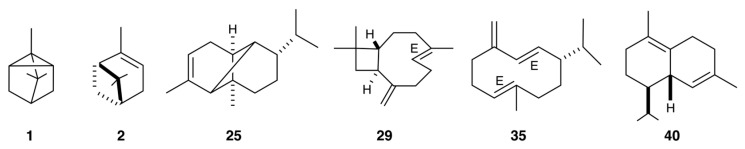 Figure 1
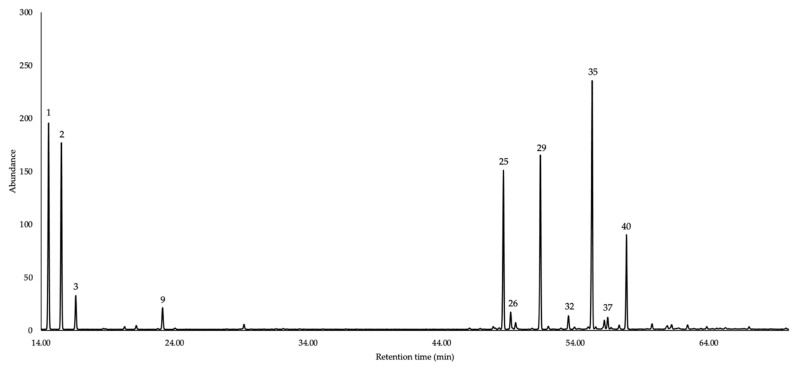 Figure 2
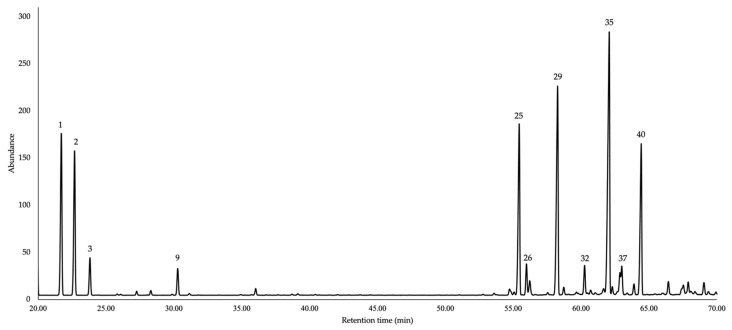 Figure 3
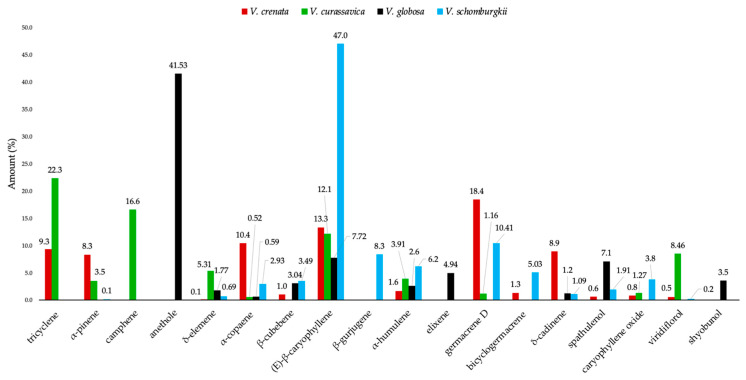 Figure 4
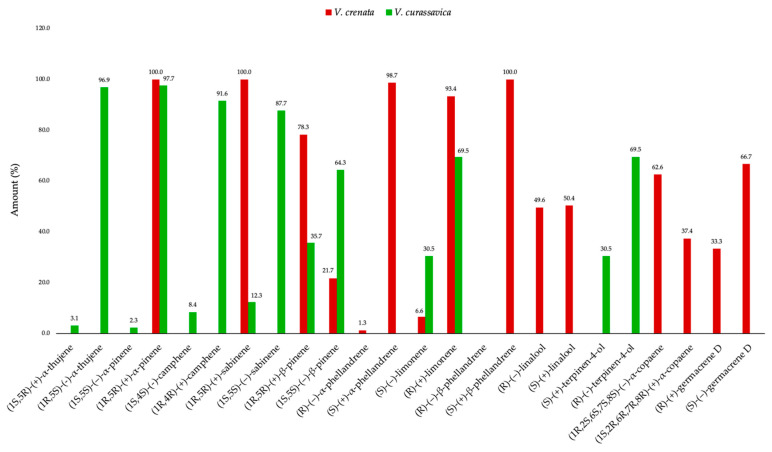 Figure 5
Peer Reviews
No public reviews on file for this paper yet. If you reviewed it on a platform where reviews are public (OpenReview, ICLR, NeurIPS, ICML), you can paste yours below so the community can read it here.
Videos
No videos yet. Explain this paper in a talk, walkthrough, or lecture? Add one.
Taxonomy
TopicsSesquiterpenes and Asteraceae Studies · Plant Toxicity and Pharmacological Properties · Bioactive Natural Diterpenoids Research
1. Introduction
Since ancient times, aromatic and medicinal plants have been prized for their healing and fragrant properties, making them an important source of bioactive compounds with therapeutic, cosmetic, and food applications [1]. With the development of natural product chemistry, it has been proven that these properties are due to their complex composition of secondary metabolites, mainly terpenes and phenylpropanoids, which are responsible for most of their antimicrobial, anti-inflammatory, antioxidant, and cytotoxic effects [2]. In the field of phytochemistry, essential oils (EOs) stand out. These are complex mixtures of volatile compounds synthesized and stored in different specialized secretory structures, such as glandular trichomes, cavities, or oil ducts, where highly volatile metabolites are concentrated [3].
Ecuador is recognized by the United Nations Environment Programme’s World Conservation Monitoring Center as one of the 17 megadiverse countries in the world. It has a wide variety of species, many of which are unique to the country. In terms of flora, Ecuador has more than 5000 endemic species [4]. Despite this, phytochemical research on many native species remains limited in the country [5,6]. For this reason, the authors have been researching the secondary metabolites present in Ecuadorian flora for more than 20 years, with the aim of expanding knowledge in the fields of natural product chemistry and phytopharmacology.
Boraginaceae taxa have been traditionally used for centuries in different cultural contexts, and their ethnopharmacological relevance has been progressively supported by phytochemical and biological studies. Members of this family are known to produce a wide variety of secondary metabolites, including fatty acids, essential oils, phenolic compounds, flavonoids, naphthoquinones, and other bioactive constituents, which account for their therapeutic and functional properties [7]. Extracts from Boraginaceae species have been associated with anti-inflammatory, antimicrobial, antioxidant, and skin-protective effects, supporting their application in pharmaceutical, cosmetic, and related biotechnological fields [8,9].
In this context, the species of genus Varronia (Boraginaceae) have attracted growing scientific interest, due to the wide range of secondary metabolites they produce, including monoterpenes, sesquiterpenes, and phenolic compounds, that contribute significantly to their chemical profile and biological potential [10]. This neotropical genus comprises more than 125 species recorded to date. Most of them are distributed in the American continent in countries such as Brazil, Mexico, and the northern Andes region, where this plant group has a strong presence [11]. These species are distinguished by their multi-stemmed shrub habit, serrated leaves, condensed inflorescences, and triporate pollen grains with a reticulate tectum [12].
Among the species belonging to this family, Varronia crenata Ruiz & Pav. is the subject of the present study. It is an aromatic shrub species, distributed across Ecuador, Peru and Bolivia. According to Tropicos, V. crenata is also known under two widely used synonyms: Cordia lantanoides Spreng. and Varronia rusbyi (Britton ex Rusby) Borhidi [13]. However, a review of Plants of the World Online indicates that V. rusbyi is treated as a synonym of Cordia alliodora. Our voucher specimen, and its comparison with reference material for C. alliodora, do not match that taxon [14]. Known locally as “wakra kallu” (Kichwa), “sacha ortiga” (Spanish–Kichwa), “matico”, “morochillo”, and “yanango”, V. crenata (reported in the cited literature under the synonym C. lantanoides) is traditionally used by Andean communities as food and medicine, and as a source of fuel [15]. This plant grows at altitudes between 2000 and 3000 m above sea level, where it inhabits montane forests and Andean scrublands, characterized by persistent fog and a temperate humid climate [13,14,15,16,17]. Despite its wide distribution and traditional use, especially in medicine to treat wounds [15], phytochemical information on this species is practically non-existent. Previous studies on related species such as V. curassavica [18,19,20,21], V. multispicata [22,23], and V. globosa [24] have revealed essential oils and non-volatile fractions rich in oxygenated sesquiterpenes, monoterpenes, and phenolic compounds with important antioxidant, antibacterial, and anti-inflammatory properties [25,26,27,28,29]. In view of the above, the species V. crenata was selected to study the chemical and enantiomeric composition of its essential oil. The purpose of this work is to expand knowledge about the volatile metabolites of Ecuadorian flora, as well as to identify compounds of interest for pharmaceutical, cosmetic, and biotechnological applications, while promoting the sustainable valorization of the country’s native plant resources.
2. Results
2.1. Chemical Composition of the EO
The dried leaves of V. crenata produced an EO with a distillation yield of 0.08 ± 0.006%. Chemical analysis was performed using two columns with stationary phases of different polarity, one nonpolar (5% phenyl methyl polysiloxane) and one polar (polyethylene glycol). A total of 46 compounds were detected, most of them (45) were identified by comparing their electron impact mass spectra (EIMS) and linear retention indices (LRI) with data reported in the literature, while one remained unidentified. Based on its molecular weight (236 amu), the unidentified compound probably corresponded to a dioxygenated sesquiterpenoid. The total amount of quantified compounds represented 87.2–85.6% of the total EO mass on the nonpolar and polar stationary phases. The volatile fraction was mainly composed of sesquiterpene hydrocarbons (60.4–60.0%), followed by a smaller proportion of monoterpenes (22.0–22.1%), while the other chemical groups only represented about 2.2–1.8%. The dominant constituents (≥3.0% in at least one column) were germacrene D (18.7–18.1%, 35), (E)-β-caryophyllene (13.3–13.3%, 29), α-copaene (10.2–10.5%, 25), tricyclene (9.4–9.1%, 1), δ-cadinene (8.9–8.8%, 40), and α-pinene (8.2–8.4%, 2). Together, these abundant metabolites defined the characteristic chemical profile of V. crenata EO, which reflected a remarkable biochemical complexity, as well as significant potential as a natural source of bioactive compounds.
The chemical structures of the main components of this EO are shown in Figure 1, while the gas chromatographic (GC) profiles are presented in Figure 2 and Figure 3. The complete results of the qualitative and quantitative analyses are detailed in Table 1.
2.2. Enantioselective Analysis
The enantioselective analysis of V. crenata EO allowed the identification of nine chiral metabolites, corresponding to both monoterpene and sesquiterpene hydrocarbons. Separation was performed using two columns whose chiral selector was based on β-cyclodextrins: 2,3-diacetyl-6-tert-butyl-dimethylsilyl-β-cyclodextrin (DAC) and 2,3-diethyl-6-tert-butyl-dimethylsilyl-β-cyclodextrin (DET), selected for their differentiated chiral resolution properties. The detailed results of the enantioselective analyses are presented in Table 2.
Among the analyzed chiral compounds, (1R,5R)-(+)-α-pinene, (1R,5R)-(+)-sabinene, and (S)-(+)-β-phellandrene were detected as enantiomerically pure, indicating highly stereospecific biosynthesis for these monoterpenes. The other identified chiral compounds were present as scalemic mixtures, where (S)-(+)-α-phellandrene showed a high enantiomeric excess (greater than 90%). In contrast, linalool showed an almost racemic distribution.
3. Discussion
The essential oil yield obtained from Varronia crenata leaves (0.08% w/w) is low; however, low or extremely low yields have been reported for other species of the genus Varronia and related Boraginaceae taxa. For instance, Varronia globosa [24], Cordia verbenacea D.C. [25], Cordia curassavica [63], and Borago officinalis L. [64,65] have been described as producing low essential oil yields, often below 1% based on dry weight.
When comparing the chemical composition of the EO of V. crenata with the one reported for other species of the genus Varronia, notably different profiles are evident [24,29,66]. Figure 4 shows the comparison of the main components (≥3.0% in at least one of the oils) identified in these species.
The essential oil of V. schomburgkii had a typical sesquiterpene composition, clearly dominated by (E)-β-caryophyllene (47.0%), accompanied by considerable proportions of germacrene D (10.4%), β-gurjunene (8.3%), α-humulene (6.2%), bicyclogermacrene (5.0%), β-cubebene (3.5%), and caryophyllene oxide (3.75%). This sesquiterpene profile reflected a characteristic feature of the Boraginaceae family [67]. On the other hand, V. globosa showed a volatile fraction clearly dominated by anethole (41.5%), a phenylpropanoid responsible for the sweet, aniseed aroma of the oil, reflecting the involvement of the shikimic acid pathway [68]. Considerable proportions of (E)-β-caryophyllene (7.7%), spathulenol (7.1%), elixene (4.9%), shyobunol (3.5%), and β-cubebene (3.0%) evidenced the coexistence of metabolites derived from different biosynthetic pathways.
In the case of V. curassavica, the EO showed a mixed profile of monoterpenes and sesquiterpenes, with tricyclene (22.3%), camphene (16.6%), α-pinene (3.5%), δ-elemene (5.3%), (E)-β-caryophyllene (12.1%), α-humulene (3.9%), viridiflorol (8.5%), α-pinene (16.6%), and germacrene D (10.4%) as major components. Notably, (E)-β-caryophyllene was present in all four analyzed species, although in varying concentrations. Interspecific variability is mainly due to genetic differences between species of the same genus, which determine particular biosynthetic pathways and enzymes responsible to produce secondary metabolites [69]. In addition, to some extent, diversity could be influenced by geographical and bioclimatic factors, that regulated the activity of enzymes involved in the biosynthesis of terpenoids and phenylpropanoids [70,71].
The main compounds identified in the EO of V. crenata, such as (E)-β-caryophyllene, tricyclene, α-copaene, α-pinene, δ-cadinene, and germacrene D, are recognized for their biological activities. For instance, (E)-β-caryophyllene (29), a bicyclic sesquiterpene, stood out for its anti-inflammatory, antioxidant, neuroprotective, and antitumor potential, attributed to its selective interaction with the CB2 receptor and the inhibition of proinflammatory mediators such as NF-κB and COX-2 [72,73,74]. Tricyclene (1), a monoterpene, has exhibited antioxidant, antimicrobial, and antitumor potential, as well as energetic properties as a precursor for biofuels, due to its compact tricyclic structure [75,76]. The sesquiterpene α-copaene (25) showed antimicrobial and antioxidant properties, together with an attractive effect on fruit insects, suggesting possible applications in biocontrol and food preservation [77,78,79]. The monoterpene α-pinene (2) demonstrated a wide range of biological effects, including antimicrobial, antifungal, antiparasitic, and neuroprotective activity, associated with the modulation of inflammatory and antioxidant pathways [80]. After that, δ-cadinene (40) exhibited antimicrobial and immunomodulatory properties, promoting the activation of neutrophils and the regulation of inflammatory processes [81,82]. Finally, germacrene D, the major compound, was associated with ecological functions such as attracting pollinating insects, acting as a kairomone and reinforcing its relevance in plant biocommunication [83,84].
Due to the lack of enantioselective studies on the EOs from this genus, the enantiomeric composition of V. crenata EO can only be compared, within the same taxon, with the one of V. curassavica [85]. The results of this comparison are presented in Figure 5.
With this regard, no common pattern was found among the two species, where only α-pinene showed a similar enantiomeric distribution. Furthermore, an interesting phenomenon was observed in V. crenata EO: certain chiral compounds, which share the same chiral precursor in their biosynthetic pathway, exhibited unexpected enantiomeric distributions. This is the case with α-pinene and β-pinene, both derived from the pinyl cation, from which they acquire the configuration of their stereogenic centers [86]. Therefore, it would be reasonable to expect them to have a similar enantiomeric distribution, with comparable enantiomeric excesses. However, the results showed that (1R,5R)-(+)-α-pinene is enantiomerically pure, while β-pinene corresponds to a scalemic mixture, with an enantiomeric excess towards its dextrorotatory form. Two hypotheses could be formulated to explain this phenomenon: (1) a post-synthetic enantiospecific reactions could have occurred on the laevorotatory form of α-pinene, completely consuming it; (2) a partial racemisation has occurred during steam-distillation on the enantiomerically pure β-pinene. Racemisation is especially important in alcohols, such as linalool, where high temperature and acidic pH conditions favor the formation of allylic carbocations, capable of causing configuration inversion at the stereogenic center.
Distillation-induced racemization has been mainly reported for oxygenated monoterpenes, whereas hydrocarbon monoterpenes such as α-pinene and β-pinene are generally more stable. Therefore, β-pinene is not considered more susceptible to racemization than α-pinene, and its scalemic distribution in Varronia crenata is more likely related to biosynthetic stereochemical variability. This physicochemical phenomenon alters the natural stereochemical distribution of volatile metabolites and reduces their optical purity [87,88]. From a biochemical perspective, even small variations in the proportion of enantiomers can modify the affinity of compounds for receptors or enzymes, altering their biological and pharmacological activities, so that the interpretation of enantioselective results must be carried out with caution [89]. In the particular case pinenes, their biological activities are enantiospecific. The optical forms (1R,5R)-(+)-α-pinene and (1R,5R)-(+)-β-pinene show more marked antimicrobial activity against Gram-positive bacteria and phytopathogenic fungi, while their laevorotatory enantiomers exhibit lower efficacy or even no effect [90]. These variations are due to the stereochemical interaction between chiral monoterpenes and the active sites of microbial enzymes, that determines different biological activities for the enantiomers [91]. Likely, α-copaene exhibits clearly enantiospecific biological activities, where (1S,2R,6R,7R,8R)-(+)-α-copaene acts as a pheromone and sex attractant in Ceratitis capitata and stimulates oviposition in Bactrocera oleae, promoting insect-plant interaction [92,93]. In contrast, (1R,2S,6S,7S,8S)-(–)-α-copaene functions as a kairomone in xylophagous beetles, especially in Euwallacea nr. fornicatus, showing synergy with quercivorol [94]. Finally, it is pertinent to mention some considerations regarding the properties of (S)-(-)-germacrene D.
According to the scientific literature, the biological properties of germacrene D have not yet been fully explored; however, it has been shown that its laevorotatory form acts as a semiochemical, generating an attraction effect towards mated females of the moth Heliothis virescens and stimulating their oviposition.
Likewise, specific receptor neurons for (S)-(-)-germacrene D have been identified in other insects of the same genus, such as H. armigera and H. assulta [83,84].
4. Materials and Methods
4.1. Plant Material
The leaves of V. crenata were collected on 13 December 2023, at the slopes of mount Villonaco, at an altitude of 2610 m above sea level, in the province of Loja, Ecuador. The plant material was collected from different shrubs, within the range of 200 m from a central point of coordinates 4°00′10″ S and 79°15′3″ W. The leaves were reunited in a single mean sample, that was dried at 35 °C for 48 h the same day of collection. The plant collection was carried out under permit MAATE-DBI-CM-2022-0248, issued by the Ministry of Environment, Water, and Ecological Transition (MAATE). The species was morphologically identified by one of the authors (N.C.) and a voucher specimen was deposited in the herbarium of the Universidad Técnica Particular de Loja, under accession number HUTPL 15794.
4.2. Distillation and Sample Preparation
The dried leaves of V. crenata underwent analytical distillation, following the procedure previously described in the literature [95], in the same modified Dean–Stark apparatus. The whole amount of plant material was divided into four portions (38.0 g each), that were distilled, for four hours each, over 2 mL of analytical grade cyclohexane, containing n-nonane (1.4 mg) as an internal standard. After hydrodistillation, the cyclohexane layer containing the EO and n-nonane (internal standard) was separated from the aqueous phase and directly injected into the GC without solvent evaporation. The procedure was performed in quadruplicate (38.0 g plant material each; 2 mL cyclohexane; 4 h), and the resulting solutions were stored at −15 °C until analysis. Both cyclohexane and n-nonane were of analytical grade and obtained from Merck (Sigma-Aldrich, St. Louis, MO, USA).
4.3. Qualitative (GC-MS) Chemical Analyses
The qualitative analysis of V. crenata EO was performed using gas chromatography coupled with mass spectrometry (GC–MS), through a GC model Trace 1310 coupled with a single quadrupole mass spectrometer model ISQ 7000, both manufactured by Thermo Fisher Scientific (Waltham, MA, USA). The detection system operated in electron impact (EI) ionization mode at 70 eV, with the transfer line and ionization source set at 230 °C. The analysis was performed in SCAN mode, with a mass scan range between 40 and 400 m/z, under vacuum pressure. The carrier gas used was high-purity helium, supplied by Indura S.A. (Guayaquil, Ecuador), at a constant flow of 1 mL/min. Injections were performed in split mode (40:1) with the injector maintained at 230 °C. Two capillary columns with stationary phases of different polarity were used, which allowed for optimized separation and increased reliability in the identification of analytes. Two capillary columns with stationary phases of different polarity were used: 5% phenyl-methyl-polysiloxane (TR-5 ms, non-polar) and polyethylene glycol (TR-Wax, polar), both supplied by Thermo Fisher Scientific (Waltham, MA, USA).
Both columns had the following dimensions: 30 m in length, 0.25 mm in internal diameter, and 0.25 μm in film thickness. The oven temperature program started at 50 °C for 10 min, followed by an increase of 2 °C/min until reaching 170 °C, and then 10 °C/min until 230 °C, a temperature that was maintained for 20 min, with a total analysis duration of 96 min. For the TR-Wax column, the same thermal program was applied, varying only the injector temperature, which was set to 220 °C. The components were identified by comparing the mass spectra (MS) and linear retention indices (LRIs) calculated according to the methodology of Van den Dool and Kratz [96], with the values reported in the literature, using a series of C_9_–C_24_ n-alkanes. The alkanes used were provided by Merck (Sigma-Aldrich, St. Louis, MO, USA).
4.4. Quantitative (GC-FID) Chemical Analyses
The quantitative analysis of the essential oil was performed using the same gas chromatography system described for the qualitative analysis, configured with a flame ionization detector (FID). The operating conditions were identical to those used in the GC–MS, both for the non-polar and polar columns. The FID was fed with a gas mixture composed of hydrogen (35 mL/min) and air (350 mL/min), maintaining a final temperature of 230 °C for the non-polar column and 220 °C for the polar one. The carrier gas was helium, with a constant flow of 1 mL/min. The quantification of the analytes was performed calculating a relative response factor (RRF) for each compound, based on the combustion enthalpy, according to the mathematical model proposed by Alain Chaintreau [97,98]. The integration areas, once adjusted with the relative response factors (RRFs), were used to calculate two six-point calibration curves for each of the analytical columns. In these curves, n-nonane was used as the internal standard and isopropyl caproate as the calibration standard. The internal standard was provided by Merck (Sigma-Aldrich, St. Louis, MO, USA), while the calibration standard was synthesized by the authors in their laboratory and purified to a purity of 98.8%, determined by GC-FID. Both calibration curves recorded coefficients of determination (R^2^) greater than 0.998, and the standard solutions were prepared according to the procedures previously described in the literature [99].
4.5. Enantioselective Analyses
The enantioselective analysis of V. crenata EO was performed using gas chromatography coupled with mass spectrometry (GC–MS), employing the same MS conditions described in the qualitative analysis. Two enantioselective capillary columns were used to separate the enantiomers, whose stationary phases were based on β-cyclodextrin derivatives: 2,3-diacetyl-6-tert-butyl-dimethylsilyl-β-cyclodextrin (DAC) and 2,3-diethyl-6-tert-butyl-dimethylsilyl-β-cyclodextrin (DET), both from Mega S.r.l. (Legnano, Italy). The columns were 25 m long, with an internal diameter of 0.25 mm and a film thickness of 0.25 µm. The carrier gas was helium, maintained at a constant pressure of 75 kPa. The oven temperature program started at 50 °C, held for 5 min, followed by a ramp of 2 °C/min to 200 °C, which was maintained for 15 min. The injector and transfer line were set at 220 °C, and the spectrometer ionization source was maintained at 230 °C, with an ionization energy of 70 eV. The enantiomers were identified by comparing their LRIs and mass spectra with those of enantiomerically pure standards, some of them purchased from Merck (Sigma-Aldrich, St. Louis, MO, USA), while others were available from the University of Turin (Italy).
Since the mass spectra of two enantiomers are identical, the assignment of each optical configuration was performed exclusively by matching the LRIs with those of the standards. The LRI calculations were performed according to the Van den Dool and Kratz method [92] described in Section 4.3, using a homologous series of n-alkanes (C_9_–C_24_), injected under the same chromatographic conditions. The use of two different chiral selectors was due to the different separation capacities of each stationary phase for each enantiomeric pair. For example, the enantiomers of α-pinene were separated more effectively using 2,3-diacetyl-6-tert-butyl-dimethylsilyl-β-cyclodextrin, while the optical isomers of limonene and germacrene D showed better resolution using 2,3-diethyl-6-tert-butyl-dimethylsilyl-β-cyclodextrin.
4.6. Limitations
The current study mainly deals with the metabolic aspects of V. crenata EO, with a special emphasis on the biochemical implications of its chemical and enantiomeric compositions. However, as widely described in discussion (see Section 3), most of the major components are known for possessing interesting biological activities, some of them enantiospecific. The low availability of plant material and the consequent analytical-scale distillation prevented the authors from obtaining a pure EO, that is practically necessary to carry out a set of biological activity tests. Unless these limitations, the experimental verification of the expected bioactivities is desirable, and it could be the object of further investigations. In particular, the antioxidant capacity of V. crenata EO should be evaluated in a future study, as a characteristic property of many major constituents
5. Conclusions
Steam-distilled dried leaves of V. crenata produced an essential oil with a yield of 0.08% (w/w). This volatile fraction was dominated by six major compounds: germacrene D, (E)-β-caryophyllene, α-copaene, tricyclene, δ-cadinene, and α-pinene, which represented more than 80% of the total oil composition. The abundance of these compounds suggested that the oil may have antibacterial, antioxidant, and anti-inflammatory activities. Enantioselective analysis revealed remarkable stereochemical complexity, with the detection of several optically pure compounds, including (1R,5R)-(+)-α-pinene, (1R,5R)-(+)-sabinene, and (S)-(+)-β-phellandrene, which evidenced highly stereoselective biosynthetic pathways.
On the other hand, (S)-(-)-germacrene D, the predominant enantiomer of the main constituent, presented an enantiomeric excess of 33.4%, that could be associated with a semiochemical role in attracting insects. From a biotechnological point of view, the essential oil of V. crenata can be considered a natural resource of agricultural and pharmaceutical interest, given its chemical profile dominated by bioactive sesquiterpenes such as germacrene D and (E)-β-caryophyllene. However, the distillation yield is a limiting factor for its commercial use.
The reference list from the paper itself. Each links out to its DOI / PubMed record.
- 1Abdelmohsen U. Elmaidomy A. Exploring the therapeutic potential of essential oils: A review of composition and influencing factors Front. Nat. Prod.20254149051110.3389/fntpr.2025.1490511 · doi ↗
- 2Bakkali F. Averbeck S. Averbeck D. Idaomar M. Biological effects of essential oils—A review Food Chem. Toxicol.20084644647510.1016/j.fct.2007.09.10617996351 · doi ↗ · pubmed ↗
- 3de Sousa D.P. Damasceno R.O.S. Amorati R. Elshabrawy H.A. de Castro R.D. Bezerra D.P. Nunes V.R.V. Gomes R.C. Lima T.C. Essential Oils: Chemistry and Pharmacological Activities Biomolecules 202313114410.3390/biom 1307114437509180 PMC 10377445 · doi ↗ · pubmed ↗
- 4UNEP-WCMC Megadiverse Countries Available online: https://www.biodiversitya-z.org/content/megadiverse-countries(accessed on 28 April 2025)
- 5Malagón O. Ramírez J. Andrade J. Morocho V. Armijos C. Gilardoni G. Phytochemistry and Ethnopharmacology of the Ecuadorian Flora. A Review Nat. Prod. Commun.20161129710.1177/1934578 X 160110030727169178 · doi ↗ · pubmed ↗
- 6Armijos C. Ramírez J. Salinas M. Vidari G. Suárez A.I. Pharmacology and Phytochemistry of Ecuadorian Medicinal Plants: An Update and Perspectives Pharmaceuticals 202114114510.3390/ph 1411114534832927 PMC 8624270 · doi ↗ · pubmed ↗
- 7Chrzanowska E. Denisow B. Ekiert H. PietrzykŁ. Metabolites Obtained from Boraginaceae Plants as Potential Cosmetic Ingredients—A Review Molecules 202429508810.3390/molecules 2921508839519729 PMC 11547297 · doi ↗ · pubmed ↗
- 8Alemayehu G. Asfaw Z. Kelbessa E. Cordia africana (Boraginaceae) in Ethiopia: A Review on Its Taxonomy, Distribution, Ethnobotany and Conservation Status Int. J. Bot. Stud.201613846