Simultaneous UHPLC-UV Determination of Hericenones, Hericenes, Erinacines and Ergosterol in Hericium erinaceus Raw Materials or Products
Yijin Tang, Ozan Kahraman, Anthony J. Goos, Christine Fields

TL;DR
This paper introduces a fast and reliable UHPLC method to measure key compounds in Lion’s Mane mushroom materials and products.
Contribution
A validated UHPLC-UV method for simultaneous quantification of hericenones, hericenes, erinacines, and ergosterol in Lion’s Mane mushroom.
Findings
The UHPLC method fully resolved target compounds within 38 minutes using an HSS T3 column.
The method showed good linearity and low limits of quantification for all compounds tested.
Recovery rates and inter-day RSD values confirmed the method’s accuracy and reliability for quality control.
Abstract
This study describes a single-laboratory validation of an ultra-high-performance liquid chromatographic (UHPLC) method for the determination of key compounds like hericenones, hericenes, erinacines, and ergosterol in Hericium erinaceus (H. erinaceus, Lion’s Mane) raw materials and finished products. The expanding market for Hericium erinaceus (Lion’s Mane) has increased the need for practical, routine-ready analytical methods that can quantify characteristic marker compounds and strengthen quality control across both raw materials and finished products. In this study, an ultra-high-performance liquid chromatographic (UHPLC) separation method was developed for the determination of hericenones, hericenes, erinacines, and ergosterol in Hericium erinaceus raw materials and finished products. Under the optimized conditions, the major target analytes—hericenones, hericenes, erinacine A, and…
Genes, proteins, chemicals, diseases, species, mutations and cell lines named across the full text — each resolved to its canonical identifier and authoritative record.
Click any figure to enlarge with its caption.
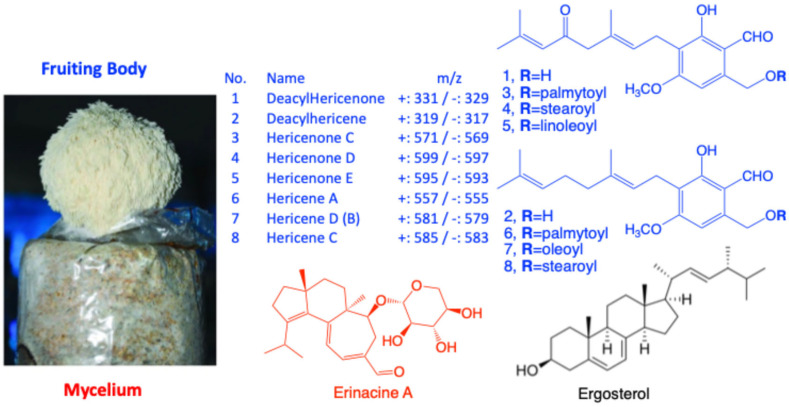 Figure 1
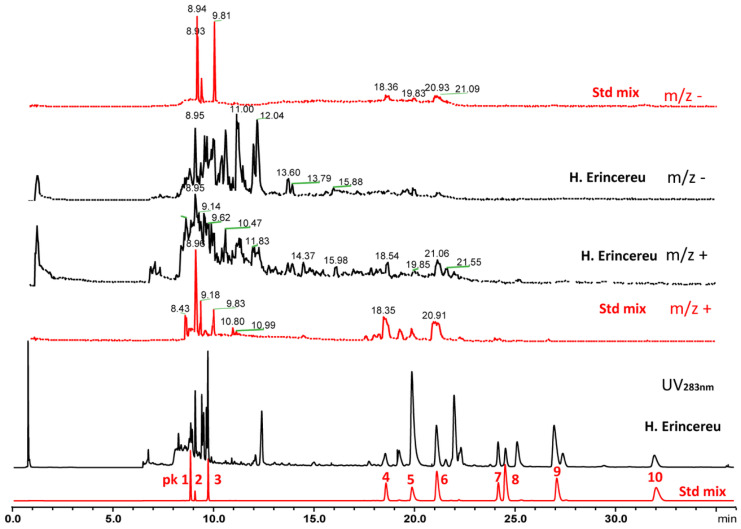 Figure 2
- —Applied Food Sciences, Inc. (Kerrville, TX, USA)
Peer Reviews
No public reviews on file for this paper yet. If you reviewed it on a platform where reviews are public (OpenReview, ICLR, NeurIPS, ICML), you can paste yours below so the community can read it here.
Videos
No videos yet. Explain this paper in a talk, walkthrough, or lecture? Add one.
Taxonomy
TopicsFungal Biology and Applications · Silymarin and Mushroom Poisoning · Sesquiterpenes and Asteraceae Studies
1. Introduction
Hericium erinaceus (H. erinaceus, also known as Lion’s mane mushroom) is a valuable edible and medicinal mushroom [1]. H. erinaceus has attracted much attention due to its potential neuroprotective [2,3,4,5] and cognitive-enhancing functions [6,7,8]. Many studies suggested these effects were biologically plausible and may involve several related mechanisms, such as support of neurotrophic signaling, reduced oxidative stress, and modulation of neuroinflammation. However, it is also emphasized that consistent results in human studies depend strongly on using well-identified and standardized materials, along with robust analytical methods to ensure product quality across the supply chain.
A key characteristic of H. erinaceus is that it contains a range of chemically distinct marker metabolites, and these are not evenly distributed across the mushroom [1]. In general, the fruiting body is richer in aromatic, mostly lipophilic secondary metabolites—most notably hericenones and hericenes, e.g. [9,10,11,12,13]—whereas the mycelium is more strongly associated with erinacines (cyathane-type diterpenoids) [2,8,14,15]. These compounds are often linked to the prevention and treatment of neurodegenerative diseases because they can induce the synthesis and secretion of nerve growth factor (NGF). In addition, ergosterol (a precursor to vitamin D2) is a naturally occurring sterol found in many mushrooms, including H. erinaceus, contributing to mushroom health-promoting properties [16,17]. Due to it being widely present in mushroom tissues, ergosterol is commonly used as a compositional marker for mushroom-derived materials. Therefore, accurate and simultaneous measurement of the major hericenones, hericenes, ergosterol and erinacines in H. erinaceus materials (Figure 1) is essential for reliable quality control and for supporting the efficacy of the rapidly expanding range of H. erinaceus health products.
Reversed-phase high-performance liquid chromatography (RP-HPLC)–Ultraviolet–Visible (UV) or –mass spectra (MS) have been reported for detecting or monitoring certain key compounds present in H. erinaceus materials [18,19,20,21]. The LC-UV or -MS was considered an effective method with good separation and high accuracy among many existing analytical methods; however, no reported LC-UV or -MS method has been fully developed and validated for determining those key compounds in H. erinaceus materials. There are two major challenges for developing the quantitative analytical method of those compounds in H. erinaceus materials: the availability of standards (even very expensive) and enough separation of those compounds in the complicated matrices by LC. The objective of this study was to develop and validate a single-laboratory UHPLC-UV method, based on AOAC and ICH Q2(R1) guidelines [22,23], for the simultaneous quantification of major bioactive hericenones, hericenes, ergosterol, and erinacine A using commonly available instrumentation to obtain reliable simultaneous quantification of the major bioactive hericenones, hericenes, ergosterol, and erinacines in H. erinaceus raw materials, mycelia or derived products.
2. Results and Discussions
2.1. Identification of Hericenones, Hericenes, Ergosterol and Erinacines with Sample Preparation
Available reference standards and H. erinaceus samples were analyzed during method development using UHPLC–UV and MS detection. UV chromatograms were recorded at 283 nm, and MS data were monitored using the total ion chromatogram (TIC) (Figure 2).
The UHPLC–UV results showed that the major marker compounds exhibited characteristic absorbance wavelengths, with hericenones and hericenes showing strong absorption at 292 nm, ergosterol at 283 nm, and erinacines at 340 nm [18,24,25,26]. The UV spectra of the reference standards are provided in Supplementary Materials Figure S1. Compound identities for the hericenones, hericenes, and erinacines were further confirmed based on their mass spectra (Supplementary Materials Figure S2). However, the mass spectra show that only a few bioactive compounds had good ionization and most of the major hericenones, hericenes and erinacines are not well-responsive as either positive or negative MS spectra; in particular, ergosterol exhibited poor ionization in electrospray mode, and significant ion suppression was observed for hericenones and hericenes compared to stable UV responses. LC–MS is highly effective for confirming compound identity and supporting structural characterization in H. erinaceus matrices. However, for routine quantitation, its performance can be constrained by low and variable ionization efficiencies and substantial matrix effects in many H. erinaceus samples. For marker compounds present at non-trace levels, LC–UV/PDA (DAD) is often better suited for day-to-day quantitative testing because it provides robust precision and a faster analytical workflow. Given these considerations, LC–UV is expected to deliver good repeatability, typically with a relative standard deviation of about 2–5% across concentrations from ~10 ppm to 1%, and generally not exceeding 10% at lower concentration levels [22]. Quantification for this method was chosen at 283 nm for all analytes due to the various matrices and the ability to quantify all compounds at that UV wavelength. This allows a QC lab to use one wavelength to quantify the hericenones, hericenes, ergosterol, and erinacine all at one time, rather than quantifying each analyte individually at different wavelengths.
2.2. Method Validation
2.2.1. Specificity/Resolution
(U)HPLC-UV is a more applicable method for the quantitation of hericenones, hericenes, ergosterol and erinacine compounds in most H. erinaceus raw materials or products. H. erinaceus raw material was used for method development, which started with gradient conditions and column screening (Supplementary Materials Figure S3). More than 10 different hericenones or hericenes were observed in the LC of the H. erinaceus sample. In order to obtain good separations in the ranges of 810 min and 1728 min (covering most hericenones and hericenes), the best LC (Figure 2) for hericenones, hericenes, ergosterol and erinacines was achieved using HSS T3 with the gradient conditions listed in Table 1.
Each individual reference standard was injected into the UHPLC-UV to compare with the standard mixture. Identification of hericenones, hericenes, ergosterol and erinacine compounds in the test materials was determined by comparing peak retention times and UV spectra (Supplementary Materials Figure S1) to the reference standards. Representative chromatograms of the standard mixture and mixed H. erinaceus materials with fruit body and mycelia are displayed in Figure 2. Under the chromatographic conditions used in the present study, all the major hericenones, hericenes, ergosterol and erinacine were eluted separately following this order: deacylhericenone, erinacine A, deacylhericene, hericenone E, ergosterol, hericenone C, hericenone D, hericene D, hericene A and hericene C. Values for the relative retention times (α), retention factors (k′) and chromatographic resolutions (R_s_), calculated from the LC analysis of the H. erinaceus standard mixtures (Figure 2), are summarized in Table 2. Retention factors (k′) were calculated as k′ = (t_r_ − t0)/t0, where t_r_ is the retention time of the analyte and t0 is the retention time of unretained compounds (solvent front, determined as 0.85 min using the first baseline disturbance). The k′ values were within the optimum range (k′ > 2) for satisfactory chromatographic elution. Excellent chromatographic specificity was observed with good resolution of the peaks (R_s_ > 1.5) and no significant interfering peaks for all compounds in the mixed standard sample. The total chromatography run time was 38.5 min. Although the 38.5 min runtime is longer than some UHPLC separations, it represents a necessary compromise to ensure a resolution (R_s_ > 1.5) for the complex 10-analyte mixture.
2.2.2. Standard Linearity
Linearity was assessed using mixed calibration standards prepared at the target concentration levels as described above. Each peak area of the chromatograms was recorded as the UV response at 283 nm for all the hericenones, hericenes, ergosterol and erinacines. Calibration curves were constructed by plotting peak area vs. the concentration of the standard compounds (Supplementary Materials Figure S4). Regression analyses were performed using Lab Solution software (ver. 5.87). Calibration curves were linear across the evaluated concentration range, with coefficients of determination (R^2^) greater than 0.999. The normalized intercept/slope of the regression line and the coefficient of correlation were calculated for the whole data set. The method was evaluated based on the coefficient of linearity and intercept values, as summarized in Table 3.
2.2.3. Limit of Detection and Limit of Quantification
The limit of detection (LOD) and limit of quantification (LOQ) of the hericenones, hericenes, ergosterol and erinacine standard assay was determined by the standard deviation of y-intercepts over the slope of the regression lines from three replicated calibration curves on different days [23]. The LODs and LOQs for the major hericenones, hericenes, ergosterol and erinacine were calculated and summarized in Table 3.
2.2.4. Recovery
A spike recovery experiment was performed to validate the extraction efficiency and overall method accuracy. Considering the prohibitive cost and limited commercial availability of certified reference materials for all ten unique compounds, a representative spike recovery was performed using ergosterol. Spike recovery experiments were performed by spiking ergosterol into the post-extraction pomace from H. erinaceus raw material at two levels: medium (0.2%) and low (0.08%) (Table 4). The average recoveries for ergosterol were found to be within the acceptable ranges of 92% to 105% at the 0.2% spiking concentration and 90% to 108% at the 0.08% spiking concentration. Specifically, recovery was 92.65 ± 1.19% at 0.2% and 97.67 ± 4.63% at 0.08%. These results suggest excellent extraction efficiency and reliable overall method performance. The slightly higher recovery at the lower spike (0.08%) level may reflect the optimized extraction conditions (3 × 3 mL solvent per 0.5 g sample), which were selected to improve recovery of highly hydrophobic analytes such as ergosterol, some hericenones and hericenes at the lower range. Regarding the sample preparation, 1×, 2× and 3× extractions were performed on one of the products (FFP5). The result (Supplementary Materials Table S1) indicated that 3× extractions did provide higher yields, especially for the high-level (close to or more than 1 mg/g) compounds, such as ergosterol (~1.798 mg/g) with relative 87.61% yield for 1× and 91.48% yield for 2×, and hericene A (~0.985 mg/g) with relative 92.46% yield for 1× and 96.51% yield for 2×, while the relative yields were compared to 3× extraction. Therefore, 3× extractions were performed for the sample preparations of all raw materials or products in this study.
2.2.5. Precision
The precision and accuracy of the method were assessed by determining the intraday precisions (n = 5) from repeating the analysis of the H. erinaceus samples on the same day and the interday precisions (n = 3 × 5, overall 15) from analyzing the same H. erinaceus samples over different days. Both intraday and inter-day precisions were calculated as RSD_r_ (%) = (standard deviation)/(mean) × 100. As summarized in Table 5, all ten analytes showed adequate precision in the tested solid matrices across the concentration levels where they were detectable.
Several H. erinaceus raw materials or finished commercial products, including AFS finished products (AFP), were analyzed using a quick and effective LC screening. Target markers (hericenones, hericenes, ergosterol, and erinacines) were analyzed after preparing a concentrated ethanol extract corresponding to approximately 500 mg of H. erinaceus raw material per ~1 mL (and not exceeding 2 mL) of ethanol. The LC screening results (Supplementary Materials Figure S5) showed that, in some H. erinaceus raw materials and finished products, most of the target bioactive compounds were below the method’s LOD or LOQ. Full LC quantitation of hericenones, hericenes, ergosterol, and erinacine A was therefore performed only for samples in which these compounds were detectable, and the results are summarized in Table 6.
Ergosterol was consistently detected in both H. erinaceus fruiting body and mycelium materials, with concentrations ranging from 0.5 to 2 mg/g, and the level of ergosterol is variable depending on the mushroom species, how the material is processed, and how the sample is prepared for testing [24,27]. Only H. erinaceus mycelia were reported to contain erinacines [8,14,15], and erinacine A was detected at about 0.2 mg/g for the MFP-01 sample in this study (Table 5), while this sample contained very low levels of hericenones or hericenes. In contrast, for fruiting-body samples (FFP), hericenones and hericenes were detected at a higher level, and erinacine A was not detected. Across the fruiting-body materials evaluated, their concentrations varied widely, ranging from 0.005 to 1 mg/g (Table 5 and Table 6). In some materials, target compounds were present at very low levels (near or below the LOQ), which contributed to higher variability, with RSD values of approximately 6–12%. The concentrations of hericenones and hericenes were strongly influenced by the quality of the H. erinaceus fruiting-body raw material, including factors such as strain differences [10,21,28] and harvest stage [19]. Therefore, routine monitoring of fruiting-body quality using hericenones and hericenes as marker compounds is important for consistent product characterization and quality control. The frequent observation of markers below the LOQ (BLQ) in commercial products highlights significant variability in the market and the urgent need for standardized quantification
3. Materials and Methods
3.1. Chemicals and Materials
Acetonitrile (ACN, HPLC grade), formic acid (FA, LC–MS grade), water (H_2_O, LC–MS grade) and methanol (MeOH, LC–MS grade) were purchased from Fisher Scientific (Waltham, MA, USA). Reference standard compounds of Hericene C (98%), Hericene A (98%), Hericene D (95%), Hericenone C (98%), Hericenone E (90%), DeacylHericene (98%) and DeacylHericenone (98%) were purchased from Biopurify Phytochemicals (Chengdu, Sichuan, China). Standard compounds of Hericenone D (98%) and Erinacine A (93.8%) were the products from ChromaDex (Longmont, CO, USA). Ergosterol was from TCI Americas (Portland, OR, USA) and purchased from Fisher Scientific (Waltham, MA, USA). Ultrapure (18 MΩ) water was produced using a Barnstead^TM^ GenPure^TM^ Pro Water Purification System from Thermo Scientific (Waltham, MA, USA).
H. erinaceus fruiting body and/or mycelial raw materials (RW) were sourced from Applied Food Sciences, Inc. (AFS, Kerrville, TX, USA) and AFS-collaborated companies. Commercial H. erinaceus finished products (powders and dry-filled capsules, FP) were purchased from local retail food markets (Coralville, IA, USA).
3.2. Instrumentation
Method development and validation studies were performed on a Shimadzu Nexera-X2 UHPLC system (Shimadzu Scientific Instruments, Columbia, MD, USA), equipped with an LC-30AD pump, a SIL-30AC autosampler with a thermostated unit, a thermostated column compartment, and an SPD-M30A PDA detector. The UHPLC system was also interfaced with a tandem Q-Exactive Orbitrap mass spectrometer (Thermo Fisher Scientific Inc., San Jose, CA, USA). High-resolution MS and MS^2^ spectra were obtained on the Q-Exactive Orbitrap mass spectrometer equipped with a heated electrospray ionization source operated in both positive and negative ion modes. The optimized parameters were set as follows: capillary voltage, 3.0 kV; sheath gas flow rate, 35 arbitrary unit; auxiliary gas flow rate, 5 arbitrary unit; sweep gas flow rate, 5 arbitrary unit; capillary temperature, 325 °C; sheath gas heater temperature, 200 °C. MS scans were recorded in a mass range of m/z 100–1500 at a resolution of 70,000 with an AGC target of 3 × 10^6^. After each MS scan, up to 5 of the most abundant multiply charged ions were selected for fragmentation. MS^2^ scans were recorded in a mass range of m/z 50 to the parent ion at a resolution of 17,500 with an AGC target of 1 × 10^5^ and a maximum fill time of 50 ms, using the stepped NCE of 25 and 35 for fragmentation in the HCD cell. Data were acquired from 50 to 1500 Da with dd-MS^2^ or MS^2^ in centroid mode. Raw data were acquired and processed using the Xcalibur software (Version 2.3.1, Thermo Electron Corporation, San Jose, CA, USA). Optimum separation of hericenones, hericenes, ergosterol and Erinacine A was achieved using an UHPLC column (Acquity HSS T3, 100 mm × 2.1 mm, 1.8 μm) from Waters (Milford, MA, USA).
3.3. Chromatographic Condition
The chromatographic separation was achieved under a gradient separation at 30 °C. Gradient elution was performed using 0.1% FA in water (solvent A) and acetonitrile (solvent B) with the gradient program listed in Table 1. The injection volume for UHPLC was 10 μL.
3.4. Standard Preparation
Individual standard stock solutions of 15 mg/mL of each H. erinaceus standard compound were accurately prepared by weighing about 520 mg of each compound and dissolving them into a 10 mL volumetric flask using ethanol. Volumetric flasks were sonicated for 10 min and wrapped with aluminum foil to protect them from light. Stock solutions were kept refrigerated. Working standard solutions were prepared fresh daily by pipetting aliquots of stock solutions and serial dilutions with ethanol were made at concentrations ranging from 2 µg/mL to 500 µg/mL for the standards of hericenones, hericenes, ergosterol and erinacine A.
3.5. Test Materials and Sample Preparation
For the sample preparation, 1×, 2× and 3× extractions were performed on one of the products. Approximately 500 mg of H. erinaceus fruiting body product was extracted with 10 mL, 5.0 mL or 3.0 mL ethanol (EtOH) and sonicated for 30 min at ambient temperature in a Fisher Scientific FSGPD10 ultrasonic bath. The extract was then centrifuged for 10 min at 3000× g, and the supernatant was transferred to a 10 mL volumetric flask. As necessary, the residual solids were re-extracted once more with 5 mL or twice with 3.0 mL EtOH using the same procedure, and the combined supernatants were brought to volume (10 mL) with EtOH. With the best extract efficiency, 3× extractions were performed for the sample preparations of all raw materials or products. Extract samples were passed through a 3 mL syringe fitted with a 0.22 µm nylon filter (VWR) and collected into amber glass HPLC vials for LC analysis. Unless otherwise specified, all samples were analyzed in triplicate or greater.
3.6. Method Validation Parameters
Method validation was conducted in accordance with AOAC guidance and ICH Q2 recommendations for single-laboratory validation [22,23]. Individual reference standards were prepared as stock solutions (1–5 mg/mL) by dissolving each compound in ethanol (EtOH) in volumetric flasks. Stock solutions were stored at −20 °C for long-term stability. For calibration and system suitability, mixed working standard solutions were prepared by combining appropriate volumes of each stock to obtain target concentrations of 100–300 µg/mL for hericenones, hericenes, and ergosterol, and 50 µg/mL for erinacine A. These mixtures were subsequently diluted to appropriate concentrations to establish retention time and combined at different concentration levels for external calibration.
3.6.1. Specificity/Resolution
The mixed reference standard was injected into the UHPLC-UV to establish the selectivity of the method. The resolution for each reference standard was calculated. An R_s_ > 1.5 between closely eluting components was considered acceptable for hericenones, hericenes, ergosterol and erinacine A.
3.6.2. Linearity
The linearity for the reference standard was determined by a six- or five-point standard calibration curve. The standard curves for hericenones and hericenes ranged from 10 µg/mL to 300 µg/mL (10, 20, 38, 75, 150 and 300 µg/mL). The standard curve for ergosterol ranged from 7 µg/mL to 226 µg/mL (7, 14, 28.3, 56.5, 113 and 226 µg/mL). The standard curve for erinacine A ranged from 1.6 µg/mL to 51.4 µg/mL (1.6, 3.2, 6.4, 12.9, 25.7 and 51.4 µg/mL). The standard curve for Deacylhericenone and Deacylhericene ranged from 3 µg/mL to 100 µg/mL (3, 6, 12, 25, 50 and 100 µg/mL). A simple linear regression was used to calculate the R^2^ value, the slope, and the y-intercept of each curve for each analyte. An R^2^ ≥ 99.9% was considered acceptable. The calibration standards of hericenones, hericenes, ergosterol and erinacine A were triplicated at the five or six concentrations and analyzed over three days.
3.6.3. LOD and LOQ
The limit of detection (LOD) and limit of quantification (LOQ) of the hericenones, hericenes, ergosterol and erinacine A standard assays were determined from the calibration curve method, according to ICH Q2 (R1) recommendations [23] by analyzing at least three replicates of the calibration standards. The LOD and LOQ of the proposed method were calculated using the following equation:
3.6.4. Recovery
Considering the cost and availability of reference standards, spike recovery experiments were performed at two levels (medium: 200 µg/g, low: 80 µg/g) for ergosterol. Powdered H. erinaceus material (after EtOH extraction) was analyzed for ergosterol before the standards were spiked. The appropriate amount of reference standards was used to spike the powdered H. erinaceus material, followed by the extraction process. Three replicates were performed at each level, and the mean recovery was calculated.
3.6.5. Precision
Two independent replicates (Raw_01 and FP-01) of the same sample were prepared and analyzed on three separate days (n = 5 × 3). The within-day, between-day, and overall precision for all target compounds were calculated for single-laboratory validation.
4. Conclusions
In summary, a UHPLC–UV method was developed and single-laboratory validated for the simultaneous determination of major H. erinaceus marker compounds—hericenones, hericenes, erinacines, and ergosterol—in both raw materials and finished products derived from fruiting bodies and/or mycelium. Method validation followed AOAC guidance for dietary supplement and botanical methods, supporting fit-for-purpose use in routine quality control environments. The method provides reliable chromatographic separation and consistent marker quantitation across diverse product types, with a total run time of around 38 min under the optimized gradient conditions. The major hericenones, hericenes, ergosterol and erinacines were well-separated under the LC resolution. The SLMV data demonstrate acceptable performance of the presented (U)HPLC–UV-based method for quantitation of hericenones, hericenes, ergosterol and erinacines in H. erinaceus materials.
In conclusion, this SLMV method strengthens the analytical basis for characterizing H. erinaceus materials by enabling reliable, standardized marker measurements across product types. In the future, this method could be extended with more available hericenone, hericene and erinacine standard compounds. By improving batch-to-batch comparability, it enhances quality control and supports better standardization of materials for research and clinical studies while helping reduce variability among commercial products on the market.
The reference list from the paper itself. Each links out to its DOI / PubMed record.
- 1Friedman M. Chemistry, Nutrition, and Health-Promoting Properties of Hericium erinaceus (Lion’s Mane) Mushroom Fruiting Bodies and Mycelia and Their Bioactive Compounds J. Agric. Food Chem.2015637108712310.1021/acs.jafc.5b 0291426244378 · doi ↗ · pubmed ↗
- 2Li C. Lee Y. Tzeng T. Chen P. Chen P. Shiao J. Chen C. Neurohealth Properties of Hericium erinaceus Mycelia Enriched with Erinacines Behav. Neurol.20182018580263410.1155/2018/580263429951133 PMC 5987239 · doi ↗ · pubmed ↗
- 3Roda E. Priori E.C. Ratto D. De Luca F. Di Iorio C. Angelone P. Locatelli C.A. Desiderio A. Goppa L. Savino E. Neuroprotective Metabolites of Hericium erinaceus Promote Neuro-Healthy Aging Int. J. Mol. Sci.202122637910.3390/ijms 2212637934203691 PMC 8232141 · doi ↗ · pubmed ↗
- 4Brandalise F. Roda E. Ratto D. Goppa L. Gargano M.L. Cirlincione F. Priori E.C. Venuti M.T. Pastorelli E. Savino E. Hericium erinaceus in Neurodegenerative Diseases: From Bench to Bedside and Beyond, How Far from the Shoreline?J. Fungi 2023955110.3390/jof 9050551 PMC 1021891737233262 · doi ↗ · pubmed ↗
- 5Cornford N. Charnley M. Hericium erinaceus: A possible future therapeutic treatment for the prevention and delayed progression of Alzheimer’s disease?—A narrative review Nutr. Res. Rev.20253861362710.1017/S 095442242500005839988819 · doi ↗ · pubmed ↗
- 6Mori K. Inatomi S. Ouchi K. Azumi Y. Tuchida T. Improving effects of the mushroom Yamabushitake (Hericium erinaceus) on mild cognitive impairment: A double-blind placebo-controlled clinical trial Phytother. Res.20092336737210.1002/ptr.263418844328 · doi ↗ · pubmed ↗
- 7Monica M.B. Raub B. Ziegenfuss E.J. Hartshorn S. Grdic J. Gustat A. Sandrock J. Ziegenfuss T.N. Acute Effects of Naturally Occurring Guayusa Tea and Nordic Lion’s Mane Extracts on Cognitive Performance Nutrients 202315501810.3390/nu 1524501838140277 PMC 10745489 · doi ↗ · pubmed ↗
- 8Bizjak C.M. Jenko Pražnikar Z. Kenig S. Hladnik M. Bandelj D. Gregori A. Kranjc K. Effect of erinacine A-enriched Hericium erinaceus supplementation on cognition: A randomized, double-blind, placebo-controlled pilot study J. Funct. Foods 202411510612010.1016/j.jff.2024.106120 · doi ↗