Building a Remote Network for Sustainable Supervision in Family Medicine Residency
Junki Shimokawa, Yuki Otsuka, Marina Kawaguchi, Akemi Ando, Kazushige Fujiwara

Abstract
Click any figure to enlarge with its caption.
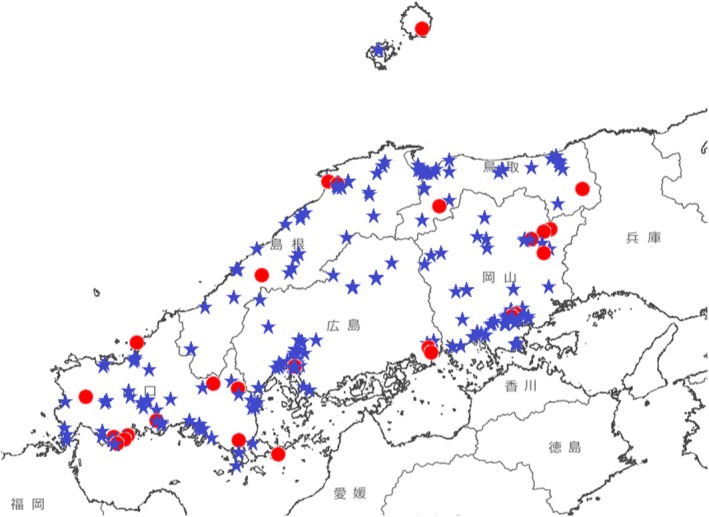 FIGURE 1
Peer Reviews
No public reviews on file for this paper yet. If you reviewed it on a platform where reviews are public (OpenReview, ICLR, NeurIPS, ICML), you can paste yours below so the community can read it here.
Videos
No videos yet. Explain this paper in a talk, walkthrough, or lecture? Add one.
Taxonomy
TopicsPrimary Care and Health Outcomes · Innovations in Medical Education · Interprofessional Education and Collaboration
To the Editor,
1
We are members of the Expert Training Support Committee of the Japan Primary Care Association (JPCA) in the Chugoku region and are involved in generalist education at each program. While the need for generalists is rapidly increasing, we face several challenges in supporting its education. In this context, we were especially encouraged by the recent letter from Matsumura et al. on “Sustainable Generalism Education.” [1] The Chugoku region consists of five prefectures with both mountainous and island areas, and, as shown in Figure 1, supervising doctors and family medicine residents are geographically dispersed. Against this backdrop, their call for interdisciplinary collaboration, community‐based educational guidance, and cross‐organizational sharing of best practices strongly resonates with us.
Locations of residents and supervising doctors in Chugoku region. Blue stars and red circles indicate family medicine residents and supervising doctors, respectively. The residents are dispersed, and some are not located in the same place as their supervising doctors.
What we want to emphasize is the need for support for residents who train in remote areas and for supervising doctors engaged in their education. Because generalist education in Japan is still in its early stages, the number of skillful supervising doctors is limited and tends to be concentrated at specific training sites. Meanwhile, residents are required to rotate through diverse clinical settings, and some residents are obliged by scholarship programs to work in resource‐limited rural areas. In such contexts, residents may be forced to practice independently without nearby supervisors, missing opportunities for proper reflection, while routine supervision may be provided by physicians who are inexperienced in medical education. We consider these to be major challenges in this field.
One of the greatest challenges is portfolio education. Portfolios are essential to the development of a generalist identity, but they require specialized teaching skills and sufficient time [2, 3]. Ideally, residents should be trained under a skillful supervising doctor and reflect on their practice. However, as noted above, geographical distance makes such interactions difficult. Moreover, supervising doctors at host institutions may not be familiar with portfolio education, and it is challenging to obtain a comprehensive overview of the wide range of topics involved. In particular, just‐started‐up programs often lack accumulated know‐how and tend to depend heavily on the residents' ability to learn autonomously.
In recent years, online learning opportunities in our specialty have been increasing [4, 5]. We have been discussing how these resources might help overcome current educational challenges. One of our efforts has been to open online sessions, conducted by well‐established programs, to residents and their supervising doctors in our region. Through these sessions, participants could attend core lectures and learn methods of reflection. Interestingly, most participants were not residents but supervising doctors, highlighting a strong need for learning among educators themselves. This activity also created opportunities for interaction among supervisors, enabling them to discuss shared difficulties. From this experience, we realized that in addition to supporting isolated residents, creating a peer mentoring community for supervising doctors is equally important.
We believe that building a digital network connecting supervising doctors will be key to implementing high‐quality generalist education in the future. By facilitating peer‐to‐peer learning among educators and exploring innovative educational systems, this network has the potential not only to address regional educational challenges but also to contribute to the development of a universal model of “sustainable general practice education,” as highlighted by Matsumura et al. [1].
Author Contributions
All authors contributed to the development of the study concept. Junki Shimokawa drafted the manuscript. Yuki Otsuka revised the manuscript and created the figure. Marina Kawaguchi collected and organized the data. Akemi Ando provided guidance for the interpretation and discussion. Kazushige Fujiwara supervised the overall study. All authors reviewed and approved the final manuscript.
Conflicts of Interest
The authors declare no conflicts of interest.
The reference list from the paper itself. Each links out to its DOI / PubMed record.
- 1S. Matsumura , Y. Yamaguchi , F. Okazaki , F. Kitanishi , S. Tomita , and H. Takagi , “Developing Sustainable Generalism Education in Community Settings: Insights From the JPCA (Japan Primary Care Association) Conference, 2024,” Journal of General and Family Medicine 58 (2024): 1536–1544.10.1002/jgf 2.770PMC 1202242540291059 · doi ↗ · pubmed ↗
- 2A. J. S. Lim , D. Z. Hong , A. Pisupati , et al., “Portfolio Use in Postgraduate Medical Education: A Systematic Scoping Review,” Postgraduate Medical Journal 99, no. 1174 (2023): 913–927.36961214 10.1093/postmj/qgac 007 · doi ↗ · pubmed ↗
- 3F. A. Al Radini , “Perceptions of Portfolio Assessment in Family Medicine Graduates: A Qualitative Interview Study,” BMC Medical Education 22, no. 1 (2022): 905.36585681 10.1186/s 12909-022-03991-7PMC 9802017 · doi ↗ · pubmed ↗
- 4Y. Miyamoto , S. Tomita , U. Yamada , and H. Wakabayashi , “Online Community for General Physicians to Learn Family‐Oriented Primary Care,” An Official Journal of the Japan Primary Care Association 46, no. 1 (2023): 25–28.
- 5Y. Otsuka , E. Mitsuda , Y. Yamamoto , et al., “Video Review by Utilizing Asynchronous Video Communication Platform,” Journal of General and Family Medicine 21, no. 4 (2025): 375–378.10.1002/jgf 2.70005 PMC 1223781340642125 · doi ↗ · pubmed ↗