Penile Mondor Disease Following Circumcision: Diagnostic Insights from Color Doppler Ultrasound
Konstantinos Douroumis, Konstantinos Kotrotsios, Panagiotis K. Levis, Evangelos Fragkiadis, Stamatios Katsimperis, Themistoklis N. Spyridopoulos, Konstantinos Stravodimos, Napoleon Moulavasilis

TL;DR
Penile Mondor disease is a rare condition that can occur after circumcision, and color Doppler ultrasound helps in its diagnosis and management.
Contribution
This case report provides educational ultrasound images of penile Mondor disease following circumcision.
Findings
Penile triplex showed no endoluminal flow in the superficial dorsal veins, confirming thrombosis.
The patient improved with conservative treatment and was asymptomatic after six weeks.
Color Doppler ultrasound is crucial for diagnosing this condition and differentiating it from similar disorders.
Abstract
Dorsal vein thrombophlebitis, or penile Mondor disease, is a rare benign penile condition presenting with cord-like induration at the dorsum of the penis. This induration is caused by an isolated thrombosis of the dorsal superficial vein of the penis. As symptoms are not typical and many patients are asymptomatic, it is often underdiagnosed. Causes include trauma, infection, sexual activity, genital surgery, and cancer. Differential diagnosis includes Peyronie’s disease and sclerosing lymphangitis, and diagnosis remains crucial as it facilitates the treatment plan and reassures the patient. Treatment consists of conservative measures, such as oral nonsteroidal anti-inflammatory medications (NSAIDs) and anticoagulation, and surgical management, with excision of the thrombosed vein. We present a case report of penile Mondor disease following circumcision, with the aim to provide…
Genes, proteins, chemicals, diseases, species, mutations and cell lines named across the full text — each resolved to its canonical identifier and authoritative record.
Click any figure to enlarge with its caption.
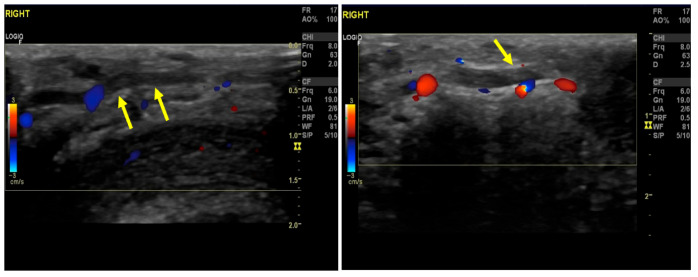 Figure 1
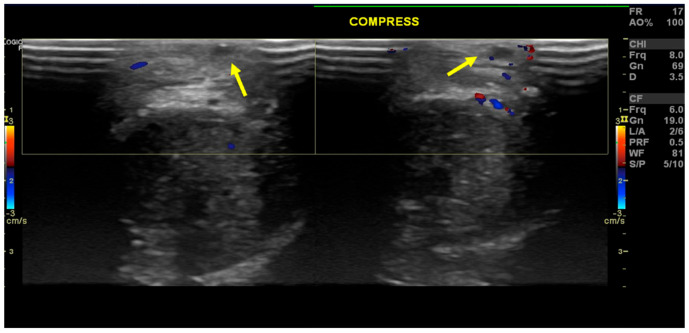 Figure 2
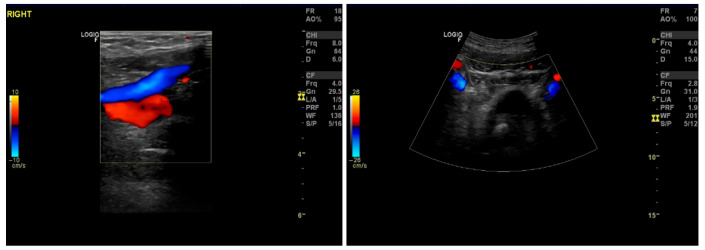 Figure 3
Peer Reviews
No public reviews on file for this paper yet. If you reviewed it on a platform where reviews are public (OpenReview, ICLR, NeurIPS, ICML), you can paste yours below so the community can read it here.
Videos
No videos yet. Explain this paper in a talk, walkthrough, or lecture? Add one.
Taxonomy
TopicsGenital Health and Disease · Male Reproductive Health Studies · Sexual function and dysfunction studies
The reference list from the paper itself. Each links out to its DOI / PubMed record.
- 1Foresti M. Parmiggiani A. Penile Mondor’s disease: Imaging in two cases J. Radiol. Case Rep.202014243010.3941/jrcr.v 14i 12.392633717401 PMC 7943046 · doi ↗ · pubmed ↗
- 2Alzahrani M.A. Penile Mondor’s Disease Resulting From Forceful Condom Removal During Sexual Intercourse: A Case Report and Literature Review Cureus 202315 e 5087210.7759/cureus.5087238130908 PMC 10733711 · doi ↗ · pubmed ↗
- 3Papaveri A. Cafarelli A. Falsetti F. Spinozzi L. Ciavarella D. Sicignano E. Maurizi V. Marchioni M. Schips L. Castellani D. Management of Penile Mondor’s disease: Insights from a scoping review Sex. Med. Rev.202614 qeaf 08010.1093/sxmrev/qeaf 08041504421 · doi ↗ · pubmed ↗
- 4Herold J. Pech M. Penile Mondor’s Disease Triggered by May-Thurner Syndrome Dtsch. Arztebl. Int.201811545210.3238/arztebl.2018.045230017028 PMC 6071304 · doi ↗ · pubmed ↗
- 5Amano M. Shimizu T. Mondor’s Disease: A Review of the Literature Intern. Med.2018572607261210.2169/internalmedicine.0495-1729780120 PMC 6191595 · doi ↗ · pubmed ↗
- 6Boscolo-Berto R. Iafrate M. Casarrubea G. Ficarra V. Magnetic resonance angiography findings of penile Mondor’s disease J. Magn. Reson. Imaging 20093040741010.1002/jmri.2185719629969 · doi ↗ · pubmed ↗