Occurrence and Genetic Parameters Estimation of Blood and Meat Spots in Brown-Shelled Eggs During the Extended Laying Period
Honglei Jin, Bingxin Luo, Lin Xuan, Runzhe Wang, Jiahui Lai, Guiyun Xu, Jiangxia Zheng

TL;DR
This study examines blood and meat spots in brown-shelled eggs from older hens, finding that meat spots are more common and can be improved through breeding, while blood spots are less heritable and may require other management strategies.
Contribution
The study provides new genetic insights into blood and meat spots in brown-shelled eggs during extended laying periods, showing their differing heritability and potential for improvement.
Findings
Meat spots are more common and have moderate heritability, making them suitable for selective breeding.
Blood spots are rare, small, and have low heritability, suggesting management strategies are more effective for improvement.
Both defects are genetically linked and negatively correlated with egg quality traits like albumen height and shell strength.
Abstract
Blood and meat spots are visible inner defects in eggs that reduce consumer acceptance and economic value, particularly in aged laying hens producing brown-shelled eggs. With modern laying cycles extended to later ages, understanding why these defects occur and whether they can be reduced through breeding is important. In this study, a total of 392 eggs from Rhode Island Red hens were included in the analysis and examined for the presence, number, size, and location of blood and meat spots. Blood spots were few, very small, and mainly located on the yolk, while meat spots were common, often multiple, and mostly found in the egg white and chalaza. Genetic analysis showed a strong relationship between blood and meat spots, but their potential for improvement differs: meat spots had moderate heritability and could be reduced through selective breeding, whereas blood spots showed low…
Genes, proteins, chemicals, diseases, species, mutations and cell lines named across the full text — each resolved to its canonical identifier and authoritative record.
Click any figure to enlarge with its caption.
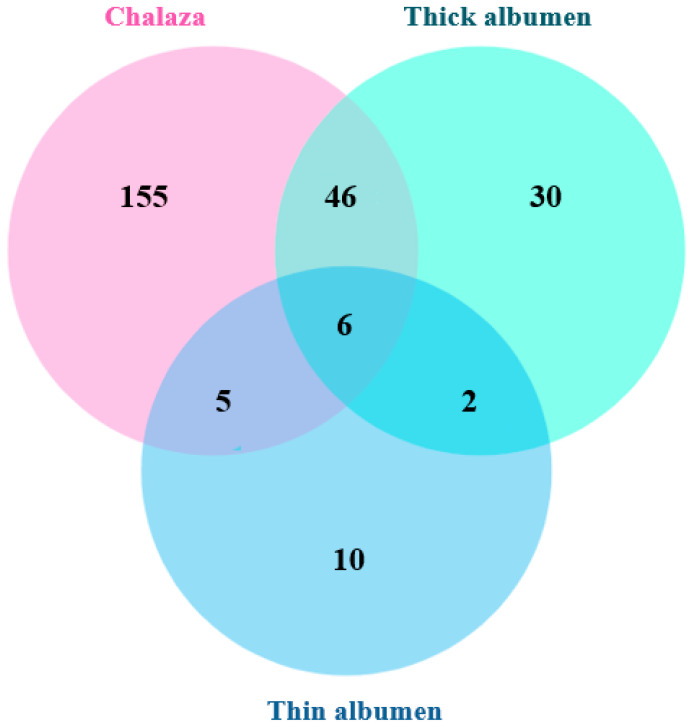 Figure 1
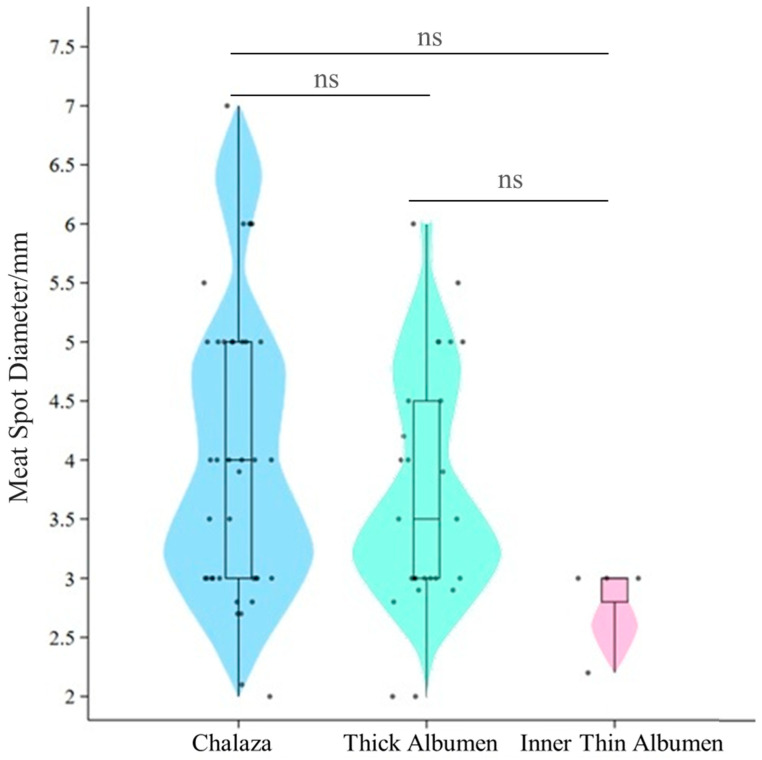 Figure 2
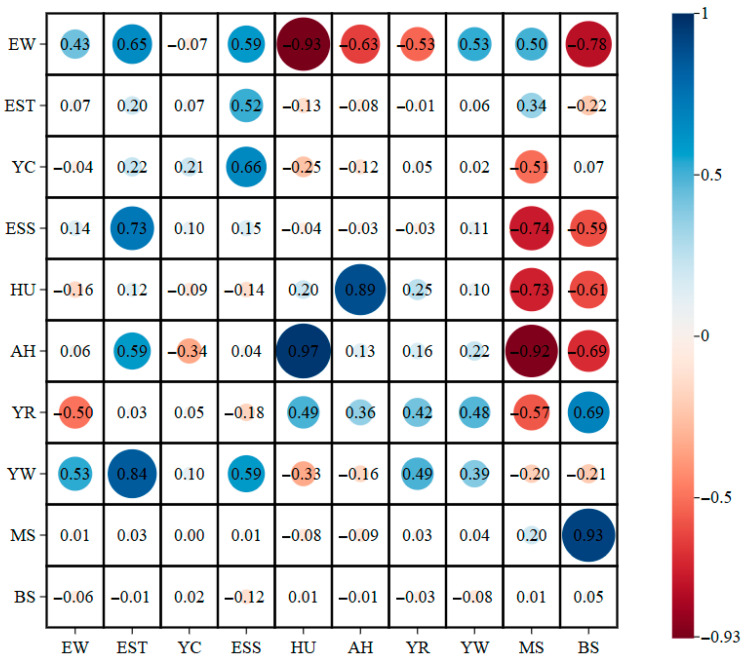 Figure 3
Peer Reviews
No public reviews on file for this paper yet. If you reviewed it on a platform where reviews are public (OpenReview, ICLR, NeurIPS, ICML), you can paste yours below so the community can read it here.
Videos
No videos yet. Explain this paper in a talk, walkthrough, or lecture? Add one.
Taxonomy
TopicsAnimal Nutrition and Physiology · Antioxidant Activity and Oxidative Stress · Livestock and Poultry Management