Big Tau: Structure, Evolutionary Divergence, and Emerging Roles in Cytoskeletal Dynamics and Tauopathies
Itzhak Fischer, Peter W. Baas

TL;DR
Big tau, a high-molecular-weight tau isoform, may protect neurons by preventing harmful tau aggregation, offering new insights into neurodegenerative diseases.
Contribution
The paper identifies Big tau's structural and functional role in suppressing tau aggregation and its potential therapeutic implications.
Findings
Big tau is predominantly expressed in the peripheral and select central nervous system neurons.
The exon-4a insert in Big tau shields aggregation-prone regions, reducing β-sheet-driven fibril formation.
Big tau's anti-aggregation properties may explain the resistance of certain brain regions to tauopathies.
Abstract
What are the main findings? Inclusion of the large exon 4a insert generates Big tau, a high-molecular-weight isoform of tau that predominates in the peripheral nervous system and in select regions of the central nervous system.Exon 4a encodes about 250 amino acids that form a highly acidic, intrinsically disordered domain whose length is evolutionarily conserved despite marked divergence in the primary sequence. Inclusion of the large exon 4a insert generates Big tau, a high-molecular-weight isoform of tau that predominates in the peripheral nervous system and in select regions of the central nervous system. Exon 4a encodes about 250 amino acids that form a highly acidic, intrinsically disordered domain whose length is evolutionarily conserved despite marked divergence in the primary sequence. What are the implications of the main findings? Modeling suggests that the expansion of the…
Genes, proteins, chemicals, diseases, species, mutations and cell lines named across the full text — each resolved to its canonical identifier and authoritative record.
Click any figure to enlarge with its caption.
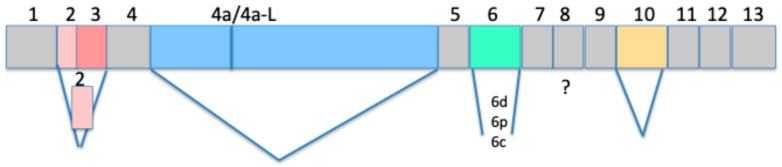 Figure 1
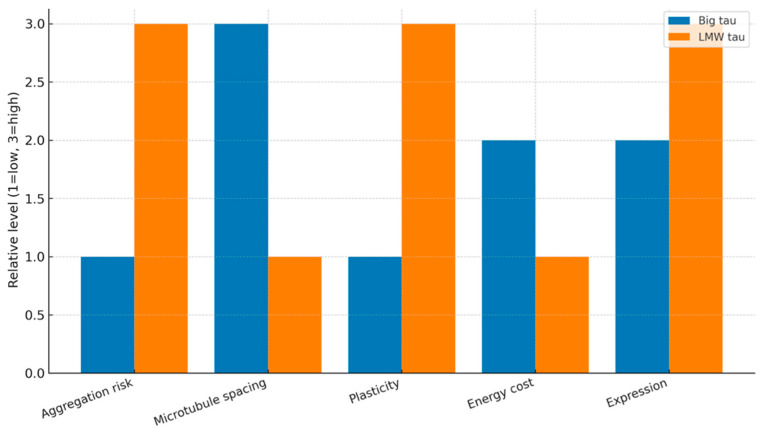 Figure 2
 Figure 3
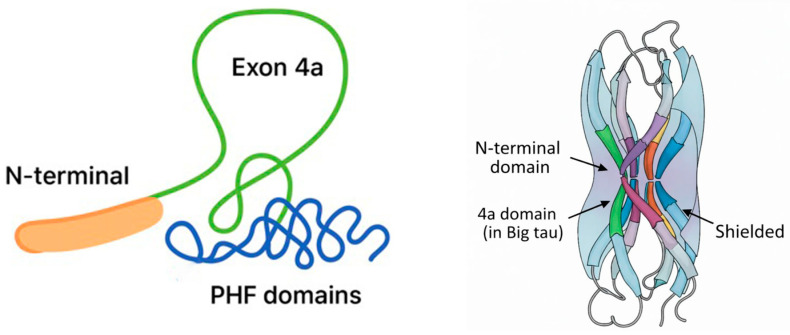 Figure 4
Peer Reviews
No public reviews on file for this paper yet. If you reviewed it on a platform where reviews are public (OpenReview, ICLR, NeurIPS, ICML), you can paste yours below so the community can read it here.
Videos
No videos yet. Explain this paper in a talk, walkthrough, or lecture? Add one.
Taxonomy
TopicsAlzheimer's disease research and treatments · Neuroscience and Neuropharmacology Research · Nerve injury and regeneration