Does Minimally Invasive Approach Change Criteria of Allocation to Treatment Strategy in Synchronous Colorectal Metastases? An Italian National Registry-Based Analysis
Giorgio Traina, Alessandro Ferrero, Felice Giuliante, Andrea Ruzzenente, Giorgio Ercolani, Umberto Cillo, Vincenzo Mazzaferro, Giuseppe Maria Ettorre, Andrea Belli, Elio Jovine, Rebecca Marino, Pierpaolo Sileri, Francesca Ratti

TL;DR
This study finds that combining colorectal and liver surgeries for colorectal metastases increases complications, suggesting careful patient selection is needed.
Contribution
The study provides new insights into the risks and outcomes of combined minimally invasive colorectal and liver resections for metastases in a large registry-based analysis.
Findings
Combined resections had higher complication rates despite similar conversion rates.
Combined procedures were associated with longer operative times and less complex liver resections.
Patient selection is critical to minimize risks in combined minimally invasive surgeries.
Abstract
This multicenter Italian study compared minimally invasive liver resections with combined minimally invasive colorectal/liver resections for synchronous colorectal liver metastases. The addition of the colorectal procedure increased postoperative morbidity, even though conversion rates remained similar. Combined minimally invasive resections are feasible but should be limited to carefully selected patients, ideally treated in high-volume centers. Overall, minimally invasive techniques reduce some risks but do not offset the added morbidity of performing both colorectal and liver resections simultaneously, supporting the need for strict patient selection and further research on long-term outcomes. Background/Objectives: Heterogeneity in clinical scenarios of colorectal liver metastases (CRLM) leads to the possible application of different surgical strategies. Specifically, the…
Genes, proteins, chemicals, diseases, species, mutations and cell lines named across the full text — each resolved to its canonical identifier and authoritative record.
Click any figure to enlarge with its caption.
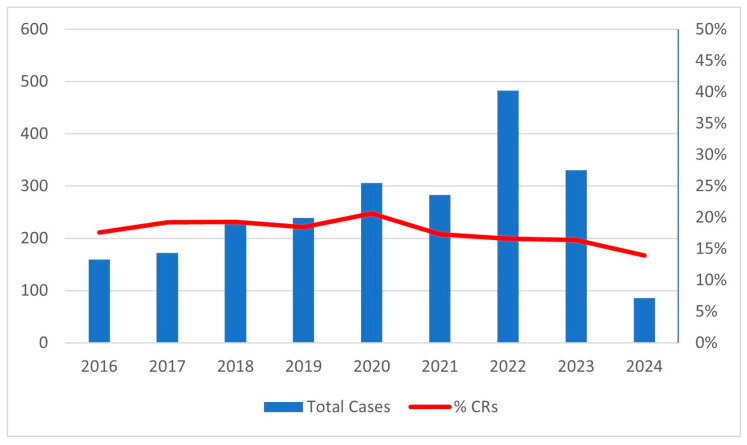 Figure 1
Peer Reviews
No public reviews on file for this paper yet. If you reviewed it on a platform where reviews are public (OpenReview, ICLR, NeurIPS, ICML), you can paste yours below so the community can read it here.
Videos
No videos yet. Explain this paper in a talk, walkthrough, or lecture? Add one.
Taxonomy
TopicsHepatocellular Carcinoma Treatment and Prognosis · Colorectal Cancer Treatments and Studies · Intraperitoneal and Appendiceal Malignancies