Deep Eutectic Solvent Ultrasonic-Assisted Extraction of Polysaccharides from Red Alga Asparagopsis taxiformis: Optimization, Characterization, Mechanism, and Immunological Activity in RAW264.7 Cells
Kun Yang, Yuxin Wang, Wentao Zou, Qin Liu, Riming Huang, Qianwang Zheng, Saiyi Zhong

TL;DR
A new method using deep eutectic solvents and ultrasound improves the extraction of polysaccharides from a red alga, but the extracted material has lower immunological activity than traditional methods.
Contribution
The study introduces an optimized DES-ultrasonic extraction method for A. taxiformis polysaccharides and reveals its impact on structure and bioactivity.
Findings
DES extraction achieved a 1.5 times higher yield than water extraction.
The DES-extracted polysaccharide showed significantly lower immunological activity in macrophages.
Molecular simulations suggest DES enhances galactose solubility through stronger hydrogen bonding.
Abstract
Traditional polysaccharide extraction suffers from low efficiency and high energy consumption, while deep eutectic solvents (DESs) are promising sustainable solvents. This study used DES ChCl-LA (1:2) with ultrasonic assistance to extract polysaccharides from red alga A. taxiformis. Optimized via single-factor experiments and response surface methodology (350 W, 1:30 g/mL, 75 °C), the yield reached 11.28% ± 0.50% (1.5 times higher than that obtained by water extraction). Structural characterization revealed that the DES extract was an acidic polysaccharide, mainly composed of galactose (89.2%), glucose (4.9%), xylose (4.9%), and glucuronic acid (1.0%), with a weight-average molecular weight of 99.88 kDa. Density functional theory and molecular dynamics simulations showed that ChCl-LA enhanced galactose solubility via stronger hydrogen bonding (−25.33 vs. −5.06 kcal/mol for water).…
Genes, proteins, chemicals, diseases, species, mutations and cell lines named across the full text — each resolved to its canonical identifier and authoritative record.
Click any figure to enlarge with its caption.
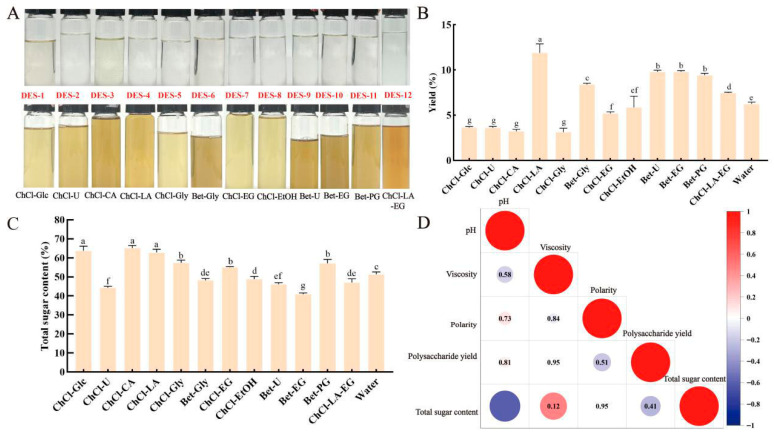 Figure 1
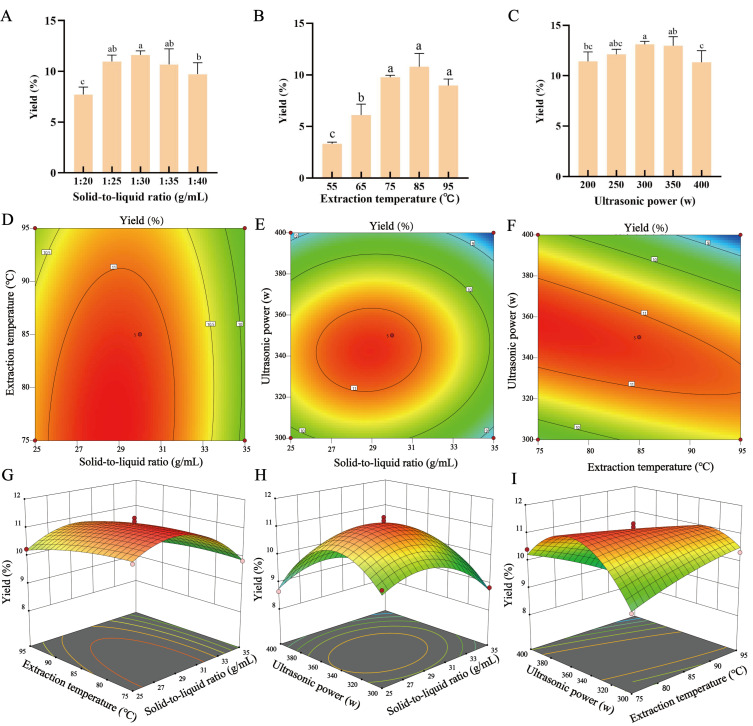 Figure 2
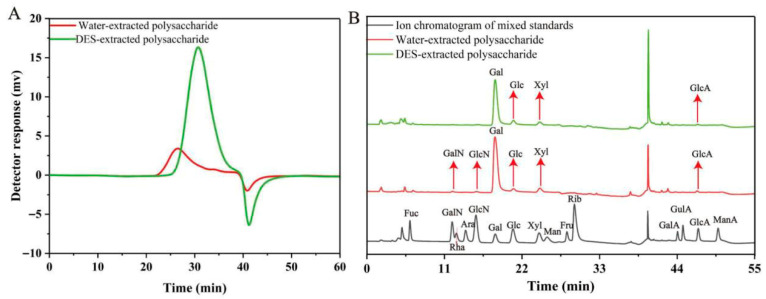 Figure 3
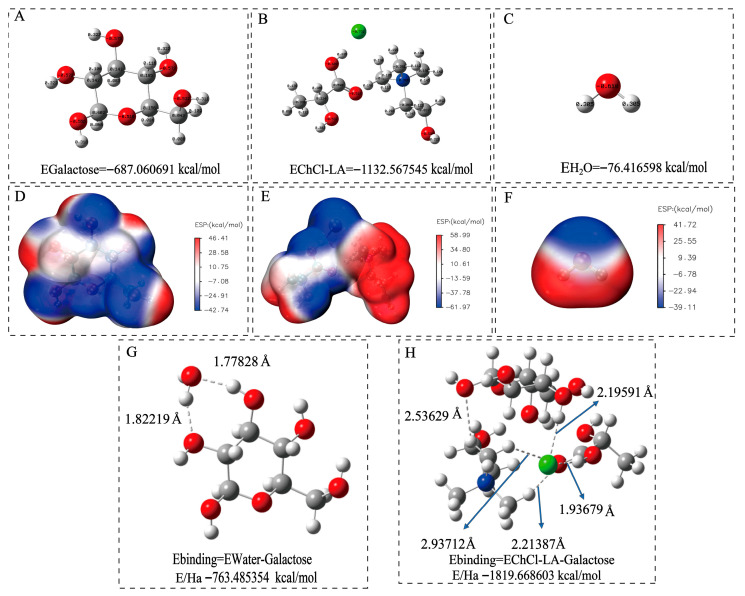 Figure 4
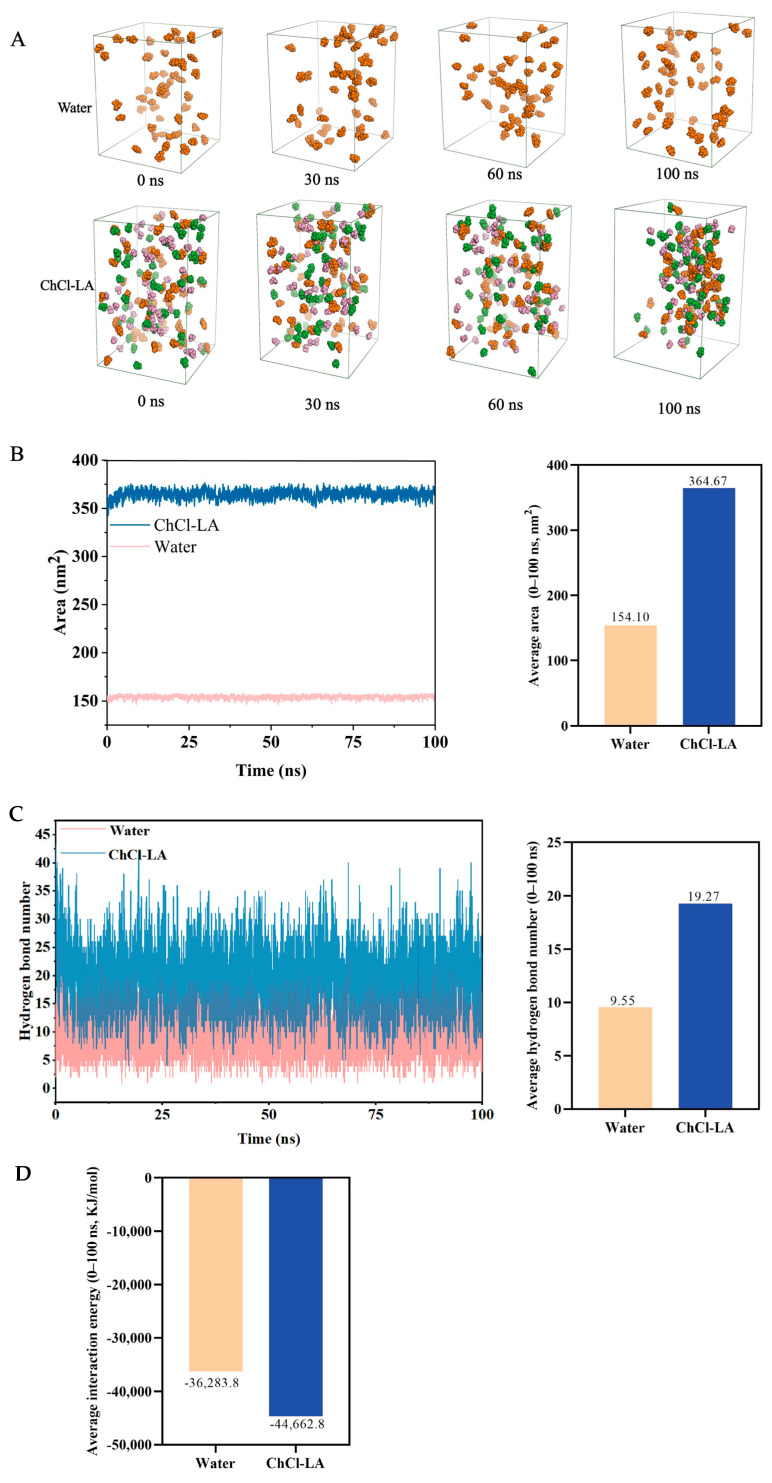 Figure 5
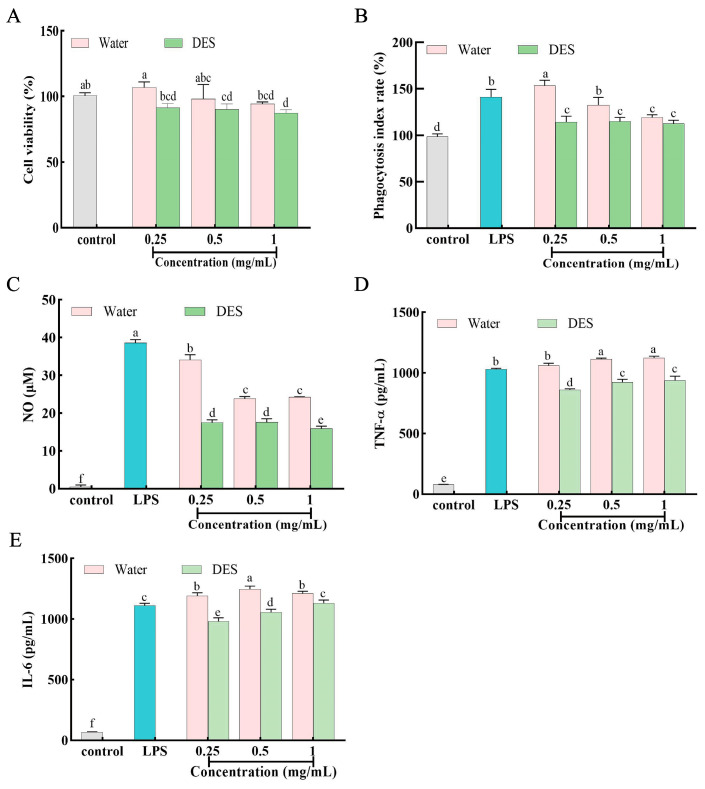 Figure 6
Peer Reviews
No public reviews on file for this paper yet. If you reviewed it on a platform where reviews are public (OpenReview, ICLR, NeurIPS, ICML), you can paste yours below so the community can read it here.
Videos
No videos yet. Explain this paper in a talk, walkthrough, or lecture? Add one.
Taxonomy
TopicsSeaweed-derived Bioactive Compounds · Polysaccharides and Plant Cell Walls · Ionic liquids properties and applications