Endometrial Mixed and Mixed-Feature Carcinomas: Small Cohort Clinicopathologic and Molecular Studies
Swati Bhardwaj, Mona Saleh, Yayoi Kinoshita, Rachel Brody, Olga Lukatskaya, Stephanie V. Blank, Brett Baskovich, Tamara Kalir

TL;DR
This study explores rare mixed endometrial cancers, finding they have unique genetic mutations that could guide better treatment strategies.
Contribution
The study identifies molecular features of mixed endometrial carcinomas, suggesting a clonal origin and distinct mutations compared to pure subtypes.
Findings
Mixed carcinomas show TP53 and PIK3CA mutations in both histologic components, indicating a clonal origin.
ERBB2 amplifications are more frequent in mixed carcinomas compared to pure subtypes.
FBXW7 mutations are unique to mixed carcinomas and not found in pure endometrioid or serous carcinomas.
Abstract
Endometrial cancer is a prevalent disease worldwide. There are different kinds of endometrial cancers and their treatment is based on the specific type of cancer—termed the histologic type, and the extent of disease spread—termed stage. The pathology diagnosis of the specific type of endometrial cancer is improving because of our ability to identify specific gene mutations that are unique to the different histologic groups of endometrial cancer. Discovering more about these gene mutations will enable us to design better, more personalized treatment, and avoid having patients try medicines that may not be effective at eliminating their tumor cells. In this current research investigation, we studied a rare sub group of endometrial cancers called mixed carcinomas. There are currently no treatment guidelines for this particular group, and we wanted to learn more about their gene mutations…
Genes, proteins, chemicals, diseases, species, mutations and cell lines named across the full text — each resolved to its canonical identifier and authoritative record.
Click any figure to enlarge with its caption.
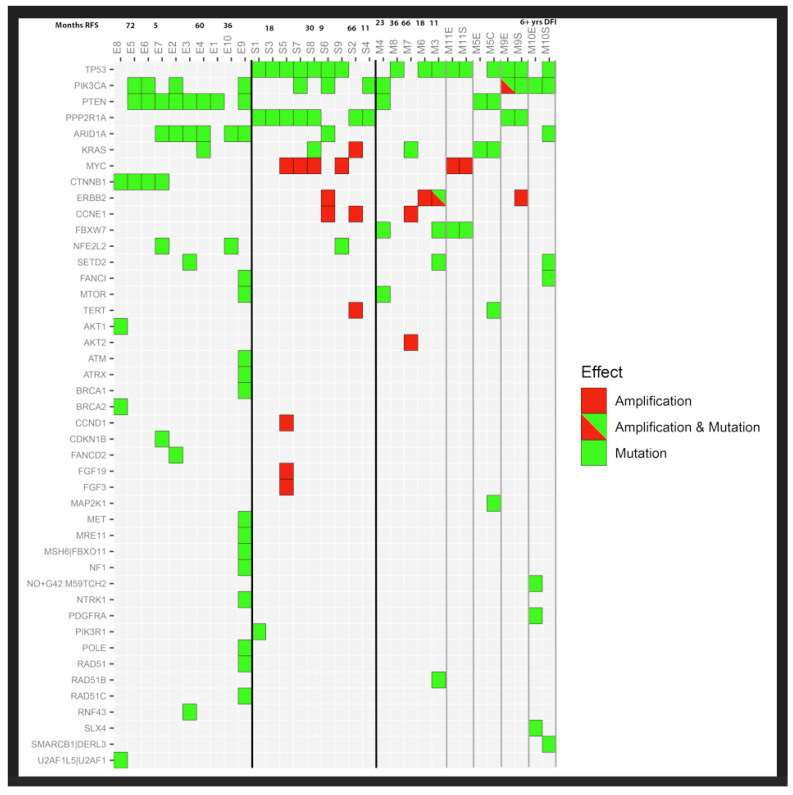 Figure 1
Peer Reviews
No public reviews on file for this paper yet. If you reviewed it on a platform where reviews are public (OpenReview, ICLR, NeurIPS, ICML), you can paste yours below so the community can read it here.
Videos
No videos yet. Explain this paper in a talk, walkthrough, or lecture? Add one.
Taxonomy
TopicsEndometrial and Cervical Cancer Treatments · Ovarian cancer diagnosis and treatment · Gynecological conditions and treatments