Discordance for Defects in Monochorionic Twins: Prevalence and Impact on Perinatal Outcomes
Ewelina Litwinska, Izabela Walasik, Monika Szpotanska-Sikorska, Paweł Stanirowski, Tomasz Góra, Tomasz Szajner, Anna Janowicz-Grelewska, Aleksandra Księżopolska, Artur Ludwin, Magdalena Litwinska

TL;DR
This study finds that about 5% of monochorionic twin pregnancies have structural defects in only one fetus, with heart issues being most common and certain factors linked to worse outcomes.
Contribution
The study reports the prevalence and outcomes of discordant structural defects in monochorionic twins with normal aCGH results.
Findings
Discordant structural defects occurred in 5.5% of monochorionic twin pregnancies.
Cardiac defects were the most common type of anomaly observed.
Intertwin CRL discordance over 20% was linked to increased fetal loss risk.
Abstract
Background: Monozygotic twin pregnancies are at increased risk of congenital abnormalities compared to singletons. In 20% of cases, both fetuses are affected (concordance), while in 80% of cases, only one fetus is affected (discordance). This study examines the prevalence of discordance for structural defects in monochorionic (MC) twins, with normal aCGH comparative genomic hybridization (aCGH), reporting the types of detected abnormalities and their possible impact on perinatal outcomes, including the rate of single and double fetal loss before 24 weeks’ gestation and the rate of preterm birth (PB) before 32 weeks’ gestation. Methods: This was a retrospective study of discordant structural fetal anomalies in MC twin pregnancies detected at first-trimester scanning in three fetal medicine centers in Poland. Results: In the study population of 381 monochorionic twin pregnancies examined…
Genes, proteins, chemicals, diseases, species, mutations and cell lines named across the full text — each resolved to its canonical identifier and authoritative record.
Click any figure to enlarge with its caption.
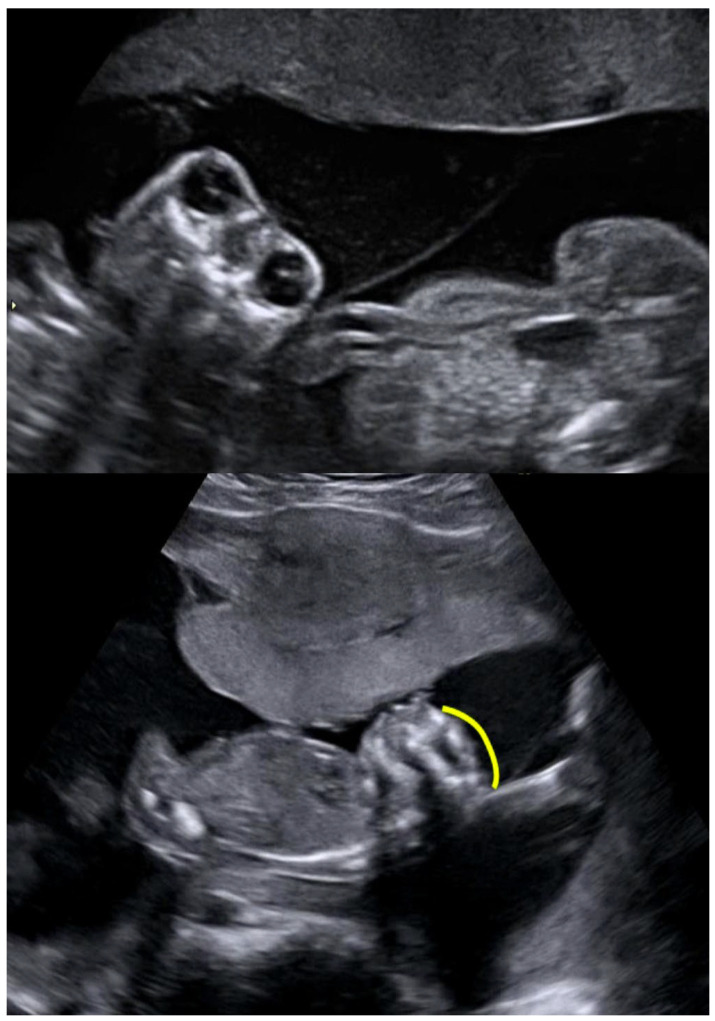 Figure 1
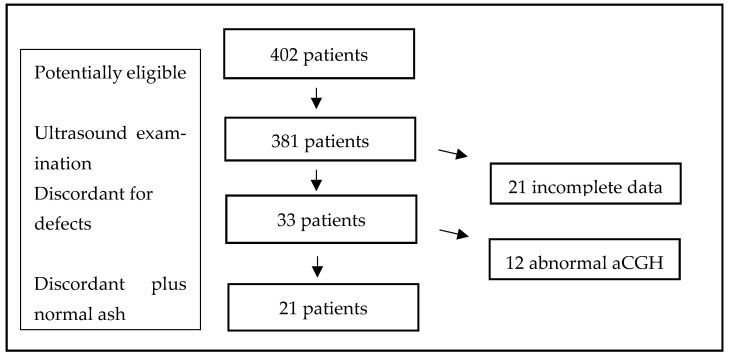 Figure 2
Peer Reviews
No public reviews on file for this paper yet. If you reviewed it on a platform where reviews are public (OpenReview, ICLR, NeurIPS, ICML), you can paste yours below so the community can read it here.
Videos
No videos yet. Explain this paper in a talk, walkthrough, or lecture? Add one.
Taxonomy
TopicsAssisted Reproductive Technology and Twin Pregnancy · Prenatal Screening and Diagnostics · Fetal and Pediatric Neurological Disorders