Skeletal Involvement in Systemic Mastocytosis: Pathophysiology, Clinical Management, Standards of Care, and Novel Therapeutic Strategies
Manlio Fazio, Adele Bottaro, Maria Elisa Nasso, Fabio Stagno, Alessandro Allegra

TL;DR
This paper explores how mast cell disorders affect bone health and highlights new treatments, including KIT inhibitors, that could reverse bone disease in systemic mastocytosis.
Contribution
The paper introduces KIT-targeted therapies like avapritinib as a novel approach to reverse both osteoporosis and osteosclerosis in systemic mastocytosis.
Findings
Neoplastic mast cells disrupt bone homeostasis by upregulating RANKL and secreting Wnt antagonists like DKK1 and sclerostin.
KIT inhibitors, such as avapritinib, can reverse molecular alterations and restore bone remodeling in systemic mastocytosis.
Machine learning models are proposed for individualized prediction of osteoporosis and fracture risk in systemic mastocytosis.
Abstract
What are the main findings? Neoplastic mast cells disrupt bone homeostasis by upregulating RANKL and secreting Wnt antagonists (DKK1 and sclerostin), cytokines, and microRNAs that inhibit osteoblast differentiation and promote osteoclastogenesis.KIT-targeting inhibition with selective tyrosine kinase inhibitors (TKIs), such as avapritinib, harbors the potential to reverse these molecular alterations and restore balanced bone remodeling by reducing mast cell burden in systemic mastocytosis. Neoplastic mast cells disrupt bone homeostasis by upregulating RANKL and secreting Wnt antagonists (DKK1 and sclerostin), cytokines, and microRNAs that inhibit osteoblast differentiation and promote osteoclastogenesis. KIT-targeting inhibition with selective tyrosine kinase inhibitors (TKIs), such as avapritinib, harbors the potential to reverse these molecular alterations and restore balanced bone…
Genes, proteins, chemicals, diseases, species, mutations and cell lines named across the full text — each resolved to its canonical identifier and authoritative record.
Click any figure to enlarge with its caption.
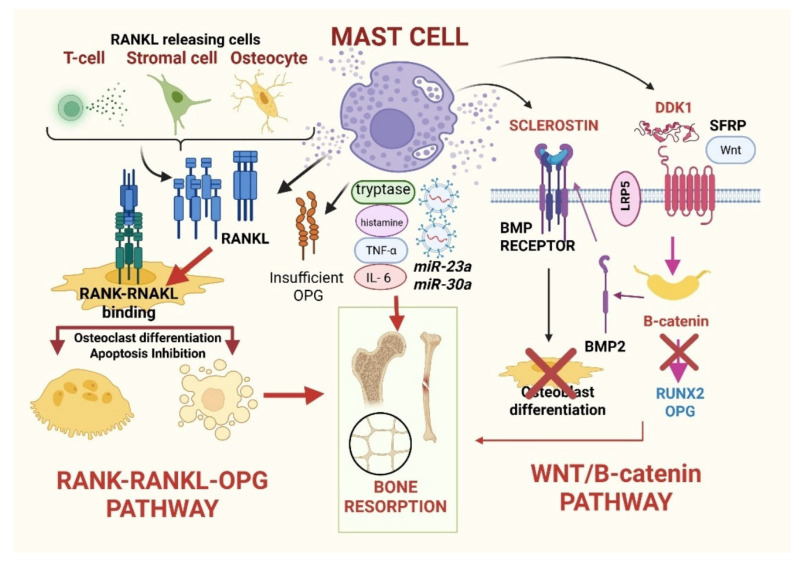 Figure 1
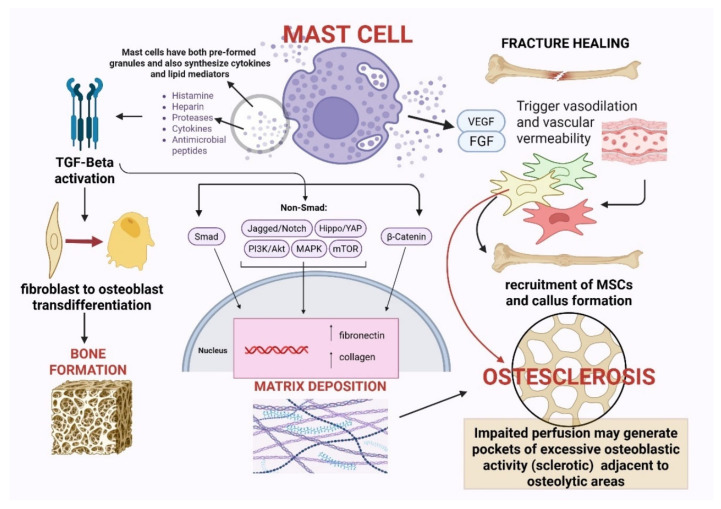 Figure 2
 Figure 3
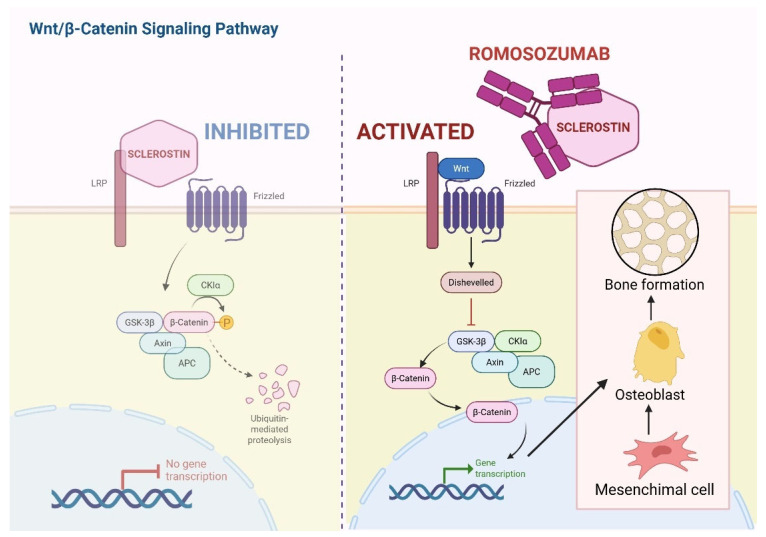 Figure 4
Peer Reviews
No public reviews on file for this paper yet. If you reviewed it on a platform where reviews are public (OpenReview, ICLR, NeurIPS, ICML), you can paste yours below so the community can read it here.
Videos
No videos yet. Explain this paper in a talk, walkthrough, or lecture? Add one.
Taxonomy
TopicsMast cells and histamine · Asthma and respiratory diseases · Hypertrophic osteoarthropathy and related conditions