Influences of Fermentation Temperature on Volatile and Non-Volatile Compound Formation in Dark Tea: Mechanistic Insights Using Aspergillus niger as a Model Organism
Rida Niaz, Mingjin Li, Qian Pu, Anlan Qu, Tianci Shen, Minghui Qi, Chengtao Wang, Lixia Chen, Shuang Wu, Youyi Huang

TL;DR
This study explores how fermentation temperature affects the chemical composition and quality of dark tea using Aspergillus niger as a model organism.
Contribution
The study provides mechanistic insights into how temperature influences volatile and non-volatile compound formation in dark tea.
Findings
Fermentation at 37°C favored the release and accumulation of volatile compounds like benzaldehyde and linalool.
Total polyphenols, flavonoids, and nucleotides were more rapidly consumed at 25–37°C, improving tea taste.
EGC, GC, melezitose, and sucrose showed significant negative correlations with tea infusion taste quality.
Abstract
The mechanism of the quality formation of dark tea is not fully clear, particularly under variable fermentation temperatures. In this study, the tea fermented with Aspergillus niger (AN) at 25 (AN25) and 37 °C (AN37) exhibited the highest quality. Different fermentation temperatures primarily influenced the degradation of fatty acids and the hydrolysis of glycosides in the tea, with 37 °C being the most favorable for the release and accumulation of volatile compounds. Eighteen key volatiles were identified. Among these, benzaldehyde (a 120.9% increase compared to CK), α-ionone (957.8%), linalool (172.2%), and nonanal (22.8%) were present at high levels in AN37, and these compounds served as the main aroma contributors. Inoculation with AN and fermentation temperature primarily influences the levels of total polyphenols, organic acids and their derivatives, as well as amino acids and…
Genes, proteins, chemicals, diseases, species, mutations and cell lines named across the full text — each resolved to its canonical identifier and authoritative record.
Click any figure to enlarge with its caption.
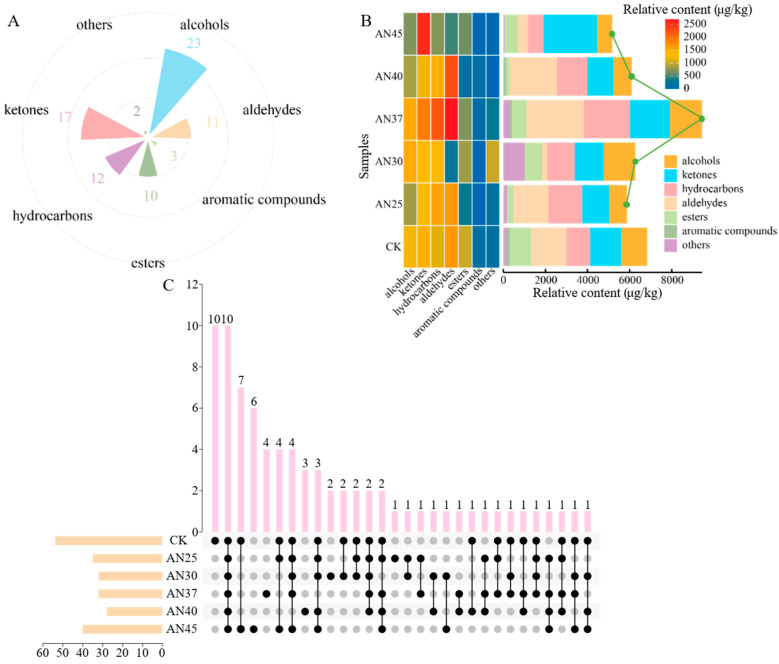 Figure 1
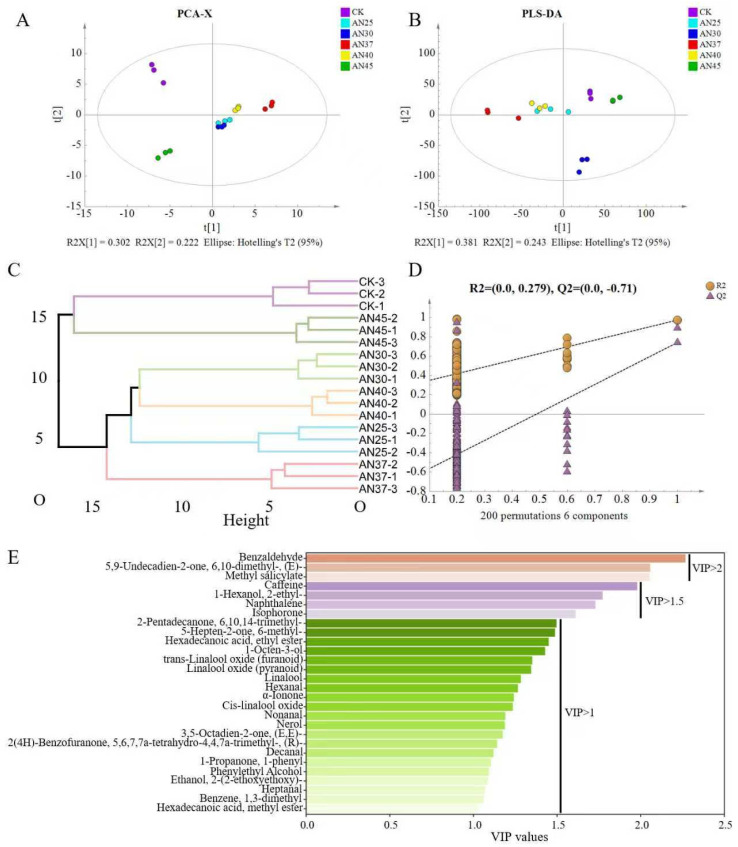 Figure 2
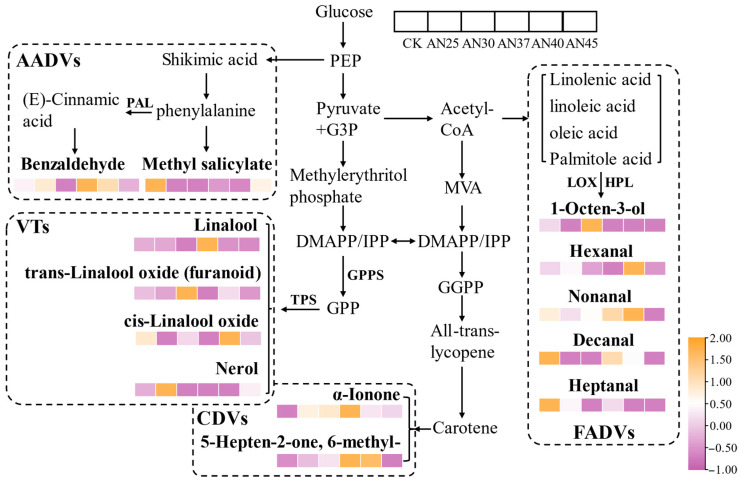 Figure 3
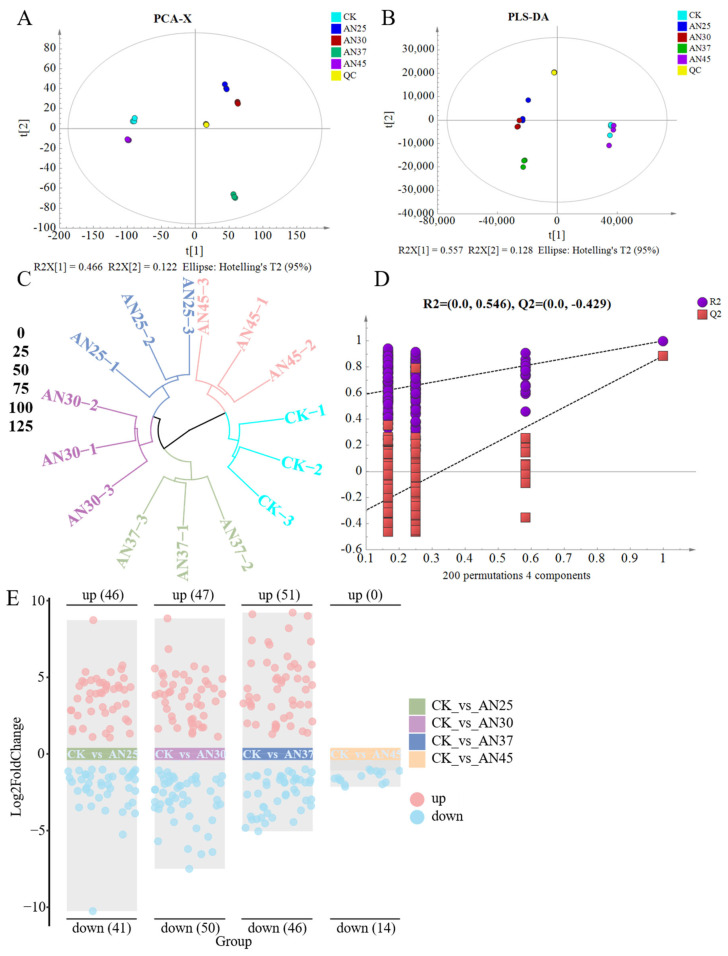 Figure 4
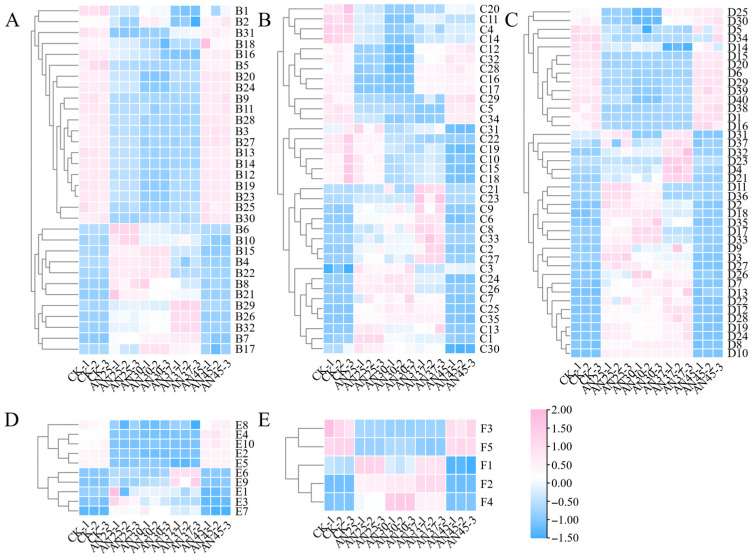 Figure 5
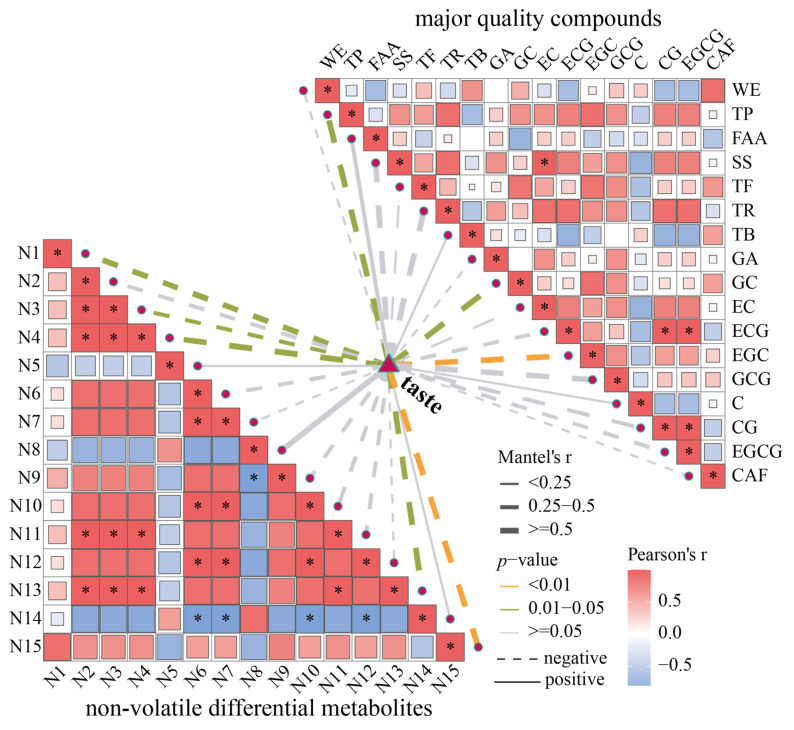 Figure 6
Peer Reviews
No public reviews on file for this paper yet. If you reviewed it on a platform where reviews are public (OpenReview, ICLR, NeurIPS, ICML), you can paste yours below so the community can read it here.
Videos
No videos yet. Explain this paper in a talk, walkthrough, or lecture? Add one.
Taxonomy
TopicsTea Polyphenols and Effects · Fermentation and Sensory Analysis · Coffee research and impacts